
Introduction
When an impact sprinkler stops rotating, the problem is usually a mismatch between water pressure, internal resistance, and the arm mechanism that drives the head forward. That failure can leave one area flooded while the rest of the lawn or garden stays dry, so identifying the cause quickly matters for both plant health and water efficiency. This article explains how an impact sprinkler is supposed to rotate, the most common reasons it stalls or short-strokes, and the practical fixes that restore normal movement. By the end, you’ll know what symptoms to look for, how to narrow down the issue, and which adjustments or cleaning steps are most likely to solve it.
Why an Impact Sprinkler Stops Rotating
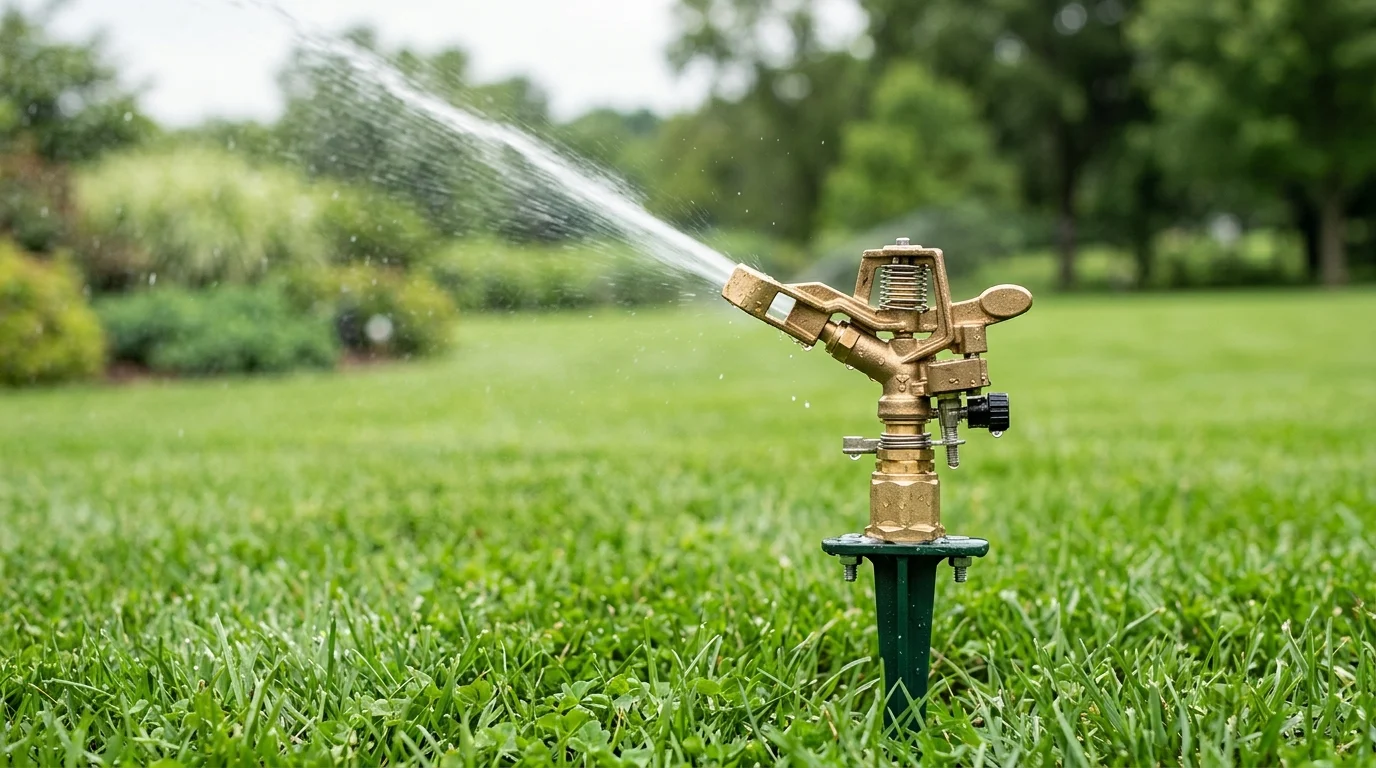
Impact sprinklers operate by converting the kinetic energy of a pressurized water stream into mechanical motion. A spring-loaded arm is pushed outward by the water flow and then snaps back, striking the sprinkler body to advance it incrementally. Proper operation strictly depends on maintaining precise hydraulic and mechanical parameters, typically requiring an operating pressure between 30 and 60 PSI at the sprinkler base to generate sufficient kinetic force.
When this intricate balance of water pressure, spring tension, and bearing friction is disrupted, the rotational mechanism fails. Understanding the mechanics behind this failure is the first step in restoring proper irrigation functionality.
Common symptoms
When the rotational mechanism fails, operators observe several distinct symptoms. The unit may stall entirely, directing a continuous, high-velocity stream into a single location while the impact arm remains completely stationary. Alternatively, the sprinkler might exhibit "short-stroking," where the arm flutters rapidly but fails to strike the body with enough force to advance the bearing. Under optimal conditions, a standard half-inch impact sprinkler should complete a full 360-degree sweep in approximately 1 to 3 minutes; any significant deviation from this timing indicates an impending failure.
How rotation affects coverage
A stationary impact sprinkler severely compromises the distribution uniformity (DU) of an irrigation system. Without continuous rotation, the precipitation rate in the localized target area can exceed 2.0 inches per hour, rapidly surpassing typical soil infiltration rates. This results in severe surface runoff, soil erosion, and localized pooling. Conversely, the surrounding vegetation receives zero precipitation, leading to acute drought stress. Maintaining consistent rotation is critical for achieving the targeted 70% to 85% DU expected in commercial agricultural and landscape irrigation systems.
Main Causes of Rotation Failure
The failure of an impact sprinkler to rotate generally stems from a breakdown in the delicate balance between hydraulic force and mechanical resistance. Identifying the root cause requires evaluating both the water supply network and the physical components of the sprinkler head.
Low pressure and flow issues
Impact sprinklers are highly sensitive to dynamic pressure drops. While a system might measure an adequate static pressure of 50 PSI at the pump, friction losses through undersized pipes, faulty valves, or elevation changes can drop the dynamic pressure at the sprinkler base below the critical operational threshold of 25 to 30 PSI. Without sufficient flow velocity at the nozzle, the water stream lacks the kinetic energy required to deflect the impact arm against its spring tension, leaving the unit stalled.
Wear in the arm, spring, and bearing
Mechanical wear naturally occurs from continuous metal-on-metal or plastic-on-plastic friction during operation. The bearing washers, often constructed of Teflon, brass, or rubber, degrade over time, which increases rotational friction. Additionally, the drive spring may suffer from metallurgical fatigue. A standard stainless steel drive spring can lose 15% to 20% of its tension over a 3- to 5-year operational lifespan. If the spring cannot forcefully return the arm to strike the sprinkler body, the rotational advancement ceases.
Debris, scale, and misalignment
Environmental factors and poor water quality frequently impede mechanical operation. Debris such as sand or silt, particularly particles larger than 100 microns, can lodge directly in the bearing stack and physically jam the rotational axis. In areas with hard water, calcium carbonate scale accumulates on the trip pins and friction collars, restricting the reversing mechanism on part-circle models.
| Failure Category | Primary Component | Typical Lifespan Before Wear | Diagnostic Indicator |
|---|---|---|---|
| Hydraulic | Nozzle / Supply Line | N/A (Systemic) | Dynamic pressure drops below 30 PSI |
| Mechanical | Drive Spring / Bearing | 3-5 Years | Weak arm return force; slow rotation |
| Environmental | Bearing Stack | 1-2 Years (unfiltered) | Gritty resistance during manual rotation |
How to Diagnose the Problem
Accurately diagnosing a stalled impact sprinkler prevents unnecessary component replacement and ensures that systemic hydraulic issues are not mistakenly treated as localized mechanical failures. A rigorous, data-driven diagnostic protocol is essential for isolating the exact fault.
Step-by-step inspection
Begin with a visual and tactile inspection while the irrigation system is depressurized. Manually deflect the impact arm to its maximum extension and release it; the arm should snap back sharply without binding or catching. Next, inspect the bearing by rotating the sprinkler head by hand. Any grinding sensation indicates particulate intrusion within the bearing washers. Finally, examine the nozzle orifice for partial obstructions or asymmetrical wear patterns that could diffuse the water stream before it strikes the drive arm.
What to measure and record
Quantitative measurements are necessary to isolate hydraulic faults from mechanical ones. Utilize a pitot tube equipped with a liquid-filled pressure gauge to measure the dynamic pressure directly at the nozzle outlet while the system is running. Record the operating pressure and compare it against the manufacturer's performance charts. For example, a standard 5/32-inch nozzle operating at exactly 40 PSI should deliver approximately 3.1 gallons per minute (GPM) with a throw radius of 40 feet. If the pressure reads 40 PSI but the flow rate or throw radius is significantly lower, a blockage within the riser or sprinkler body is mathematically certain.
How to Fix or Replace It
Once the specific point of failure is identified, operators must decide on the most efficient remediation strategy. The repair approach varies significantly depending on the sprinkler's material construction, the availability of parts, and the severity of the defect.
Repairs that restore rotation
Mechanical repairs typically involve disassembling the bearing stack to replace worn washers or flush out accumulated debris. If the arm is sluggish despite a clean bearing, replacing the drive spring will restore the necessary kinetic strike force. For part-circle models that fail to reverse direction, adjusting or replacing the friction collars and trip pin is required. Additionally, clearing a clogged nozzle with a non-metallic probe—to avoid scoring the brass or plastic orifice—immediately restores the stream velocity needed to actuate the arm.
When to rebuild vs replace
The decision to rebuild versus replace hinges on unit cost and labor economics. Commercial-grade brass impact sprinklers, which typically retail between $30 and $80, are highly serviceable; installing a $5 to $10 rebuild kit containing new washers, seals, and springs is highly cost-effective and extends the asset's life. Conversely, entry-level plastic models costing $10 to $15 are generally considered disposable, as the labor cost required to disassemble and rebuild them quickly exceeds the replacement value of the entire unit.
Common fixes by symptom
Matching the observed symptom directly to the correct fix minimizes system downtime and prevents wasted labor.
| Observed Symptom | Probable Cause | Recommended Fix |
|---|---|---|
| Arm flutters but head does not rotate | Worn bearing washers or low pressure | Replace washer stack; verify base pressure > 30 PSI |
| Arm stays fully extended | Broken or fatigued drive spring | Replace drive spring |
| Water sprays but arm does not move | Clogged nozzle or severe bearing jam | Clear nozzle orifice; disassemble and flush bearing |
How to Prevent Future Failures
Proactive maintenance is the most effective method for extending the operational lifecycle of impact sprinklers and maintaining high distribution uniformity. Implementing strict maintenance protocols mitigates the primary drivers of mechanical and hydraulic failure before they disrupt irrigation schedules.
Preventive maintenance practices
A structured preventive maintenance schedule should include annual teardowns of heavily utilized sprinkler heads. During this process, bearing assemblies must be cleaned and inspected for wear. Operators must strictly avoid applying oil-based lubricants to the bearings, as oil attracts dust and creates an abrasive paste that accelerates wear. Instead, if lubrication is required by the manufacturer, only dry PTFE (Teflon) sprays should be utilized. Additionally, proper winterization—purging the lateral lines with compressed air at 40 to 50 CFM—prevents freeze damage to the internal seals and bearing components.
Water quality and operating checks
Water quality directly dictates the required maintenance intervals. Systems drawing from surface water or agricultural wells must implement adequate primary filtration. Installing 80- to 120-mesh screen or disc filters prevents abrasive particulates from reaching the sprinkler heads. Furthermore, operators should routinely test water hardness. If calcium levels exceed 120 parts per million (ppm), chemical injection systems or periodic acid washes using mild phosphoric acid solutions become necessary. These treatments dissolve scale buildup on the trip mechanisms and bearing stacks, ensuring uninterrupted rotation throughout the irrigation season.
Key Takeaways
- The most important conclusions and rationale for impact sprinkler
- Specs, compliance, and risk checks worth validating before you commit
- Practical next steps and caveats readers can apply immediately
Frequently Asked Questions
What pressure does an impact sprinkler need to rotate properly?
Most impact sprinklers need about 30–60 PSI at the sprinkler base. If dynamic pressure falls below roughly 25–30 PSI, the arm may flutter or stop rotating.
Why does my impact sprinkler spray water but stay in one spot?
This usually means low pressure, a weak spring, worn bearing washers, or debris in the bearing stack. Check pressure first, then inspect the arm, spring, and nozzle for clogging or wear.
How can I tell if low pressure is the real problem?
Measure dynamic pressure while the sprinkler is running, not static pressure at the pump. If base pressure is under 30 PSI, look for undersized pipe, partially closed valves, leaks, or elevation loss.
Can dirt or hard-water scale stop an impact sprinkler from turning?
Yes. Sand, silt, and calcium buildup can jam the bearing, trip pins, or friction collar. Flush the line, clean the nozzle and moving parts, and replace badly scaled components if needed.
How often should impact sprinkler parts be replaced?
Inspect yearly. Bearings in unfiltered systems may wear in 1–2 years, while springs and other moving parts often last about 3–5 years. Replace parts sooner if rotation slows or becomes inconsistent.