
Introduction
Choosing the right irrigation swing joint size on a commercial project affects more than fit-up at the head: it influences pressure loss, spray performance, impact resistance, and long-term maintenance costs. A joint that is too small can restrict flow and reduce rotor radius, while one with insufficient length or flexibility may transfer stress to the lateral line and fail under traffic or settling. This article explains how to size a swing joint based on flow, inlet size, pressure conditions, and installation demands, so you can match the assembly to the sprinkler and site conditions with fewer performance problems in the field.
Why irrigation swing joint sizing affects performance and risk
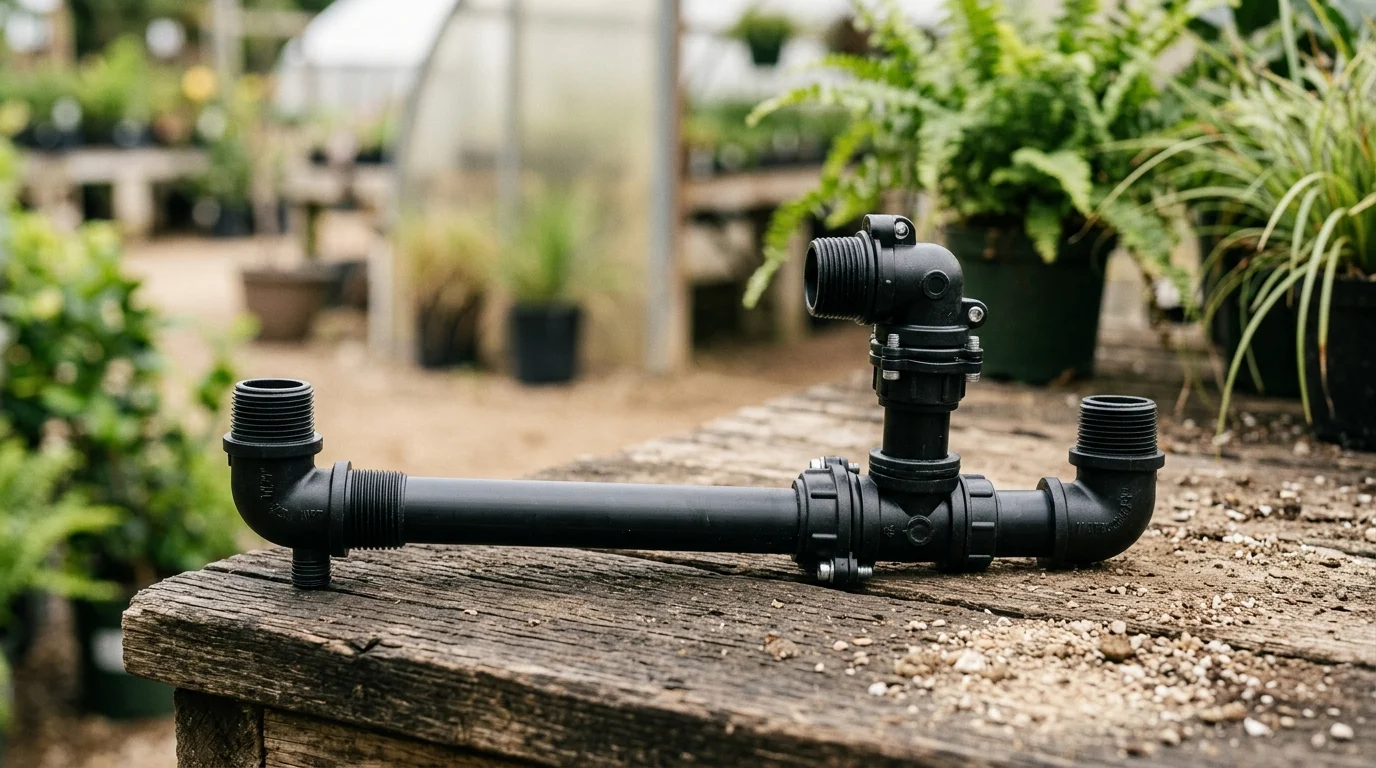
In commercial and municipal landscaping, the irrigation swing joint serves as the critical mechanical bridge between rigid lateral piping and the sprinkler head. Its primary function is to absorb dynamic surface impacts and allow for precise elevation adjustments of the rotor. Selecting the correct size and configuration is a fundamental engineering requirement that directly impacts system hydraulics, structural integrity, and long-term maintenance liabilities. Because commercial systems frequently operate under high dynamic pressures—often reaching up to 315 psi in specialized applications—the swing joint is a highly stressed component.
Effects of improper sizing on sprinkler performance
When an irrigation swing joint is undersized relative to the sprinkler's flow requirements, it acts as a hydraulic bottleneck. For example, forcing a 15-gallon-per-minute (GPM) flow rate through a 1/2-inch swing joint creates excessive friction loss, frequently exceeding a 5 psi pressure drop across the assembly. This pressure degradation reduces the throw radius of the rotor, leading to poor distribution uniformity and dry spots across the turf.
From a mechanical standpoint, a swing joint that is too short lacks the necessary articulation to absorb surface shocks. When heavy maintenance equipment, such as a commercial mower, rolls over the sprinkler head, a properly sized swing joint flexes. An undersized, over-extended joint transfers that kinetic energy directly to the lateral PVC line, risking catastrophic pipe fractures.
Project conditions that change sizing requirements
Site-specific environmental and operational conditions heavily dictate sizing parameters. In regions subject to severe freeze-thaw cycles, soil heaving causes significant vertical displacement of irrigation heads. Swing joints must possess adequate lay length to accommodate this seasonal movement without snapping. Typically, lateral lines in commercial projects are buried at depths of 12 to 18 inches; the swing joint must bridge this vertical gap while maintaining enough slack for future adjustments.
Furthermore, soil composition plays a vital role. Highly expansive clay soils exert immense lateral and vertical pressures on subterranean fittings. In these environments, specifying a longer swing joint provides the requisite flexibility to prevent shearing. High-traffic areas, such as municipal parks, also necessitate rigorous sizing standards to ensure the rotor can be set exactly to grade, mitigating tripping hazards and associated liability.
How to size an irrigation swing joint correctly
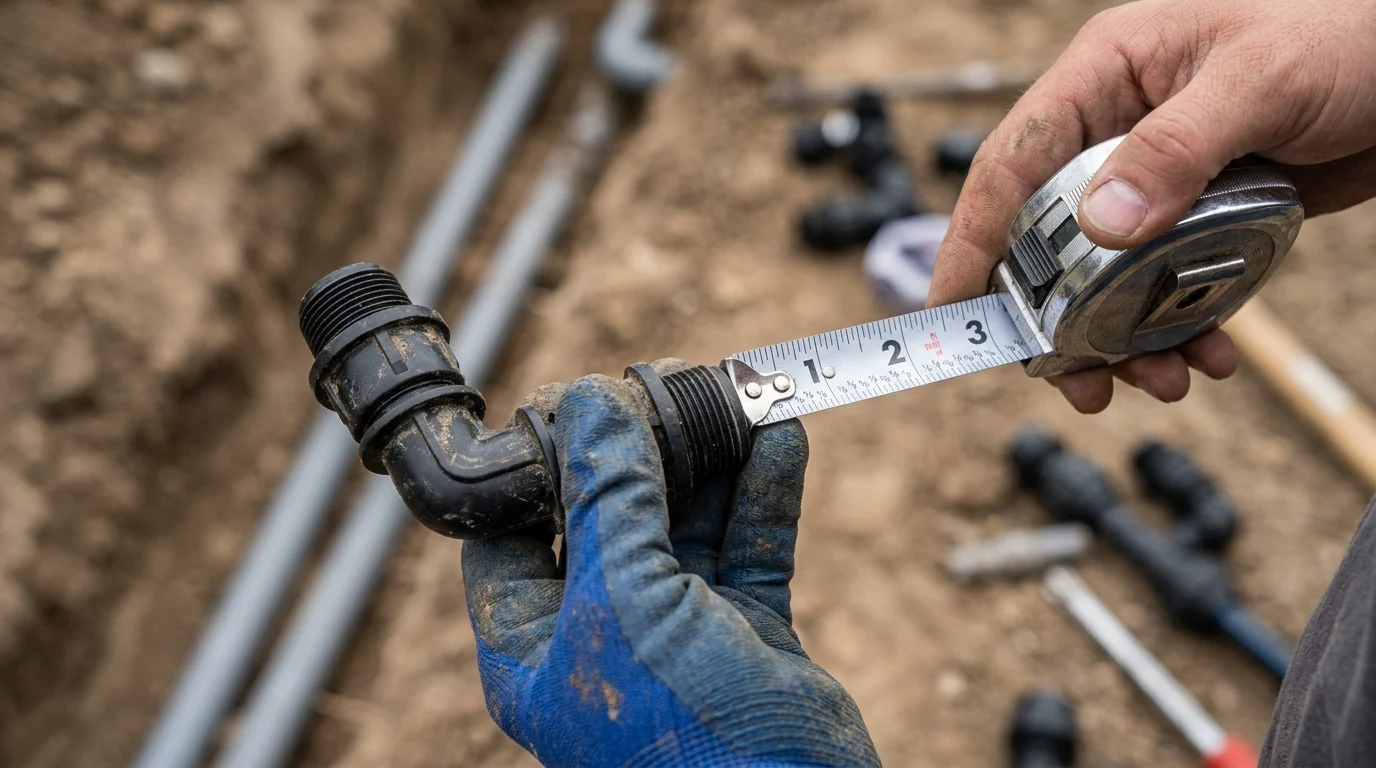
Properly sizing an irrigation swing joint requires a systematic evaluation of both hydraulic demands and physical trench dimensions. Engineers must balance the need for unrestricted water flow with the mechanical requirement for articulation.
Hydraulic, mechanical, and site variables to assess
The primary variables include the required flow rate of the sprinkler, the depth of the lateral pipe, and the specific thread dimensions of the sprinkler inlet. Hydraulically, friction loss through the swing joint should ideally be kept below 10% of the total operating pressure at the head to maintain optimal nozzle performance. Mechanically, the joint must be long enough to connect the lateral line to the surface while maintaining a resting angle that allows for downward travel if the head is compressed.
How to match swing joint dimensions to sprinkler needs
Matching the swing joint to the sprinkler involves selecting the correct diameter and lay length. Lay lengths typically range from 8 to 18 inches in commercial applications. The fundamental rule is that the swing joint must never be installed in a fully vertical, fully extended position. It requires a 30- to 45-degree resting angle to provide shock absorption. Therefore, if a lateral line is 12 inches deep, an 8-inch swing joint is mechanically insufficient; a 12-inch or 18-inch length is required to achieve the necessary angular offset.
Common size comparison table to include
To streamline the specification process, irrigation designers rely on established hydraulic parameters to pair sprinkler inlets with the appropriate swing joint diameter. The following table outlines standard pairings designed to maintain optimal flow velocities and minimize friction loss across commercial systems.
| Sprinkler Inlet Size | Recommended Swing Joint Diameter | Maximum Efficient Flow (GPM) | Typical Application |
|---|---|---|---|
| 1/2-inch | 1/2-inch | Up to 8 GPM | Spray heads, small rotors |
| 3/4-inch | 3/4-inch | 8 to 15 GPM | Medium commercial rotors |
| 1-inch | 1-inch | 15 to 35 GPM | Large turf, sports fields |
| 1.5-inch | 1.5-inch | 35 to 80+ GPM | Golf course rotors, water cannons |
How to compare irrigation swing joint materials and configurations
Beyond basic dimensions, the material composition and joint configuration determine the assembly's durability under stress. The industry standard has largely shifted toward rigid Schedule 80 PVC or high-density flexible polyethylene, depending on the specific application and budget constraints.
When preassembled models are the better choice
Factory-assembled, rigid PVC swing joints are often the superior choice for high-value commercial projects. These units are engineered to withstand extreme surge pressures, with many premium models carrying surge ratings up to 315 psi. Utilizing preassembled models eliminates the variability of field-glued joints, significantly reducing the risk of micro-leaks. Furthermore, preassembled units yield substantial labor efficiencies, often saving contractors 5 to 10 minutes of assembly time per sprinkler head compared to building joints from scratch using standard elbows and nipples.
How flexible pipe, elbow count, and connection type affect selection
The configuration of elbows directly impacts the joint's adjustability. A standard triple-elbow configuration provides basic vertical and horizontal adjustment, which is sufficient for flat, predictable terrain. However, a quadruple-elbow (quad-link) configuration adds a fourth point of articulation, allowing the sprinkler to be positioned 360 degrees on two axes. This is invaluable on sloped terrain or when retrofitting existing systems. Connection types also matter; ACME threads are increasingly preferred over standard National Pipe Thread (NPT). ACME threads utilize an O-ring seal, eliminating the need for Teflon tape and drastically reducing the risk of overtightening, which frequently cracks female NPT fittings.
Code, manufacturer, and warranty checks
Specifications should always verify compliance with relevant industry standards, such as ASTM D3139 for joints in plastic pressure pipes. When evaluating manufacturers, examine the warranty terms closely. Many leading irrigation manufacturers offer extended system warranties—often extending from 3 up to 5 years—if the swing joint and the rotor are sourced from the same brand. This single-source specification ensures thread compatibility and provides comprehensive liability protection for the property owner.
Field process for sizing and installing irrigation swing joints
Even perfectly specified irrigation swing joints will fail if field installation practices violate mechanical limits. The installation phase requires rigorous oversight to ensure the theoretical design translates accurately to the trench.
Steps to verify trench and site conditions
Before installing the swing joint, contractors must verify the actual trench depth against the irrigation plan. If the lateral line is installed at a depth of 18 inches rather than the specified 12 inches, the pre-ordered swing joints may be too short. Installers must measure the vertical distance from the lateral tee to final grade. The swing joint lay length must be approximately 1.5 times this vertical distance to ensure the assembly rests at the optimal 30- to 45-degree angle.
How to handle high-traffic, sports field, and narrow-space installs
Specialized environments demand modified installation techniques. On sports fields, player safety is paramount; swing joints must be adjusted so the top of the rotor sits exactly 1/2 inch below the final turf grade to prevent cleat impacts. In narrow-space installations, such as parking lot median strips, lateral trenches are often shallower. Here, shorter 8-inch swing joints are utilized, but contractors must exercise extreme care during backfilling to ensure the joint retains its capacity to flex under the weight of commercial landscaping equipment.
Common installation errors and how to prevent them
The most frequent point of failure in irrigation swing joints is improper mechanical tension during installation. The table below details common installation errors, their mechanical consequences, and the standard corrective actions required to maintain system integrity.
| Common Installation Error | Mechanical Consequence | Corrective Action / Prevention |
|---|---|---|
| Vertical "straight-up" installation | Zero shock absorption; lateral pipe fracture | Size joint length to allow a 45-degree resting angle |
| Overtightening NPT threads | Stress cracking in the female fitting | Limit torque to hand-tight plus 1/2 to 1 full turn |
| Insufficient burial depth | Sprinkler head protrudes above grade | Deepen trench or select a shorter swing joint lay length |
| Mixing incompatible thread types | Micro-leaks and pressure loss | Standardize on ACME threads or strictly match NPT fittings |
How to make the final irrigation swing joint selection
Making the final selection for an irrigation swing joint requires synthesizing hydraulic data, site-specific mechanical demands, and long-term facility management goals. The optimal joint functions invisibly, protecting the broader irrigation infrastructure from hydraulic surges and surface impacts without requiring constant maintenance.
Decision criteria for performance and standardization
Facility managers must weigh upfront capital costs against lifecycle durability. Standardizing on a specific swing joint configuration—such as universally deploying 1-inch or 1.5-inch ACME threaded joints across a large campus—drastically reduces inventory complexity for future maintenance. While premium quadruple-elbow, Schedule 80 PVC joints represent a higher initial expenditure, their ability to withstand heavy mower traffic and high pressure surges often yields a lower total cost of ownership by eliminating localized pipe fractures and minimizing head replacement labor.
Best-practice takeaway for choosing the right size
The definitive best practice for sizing irrigation swing joints is to strictly govern flow velocity and mechanical articulation. Designers must ensure water velocity through the joint never exceeds the industry standard threshold of 5 feet per second to prevent water hammer. Simultaneously, field execution must guarantee the joint is never fully extended. By adhering to these two fundamental parameters—hydraulic capacity and angular flexibility—commercial irrigation systems achieve maximum reliability and operational efficiency.
Key Takeaways
- The most important conclusions and rationale for irrigation swing joint
- Specs, compliance, and risk checks worth validating before you commit
- Practical next steps and caveats readers can apply immediately
Frequently Asked Questions
What size swing joint should I use for a 3/4-inch commercial rotor?
Use a 3/4-inch swing joint for most 3/4-inch rotor inlets, especially in the 8–15 GPM range, to avoid excess friction loss and preserve throw radius.
Can I use a 1/2-inch swing joint for a 15 GPM sprinkler?
No. A 1/2-inch swing joint at 15 GPM can create significant pressure drop, often over 5 psi, which reduces rotor performance and coverage.
How long should an irrigation swing joint be for a 12-inch-deep lateral?
Choose a 12-inch or 18-inch lay length. An 8-inch joint is usually too short to maintain the needed 30–45° resting angle and absorb impact properly.
Why shouldn’t a swing joint be installed straight up and fully extended?
A fully vertical, stretched joint cannot flex well. Install it with a 30–45° resting angle so it can absorb mower impacts and allow future grade adjustment.
Do freeze-thaw or clay soil conditions change swing joint sizing?
Yes. In freeze-thaw zones or expansive clay, specify a longer swing joint to handle soil movement, reduce shear stress, and keep heads adjustable over time.