
Introduction
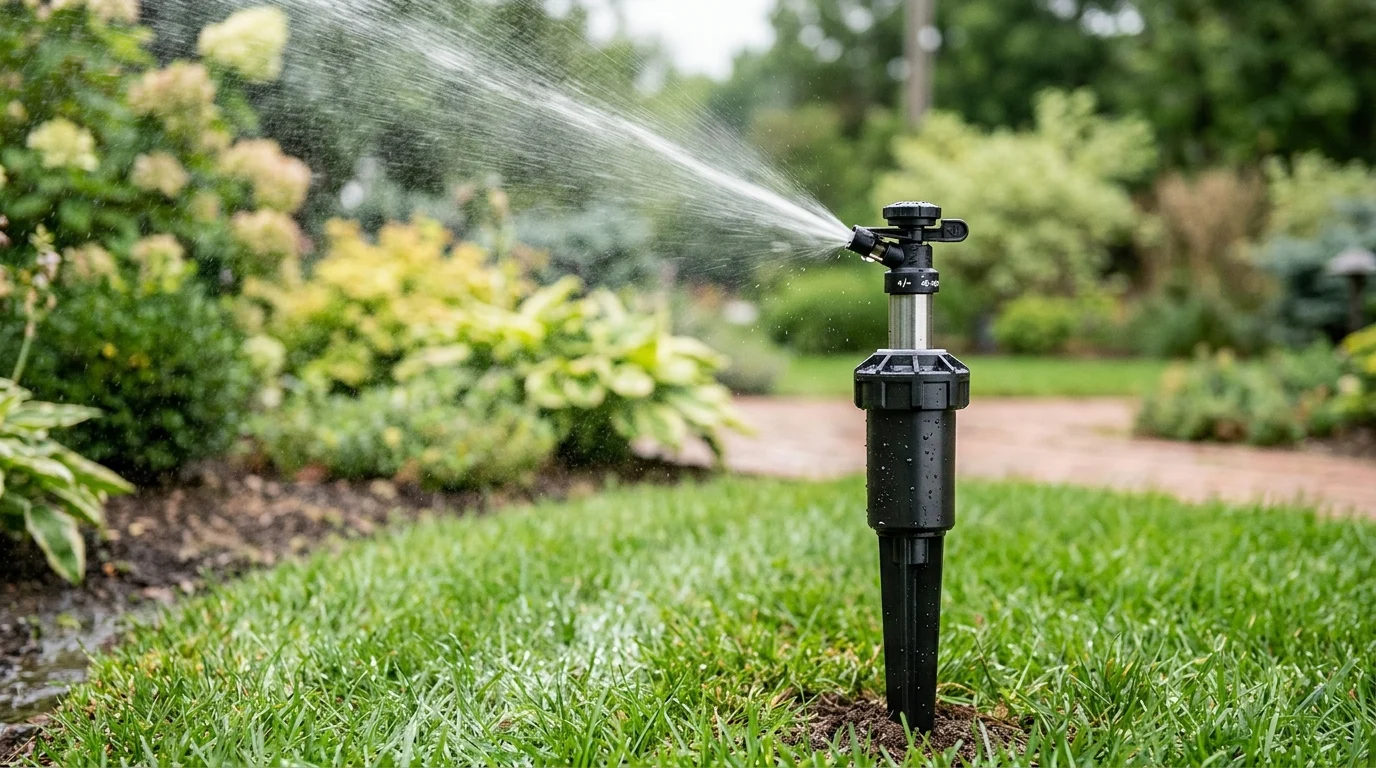
Gear drive sprinklers are a common choice for lawns, sports fields, and commercial landscapes because they can throw water farther and more evenly than fixed spray heads. Instead of releasing water in a stationary fan, they use water pressure to turn an internal gear mechanism that rotates a single stream across a set arc. This introduction explains what a gear drive sprinkler is, how its main parts work together, and why its enclosed design improves durability, coverage, and water efficiency. With that foundation, the rest of the article can make sense of performance differences, adjustment options, and where this type of sprinkler fits best in an irrigation system.
What Is a Gear Drive Sprinkler
A gear drive sprinkler, commonly referred to in the irrigation sector as a rotor, is a highly engineered fluid dynamics device designed to distribute water over medium to large distances. Unlike fixed spray heads that discharge water simultaneously in all directions, gear drive sprinklers emit a single, concentrated stream of water that rotates across a defined arc. This rotation is powered entirely by the hydraulic pressure of the irrigation system, making it an energy-efficient solution for turf and landscape management.
The enclosed nature of the gear drive mechanism protects the internal components from dirt, debris, and mechanical damage, which historically plagued older open-mechanism sprinkler designs. By utilizing a continuous, smooth rotation, these devices achieve exceptional uniformity in water distribution, minimizing runoff and maximizing absorption in the soil profile.
Key components
The architecture of a gear drive sprinkler consists of several critical internal and external components. The outer housing, typically constructed from high-impact ABS plastic or stainless steel, protects the internal riser assembly. At the base of the riser sits a filter screen, which prevents particulate matter from entering the drive mechanism.
Above the filter is the stator, a bypass valve that regulates the volume and velocity of water directed toward the drive mechanism. The core of the system includes the turbine (or impeller) and the planetary gear train. Finally, the uppermost section houses the nozzle, which dictates the flow rate and trajectory of the water stream, alongside a radius adjustment screw that diffuses the stream for precise distance control.
How the drive mechanism works
The operational cycle begins when pressurized water enters the base of the sprinkler. As water flows past the stator, it is forcefully directed against the blades of the turbine. This hydraulic force causes the turbine to spin at extremely high velocities—often exceeding 4,000 revolutions per minute (RPM) depending on the system pressure.
Because 4,000 RPM is far too fast for effective water distribution, this high-speed, low-torque rotation must be converted. The turbine is connected to a sophisticated planetary gear reduction train. This series of interlocking gears drastically reduces the rotational speed while proportionally increasing the torque. The output of the gear train rotates the nozzle turret at a slow, deliberate pace—typically completing a full 360-degree rotation in 1 to 3 minutes, ensuring a steady and wind-resistant water stream.
Core performance specifications
Gear drive sprinklers are specified based on a strict set of hydraulic parameters. Standard commercial and residential models require an operating pressure ranging from 25 to 70 pounds per square inch (PSI), with optimal performance usually achieved at an industry baseline of 45 to 50 PSI.
Flow rates are highly variable based on the selected nozzle, generally spanning from 0.5 to 15.0 gallons per minute (GPM). This combination of pressure and flow yields precipitation rates typically between 0.2 and 0.8 inches per hour. Maintaining these specifications is critical; operating below 25 PSI often results in the gear train stalling, while exceeding 70 PSI can cause the water stream to mist, leading to severe evaporative losses and poor distribution uniformity.
Why Gear Drive Sprinklers Matter in Professional Irrigation
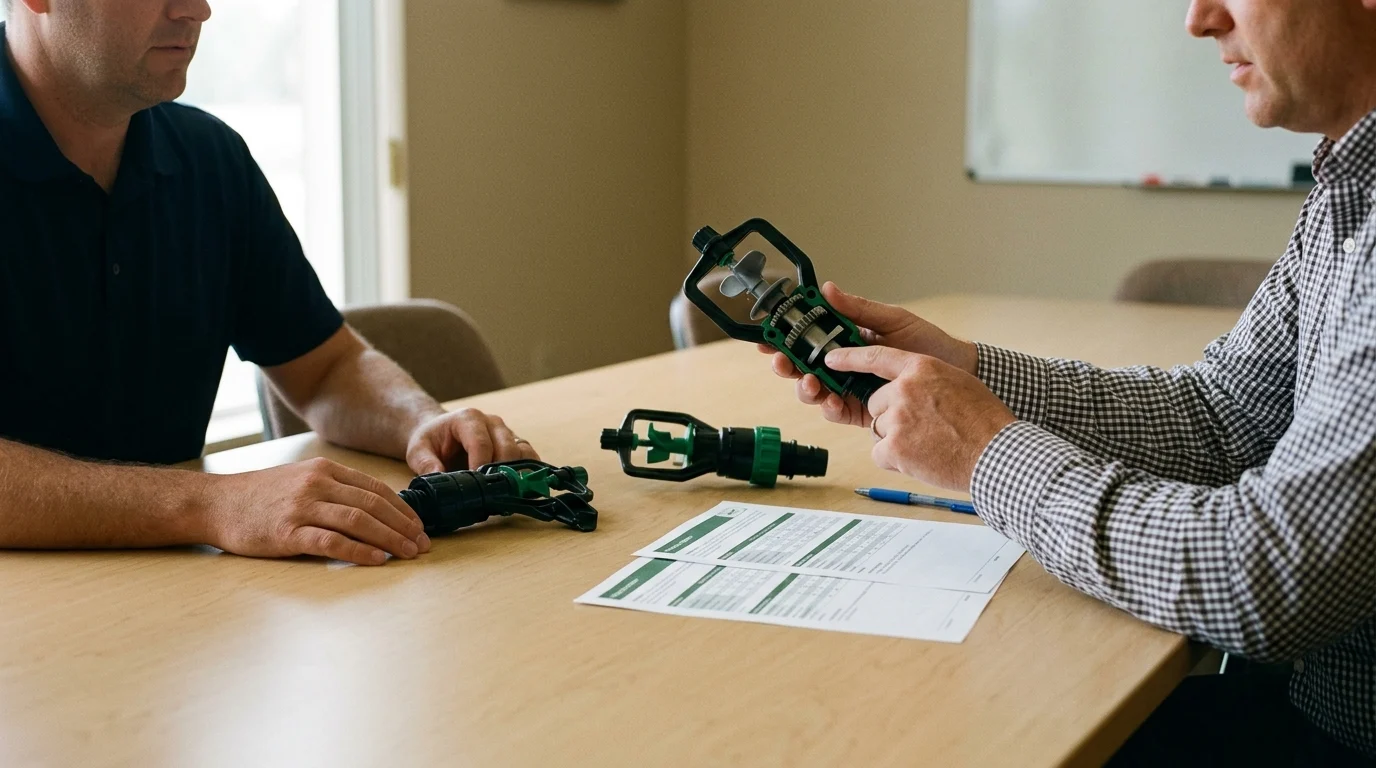
Professional irrigation relies heavily on gear drive architectures due to their enclosed, tamper-resistant nature and precise hydraulic control. In commercial landscape architecture, agricultural perimeters, and municipal park management, the ability to deliver water precisely over large expanses is paramount. Gear drive sprinklers have become the default specification for these environments, largely supplanting older technologies due to their superior efficiency metrics and aesthetic integration.
The shift toward gear-driven rotors is also driven by stringent municipal water conservation mandates. Because these devices can be finely tuned to match the exact infiltration rates of various soil types, they prevent the pooling and runoff associated with high-precipitation spray heads.
Water distribution benefits
The primary agronomic advantage of gear drive sprinklers is their high Distribution Uniformity (DU). In professionally designed systems, gear rotors frequently achieve a DU exceeding 75% to 80%, meaning water is applied evenly across the entire target area. This uniformity is achieved through the smooth, uninterrupted rotation provided by the gear train, which eliminates the heavy watering spots at the ends of the throw arc.
Furthermore, the slow precipitation rate (often averaging 0.4 inches per hour) closely matches the capillary absorption rate of heavy clay and compacted loam soils. This slow delivery allows water to percolate deeply into the root zone, promoting deeper root growth and enhancing the drought tolerance of the turfgrass, which is a critical metric in LEED-certified landscape projects.
Typical applications
Gear drive sprinklers are typically deployed in expansive areas where the required throw radius ranges from 15 feet to over 50 feet. Typical applications include municipal soccer and baseball fields, golf course roughs and fairways, corporate campus lawns, and large residential estates.
In highly trafficked commercial applications, such as athletic fields, stainless steel riser variants are often specified to withstand the physical impact of maintenance equipment and player cleats. Additionally, specialized short-radius gear rotors are utilized in median strips and boulevards, providing the durability of a rotor mechanism while restricting the throw to as little as 12 feet to prevent hardscape overspray.
How Gear Drive Sprinklers Compare with Impact Sprinklers
For decades, impact sprinklers—characterized by their spring-loaded metallic arms that repeatedly strike the water stream—dominated large-area irrigation. However, gear drive sprinklers have largely supplanted them in modern commercial and residential specifications. Understanding the engineering and performance divergences between these two mechanisms is essential for irrigation consultants and landscape architects evaluating retrofits or new installations.
Performance differences
The most immediate difference between gear drive and impact sprinklers is acoustic. Impact sprinklers generate a distinct, rhythmic clicking sound, often registering above 60 decibels (dB), which can violate noise ordinances in dense residential or commercial zones. Gear drives, operating via a submerged internal turbine, are virtually silent, typically producing less than 40 dB.
Visually, gear drive sprinklers offer a superior aesthetic profile. They are predominantly designed as pop-up fixtures that retract flush with the soil grade when depressurized, minimizing trip hazards and vulnerability to lawnmowers. Conversely, many impact sprinklers remain positioned above grade, exposing them to mechanical damage and vandalism.
Coverage and evaluation criteria
When evaluating coverage, gear drives offer a more continuous and wind-resistant stream due to their constant rotational velocity. Impact sprinklers, however, maintain an advantage in environments with highly contaminated water. Because impact models lack internal micro-gears, they can pass larger particulates that would otherwise jam a gear drive's stator or turbine.
| Specification / Feature | Gear Drive Sprinkler | Impact Sprinkler |
|---|---|---|
| Mechanism | Internal planetary gear train | Spring-loaded external arm |
| Operating Noise | < 40 dB (Virtually silent) | 60+ dB (Loud, rhythmic clicking) |
| Debris Tolerance | Low to Medium (Requires < 40 mesh filtration) | High (Can pass larger grit and organic matter) |
| Distribution Uniformity | High (75% – 85%) | Moderate (60% – 70%) |
| Visual Profile | Flush pop-up (aesthetically hidden) | Often above-ground (visible) |
| Typical Lifespan | 7 – 10 years | 10 – 15+ years (highly rebuildable) |
Engineers must weigh these criteria carefully. While gear drives dominate municipal and residential markets due to efficiency and noise, agricultural and industrial dust-suppression applications still frequently utilize impact sprinklers where water quality is poor and aesthetics are irrelevant.
Installation and Maintenance Factors
The theoretical efficiency of a gear drive sprinkler is only realized through rigorous installation practices and proactive maintenance. System longevity and operational efficiency depend on stringent adherence to hydraulic engineering principles, from the initial pipe sizing to the integration of the sprinkler body into the soil matrix.
Sizing spacing and zoning
The foundational rule of installing gear drive sprinklers is achieving "head-to-head" coverage. This requires a 100% overlap, meaning the throw radius of one sprinkler must physically reach the head of the adjacent sprinkler. If a rotor is rated for a 30-foot throw at 45 PSI, the spacing between heads must be exactly 30 feet.
Zoning is equally critical. Gear drive sprinklers must never be placed on the same valve zone as fixed spray heads or drip lines. Because rotors have a much lower precipitation rate (e.g., 0.3 inches/hour) compared to spray heads (which can exceed 1.5 inches/hour), mixing them results in severe overwatering of the spray zones or underwatering of the rotor zones. Proper sizing also requires accounting for friction loss through the PVC or poly laterals to ensure the farthest head on the zone still receives the minimum 25 to 30 PSI required for gear rotation.
Common failure modes
Despite their robust enclosures, gear drive sprinklers are susceptible to specific failure modes. The most common is wiper seal degradation. The rubber seal around the pop-up riser can wear down from sand and grit, causing water to geyser from the base and resulting in a localized loss of pressure.
Another frequent failure is gear stripping. This occurs when external force is applied to the turret while it is not operating, or when users attempt to adjust the arc settings forcefully without utilizing the manufacturer's specified adjustment key. Finally, clogged filter screens (typically 40 to 100 mesh) will starve the turbine of water, causing the head to pop up but fail to rotate.
Service life best practices
Maximizing the 7 to 10-year expected service life of a commercial gear drive sprinkler requires routine maintenance. Annual inspection of the filter screens and verification of the arc alignment are mandatory. In regions subject to freezing temperatures, winterization is the most critical maintenance event.
When blowing out the irrigation lines with compressed air, technicians must regulate the compressor to deliver no more than 50 cubic feet per minute (CFM) at a maximum of 50 PSI. Excessive air pressure causes the internal turbine to spin far beyond its wetted design limits (often termed "free-wheeling"). Without water to lubricate and cool the planetary gears, the friction can literally melt the plastic gear train within seconds, necessitating total replacement of the internal assembly.
How to Choose the Right Gear Drive Sprinkler
Specifying the optimal gear drive sprinkler necessitates a comprehensive analysis of site-specific hydraulic parameters and agronomic requirements. The market offers a vast array of models, from basic 1/2-inch residential rotors to heavy-duty 1-inch commercial units capable of throwing water over 70 feet. Selecting the wrong unit can lead to dry spots, excessive municipal water bills, and premature mechanical failure.
Project selection variables
When selecting a rotor, designers must first evaluate the available dynamic water pressure and flow rate. A system with a baseline dynamic pressure of 50 PSI and a flow capacity of 12 GPM per zone can comfortably support three or four standard commercial rotors. Additionally, the concept of Matched Precipitation Rates (MPR) must be applied. If a zone includes both 90-degree quarter-circle heads and 360-degree full-circle heads, the full-circle nozzles must have four times the flow rate (GPM) of the quarter-circle nozzles to ensure water is applied evenly.
Elevation changes across the site also dictate hardware selection. If a zone features an elevation drop greater than 2 to 3 feet, designers must specify gear drive sprinklers equipped with internal check valves (often termed Seal-A-Matic or SAM valves). These valves hold back up to 10 feet of elevation head pressure, preventing the lowest sprinkler on the line from continuously draining the lateral pipes after the valve shuts off, thereby eliminating puddling and soil erosion.
| Project Requirement | Recommended Rotor Specification | Typical Flow Rate | Ideal Application |
|---|---|---|---|
| Short Throw (15-25 ft) | 1/2" Inlet, Low-Angle Nozzle | 0.5 – 3.0 GPM | Small residential lawns, medians |
Key Takeaways
- The most important conclusions and rationale for gear drive sprinkler
- Specs, compliance, and risk checks worth validating before you commit
- Practical next steps and caveats readers can apply immediately
Frequently Asked Questions
What is a gear drive sprinkler?
A gear drive sprinkler, or rotor, uses water pressure to rotate a single stream across a set arc, covering medium to large lawn areas more evenly than fixed spray heads.
How does a gear drive sprinkler work?
Pressurized water spins an internal turbine, and a gear train slows that motion to rotate the nozzle steadily. This creates a controlled, even watering pattern.
What pressure does a gear drive sprinkler need?
Most models work best around 45–50 PSI, with an overall range of 25–70 PSI. Below 25 PSI, rotation may stall; above 70 PSI, the spray can mist.
Why choose a gear drive sprinkler instead of a spray head?
Gear drive sprinklers cover larger areas, resist wind better, and apply water more uniformly. They also reduce runoff by watering more slowly and precisely.
How can I adjust a gear drive sprinkler for better coverage?
Adjust the arc to match the area, choose the correct nozzle for flow, and use the radius screw to shorten throw. Clean the filter screen if rotation slows.