
Introduction
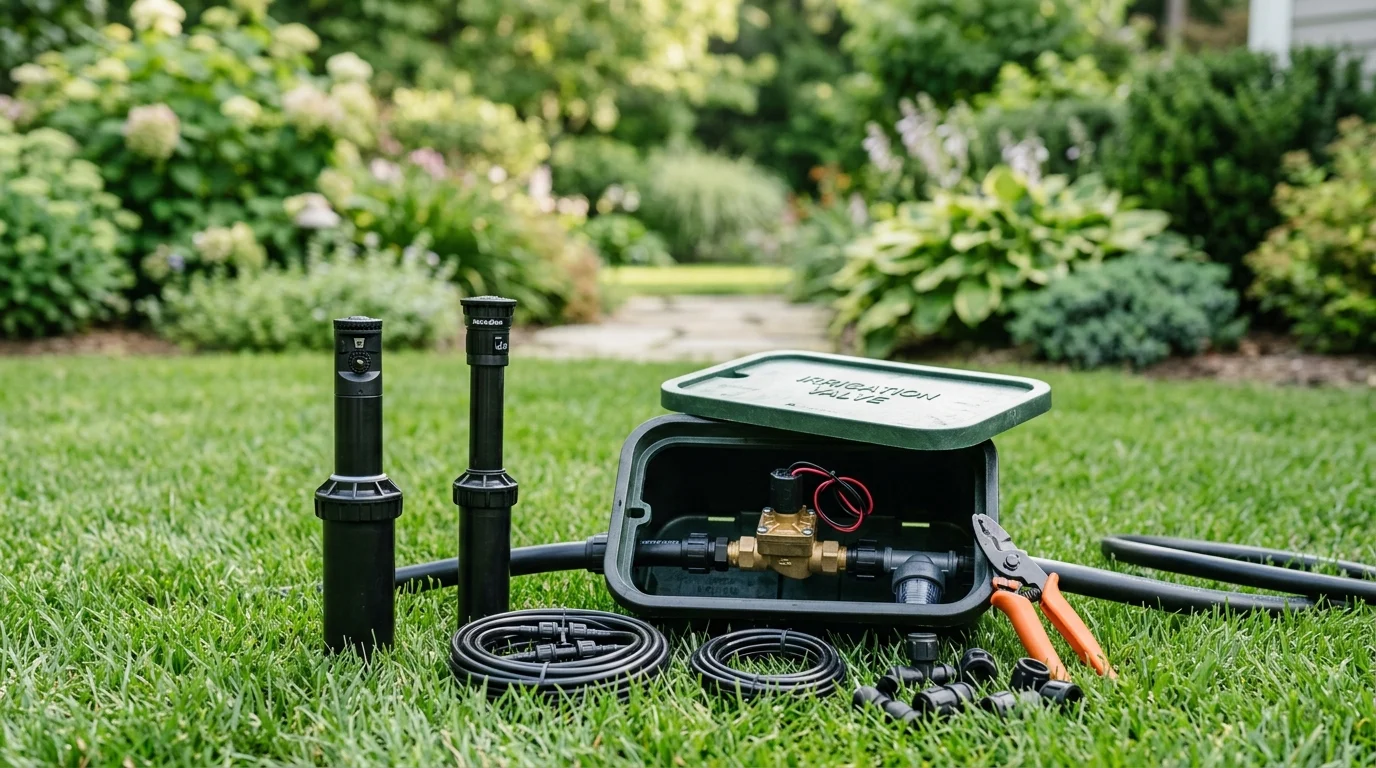
Buying landscape irrigation equipment direct from China can lower unit costs, expand product options, and give importers more control over specifications, but the process also introduces supplier verification, quality control, compliance, and logistics risks. This guide explains how to source wholesale irrigation supplies efficiently, from identifying capable manufacturers and comparing product lines to negotiating terms, checking certifications, and planning shipping. By the end, readers will have a practical framework for evaluating Chinese suppliers and building a more reliable, cost-effective procurement pipeline for commercial or residential irrigation projects.
Why Buyers Source Landscape Irrigation Equipment Direct
Procuring commercial and residential irrigation systems requires navigating complex supply chains where margins are heavily impacted by intermediary markups. As global agricultural and landscaping demands increase, procurement managers are increasingly bypassing domestic wholesalers to source directly from overseas manufacturers. Establishing a direct pipeline to Chinese manufacturing hubs allows importers to secure highly competitive pricing while maintaining stringent oversight over product specifications.
Sourcing directly from the origin point requires substantial upfront effort but yields significant long-term operational advantages. By partnering directly with facilities that engineer landscape irrigation equipment, enterprise buyers can consolidate their purchasing power and customize components to meet specific regional environmental demands.
Pricing, range, and scale advantages
The primary driver for establishing direct factory relationships is the substantial reduction in unit costs. Importers typically realize gross margin improvements ranging from 35% to 45% when transitioning from domestic distributors to direct Chinese manufacturers. This cost advantage is rooted in economies of scale, localized raw material sourcing, and the elimination of multi-tiered distribution markups.
Beyond pricing, direct sourcing unlocks extensive product range capabilities. Manufacturers possess the infrastructure to produce comprehensive catalogs, from low-flow drip emitters to high-pressure brass impact sprinklers. Scaling operations becomes significantly more efficient when a single factory or a consolidated group of regional factories can fulfill high-volume orders, enabling buyers to scale from pallet-level shipments to multiple 40-foot high-cube (40HQ) containers per month without facing inventory bottlenecks.
Best-fit buyer profiles
Direct overseas sourcing is not universally appropriate for all market participants. The model best serves entities with predictable, high-volume inventory turnover. Best-fit profiles include large-scale landscaping contractors, wholesale agricultural suppliers, and regional hardware distributors. These organizations typically possess the logistical infrastructure to handle containerized freight and warehouse bulk inventory.
From a quantitative standpoint, direct sourcing becomes financially viable when an organization’s annual procurement spend on irrigation components exceeds $100,000. Below this threshold, the overhead costs associated with international freight, customs clearance, and quality assurance inspections often erode the per-unit cost savings. Organizations meeting or exceeding this spend threshold are uniquely positioned to leverage direct factory relationships for maximum return on investment.
What to Define Before Requesting Quotes
A successful international procurement strategy begins long before initial supplier contact. Requesting accurate, actionable quotes requires a meticulously defined Request for Quotation (RFQ) package. Ambiguity in product specifications inevitably leads to variance in pricing estimates, sub-standard material substitution, and eventual product failure in the field.
Product categories and specifications
The broad classification of landscape irrigation equipment must be segmented into precise categories such as micro-irrigation systems, rotor sprinklers, solenoid valves, and smart controllers. Each category demands specific technical parameters within the RFQ. For instance, when sourcing drip tapes, buyers must specify wall thickness (typically ranging from 6 mil to 15 mil), emitter spacing, and flow rates (e.g., 0.5 to 2.0 gallons per hour).
For pressurized components like pop-up rotors and valves, operating pressure ranges are critical data points. Specifications must clearly outline the required dynamic pressure thresholds, often demanding stable operation between 15 PSI for low-pressure drip systems up to 80 PSI for commercial rotor applications. Failure to define these parameters allows suppliers to quote entry-level, light-duty products that may not withstand commercial applications.
Material and performance requirements
Material science dictates the longevity and reliability of irrigation components exposed to harsh environmental conditions. Plastics used in outdoor environments must feature UV stabilization to prevent premature degradation. Procurement specifications should mandate compliance with standards such as ISO 4892-2, ensuring polymer housings can withstand 3 to 5 years of intense solar radiation without embrittlement.
Furthermore, specifications must dictate the exact grade of raw materials. Buyers should differentiate between standard Acrylonitrile Butadiene Styrene (ABS) and Polyoxymethylene (POM) for moving gears in sprinkler heads, or specify virgin Polyethylene (PE) over recycled regrind for tubing to maintain burst pressure ratings. For metal fittings, specifying the exact brass alloy (e.g., DZR brass for dezincification resistance) prevents the substitution of inferior, corrosion-prone metals.
Supplier comparison criteria
When evaluating returned quotes, procurement teams must utilize standardized criteria to compare suppliers objectively. A robust evaluation framework weighs technical capabilities against pricing structures.
| Evaluation Metric | Tier 1 Manufacturer | Tier 2 Manufacturer | Trading Company |
|---|---|---|---|
| Core Competency | R&D, Custom Tooling | Mass Production | Sourcing & Consolidation |
| Typical MOQ | 10,000+ units | 5,000 – 10,000 units | 500 – 2,000 units |
| Price Competitiveness | High (for bulk) | Very High (standard parts) | Low to Medium |
| Quality Control | In-house lab testing | Basic line inspection | Outsourced / Variable |
| Lead Time | 30 – 45 days | 20 – 30 days | 15 – 25 days |
Utilizing this matrix allows buyers to align their specific project requirements—whether prioritizing rapid fulfillment of mixed catalogs or demanding custom-engineered components at maximum volume—with the appropriate supplier tier.
How to Vet Chinese Suppliers
Mitigating risk in international supply chains requires rigorous vetting of prospective manufacturing partners. The physical distance and jurisdictional differences necessitate a systematic approach to verifying a supplier’s operational legitimacy, production capacity, and historical quality control metrics before any capital is transferred.
Factory qualifications and capacity
Initial vetting must verify a factory’s formal qualifications, starting with an active ISO 9001:2015 certification to ensure standardized quality management systems are in place. Advanced buyers should request the factory’s Business License and Export License, cross-referencing the registered capital and approved business scope. A registered capital below 1,000,000 RMB often indicates a smaller operation that may lack the financial resilience to handle large-scale commercial orders.
Assessing physical capacity involves reviewing the factory’s equipment list. For plastic irrigation components, buyers should verify the number and tonnage of injection molding machines. A mid-sized capable facility will operate 15 to 30 machines ranging from 100 to 500 tons of clamping force. This data provides a mathematical baseline to calculate true monthly production capacity, ensuring the supplier can reliably meet peak seasonal demand without unauthorized subcontracting.
Samples, pilot orders, and inspections
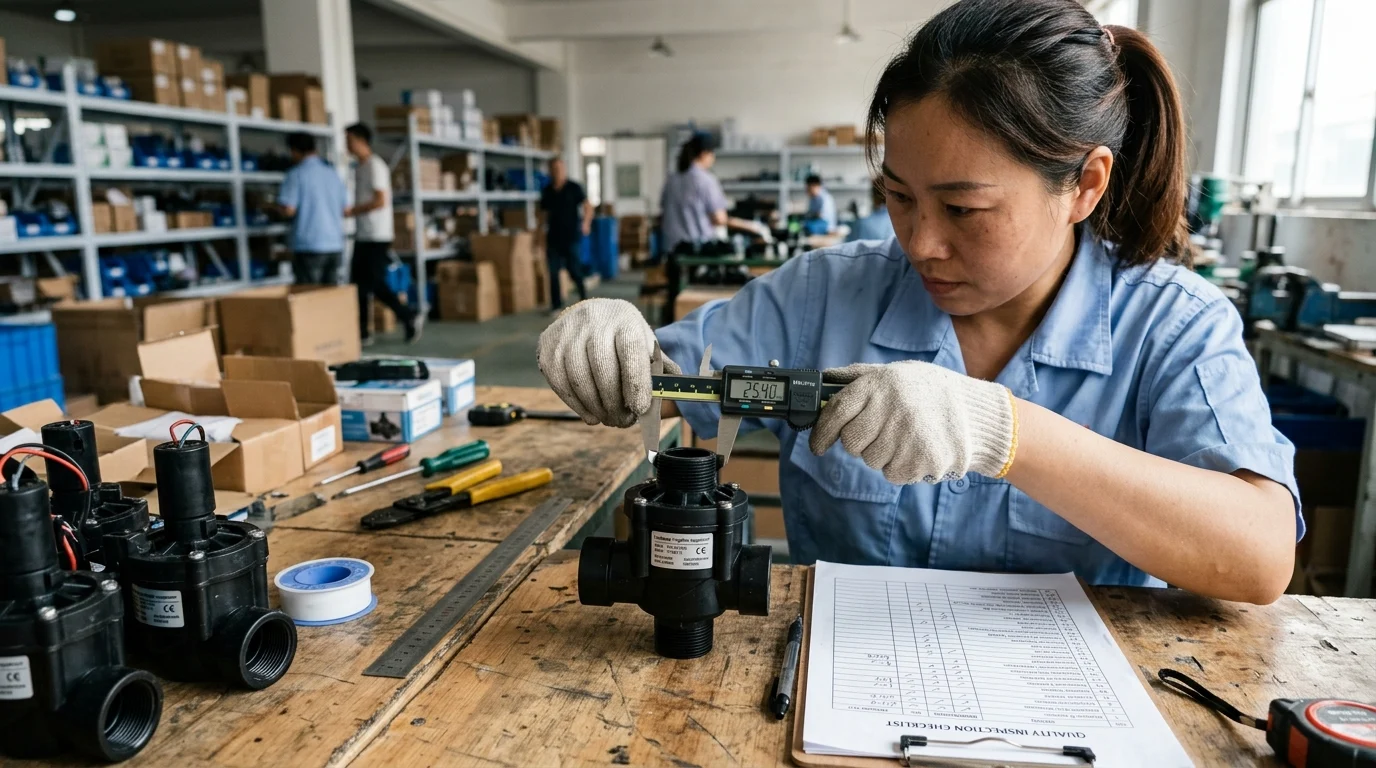
The transition from digital vetting to physical validation requires a structured sampling and pilot order phase. Initial pre-production samples should be subjected to destructive testing, including burst pressure assessments and accelerated UV exposure. Once samples are approved, a pilot order (typically 10% to 20% of a standard production run) validates the factory’s ability to maintain quality at scale.
Third-party inspections are mandatory for professional procurement. Utilizing Acceptable Quality Limit (AQL) standards ensures objective evaluation. A standard threshold for irrigation equipment is AQL 1.5 for major defects (e.g., leaking seals, cracked housings) and AQL 4.0 for minor defects (e.g., cosmetic scratches). Inspections must occur pre-shipment, allowing for rework at the factory level rather than discovering defective inventory upon arrival at the domestic warehouse.
Factory vs trading company selection
A fundamental decision in the vetting process is choosing between a direct factory and a trading company. Factories own the production equipment, control the raw material supply chain, and offer the lowest possible unit cost. However, they often specialize in narrow product categories (e.g., exclusively manufacturing PVC pipe fittings or only assembling solenoid valves) and enforce strict Minimum Order Quantities (MOQs).
Trading companies act as intermediaries, consolidating diverse product lines from multiple factories into a single shipment. While they typically apply a margin markup of 10% to 20%, they provide significant value for buyers requiring mixed containers of diverse irrigation supplies. The optimal choice depends on the buyer’s scale: enterprise buyers requiring millions of specific emitters should partner with direct factories, while mid-sized distributors seeking turnkey catalog fulfillment may find trading companies more operationally efficient.
Total Landed Cost, Compliance, and Logistics
The quoted unit price is only a fraction of the financial equation. Procurement professionals must calculate the Total Landed Cost (TLC) to accurately project profit margins. This comprehensive calculation incorporates tooling amortization, logistical expenses, and the hidden costs of regulatory compliance.
Tooling, MOQs, and Incoterms
Customizing irrigation components requires initial capital expenditure for tooling. Plastic injection molds for specialized sprinkler heads or proprietary valve bodies typically range from $3,000 to $10,000 per mold, depending on cavity count and steel grade (e.g., P20 vs. hardened H13 steel). These costs must be amortized over the projected lifecycle of the product to determine true unit cost.
Furthermore, buyers must negotiate Minimum Order Quantities (MOQs) in conjunction with Incoterms. Standard MOQs for small polymer components like drip emitters often start at 10,000 to 50,000 units. Incoterms define liability and freight responsibilities; Free On Board (FOB) is the industry standard, where the factory covers costs to load the goods onto the vessel at the Chinese port, leaving the buyer to control ocean freight negotiations and insurance.
Certifications and market requirements
Importing agricultural and landscaping products requires strict adherence to regional regulatory standards. In the United States, electronic smart controllers must comply with FCC regulations for radio frequency emissions and often require UL or ETL safety certifications. Water efficiency certifications, such as the EPA WaterSense label, are increasingly mandatory for commercial projects and municipal contracts.
In European markets, components must meet CE marking requirements and the RoHS directive, ensuring products are free from restricted hazardous substances. Failure to secure and verify these certifications prior to shipment can result in customs seizures, costly delays, and total forfeiture of the inventory. The cost of compliance testing, which can range from $1,000 to $5,000 per product family, must be factored into the initial sourcing budget.
Freight, loading, and lead times
Logistics planning dictates cash flow and inventory availability. Ocean freight is the only viable transport method for the volume and weight of irrigation supplies. Buyers must optimize container loads, choosing between a standard 20-foot container (approximately 28 cubic meters of usable space) or a 40-foot High Cube (approximately 68 cubic meters). Shipping partial loads (LCL) significantly increases the per-unit freight cost and risk of damage.
| Cost Component | Typical % of Total Landed Cost | Strategic Notes |
|---|---|---|
| Ex-Works Unit Price | 60% – 70% | Core manufacturing cost; highly sensitive to raw material indices. |
| Ocean Freight (FOB to Port) | 10% – 15% | Fluctuates based on global shipping lane demand and container size. |
| Import Duties & Tariffs | 5% – 25% | Dependent on HS Codes (e.g., 8424.82 for agricultural irrigation). |
| Customs Clearance & Inland | 5% – 10% | Brokerage fees, port handling, and domestic trucking to the final warehouse. |
Lead times require precise forecasting. Standard production cycles span 25 to 40 days, followed by 20 to 30 days of ocean transit, and an additional 7 to 14 days for customs clearance and inland freight. Procurement teams must operate on a 90-to-120-day lead time matrix to prevent stockouts during peak spring and summer landscaping seasons.
How to Decide if Direct China Sourcing Fits
Determining the ultimate viability of direct overseas procurement requires synthesizing operational capabilities with financial projections. The decision to bypass domestic distributors is a strategic shift that demands organizational commitment and rigorous process management.
Step-by-step sourcing process
Executing a direct sourcing strategy follows a systematic, five-step lifecycle. Phase one involves internal auditing to finalize exact technical specifications, packaging requirements, and volume projections. Phase two executes the supplier discovery and vetting process, utilizing structured RFQs and matrix evaluations. Phase three encompasses sampling, tooling development, and pilot production runs.
Phase four is the execution of mass production, integrated with mandatory third-party AQL inspections prior to container loading. Finally, phase five manages the complex logistics chain, from origin port departure through customs clearance and final delivery. Organizations must ensure they have dedicated personnel or experienced procurement partners capable of managing each discrete phase to prevent costly supply chain fractures.
Decision criteria for cost, quality, and risk
The final decision rests on a comprehensive risk-reward analysis.
Further reading:
Key Takeaways
- The most important conclusions and rationale for landscape irrigation equipment
- Specs, compliance, and risk checks worth validating before you commit
- Practical next steps and caveats readers can apply immediately
Frequently Asked Questions
When does direct sourcing irrigation equipment from China make financial sense?
It usually becomes viable when annual irrigation spend exceeds $100,000 and you can handle bulk freight, customs, and warehouse inventory.
What should be included in an RFQ for landscape irrigation equipment?
List exact product type, dimensions, pressure range, material grade, UV requirements, flow rate, packing, and target order quantity to get accurate quotes.
How can buyers verify irrigation product quality before shipment?
Request material specs, test reports, production samples, and a pre-shipment inspection covering pressure performance, leaks, dimensions, and packaging.
Can ZM Inovato help source a full range of landscape irrigation products?
Yes. ZM Inovato offers multiple irrigation product categories, helping buyers consolidate sourcing and compare specifications across related items.
Which materials matter most for durable irrigation components?
Use UV-stabilized plastics, virgin PE tubing, suitable engineering plastics like POM for moving parts, and corrosion-resistant brass such as DZR for fittings.


