
Introduction
Selecting a dependable Chinese factory for gear drive rotary sprinklers is not just about finding a low unit price; it is about securing consistent performance, stable supply, and fewer warranty problems after shipment. This article explains how to evaluate real manufacturing capability, product quality control, production capacity, and supplier transparency so you can separate experienced sprinkler makers from traders and unreliable assemblers. By the end, you will know which factory signals matter most, what risks to check early, and how to choose a partner that supports long-term procurement rather than short-term cost savings.
Why Choosing a Reliable Chinese Factory Matters
Sourcing gear drive rotary sprinklers from China offers significant cost advantages, but the market is highly fragmented. Buyers must distinguish between genuine manufacturers with in-house engineering and trading companies that merely assemble off-the-shelf components. Partnering with a reliable factory directly impacts your brand’s reputation, warranty claims, and bottom line.
A dedicated gear drive sprinkler factory will have specialized tooling, a robust supply chain for raw materials, and the technical expertise required to handle complex hydrodynamic designs. Understanding the landscape of Chinese irrigation manufacturing is the first step toward securing a stable, long-term supply chain.
Factory capability and product consistency
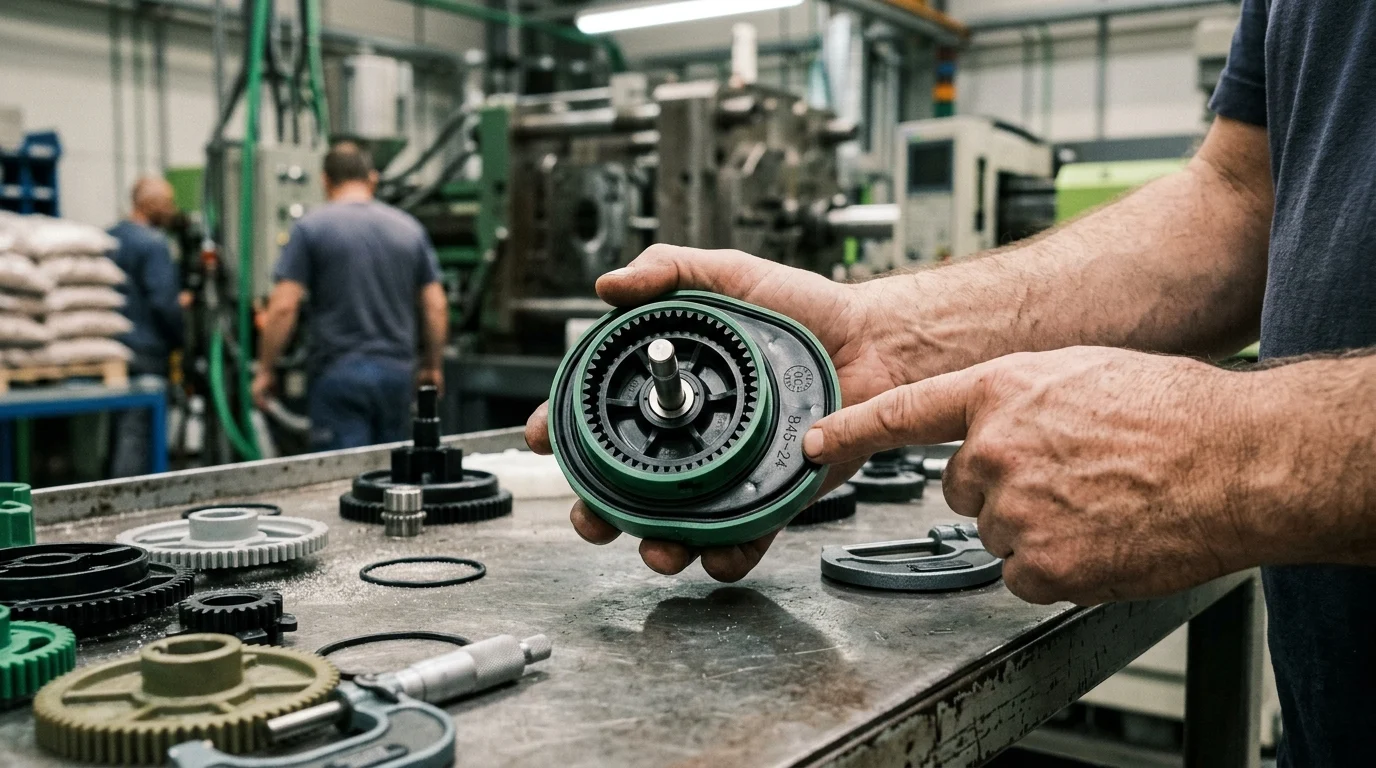
Top-tier factories invest heavily in automated injection molding and CNC machining for precision components. In the production of gear-driven irrigation heads, dimensional accuracy is paramount. A reliable factory maintains injection molding tolerances within ±0.05 mm, ensuring that internal gears mesh perfectly without excessive friction or premature wear.
Furthermore, capable factories demonstrate scalable production capacities. A mature facility should comfortably handle production runs of 100,000 to 250,000 units per month while maintaining strict product consistency. This consistency is achieved through automated assembly lines and centralized raw material feeding systems, which minimize human error and material contamination.
Key sourcing risks for buyers
Navigating the Chinese manufacturing landscape carries inherent risks, particularly when vetting suppliers remotely. One major risk is raw material substitution. Unscrupulous suppliers might quote prices based on virgin POM (polyoxymethylene) for internal gears but substitute it with up to 30% recycled plastics during mass production, drastically reducing the sprinkler’s lifespan.
Another critical risk is inconsistent quality control leading to high defect rates. While a premium factory maintains defect rates below 1.5%, poorly managed facilities can ship batches with defect rates exceeding 8%, resulting in leaking seals, stuck rotation mechanisms, and uneven water distribution. Buyers also face intellectual property risks; without proper NDAs and NNN (Non-Disclosure, Non-Use, Non-Circumvention) agreements, proprietary nozzle designs can easily end up in a competitor’s catalog.
How to Compare Rotary Sprinkler Suppliers
Once you have identified potential manufacturing partners, the next phase is a rigorous technical comparison. Relying solely on marketing brochures or online marketplace profiles is insufficient. Buyers must evaluate the specific types of irrigation equipment a factory produces and scrutinize their technical specifications to gauge true engineering capabilities.
Sprinkler types and product differences
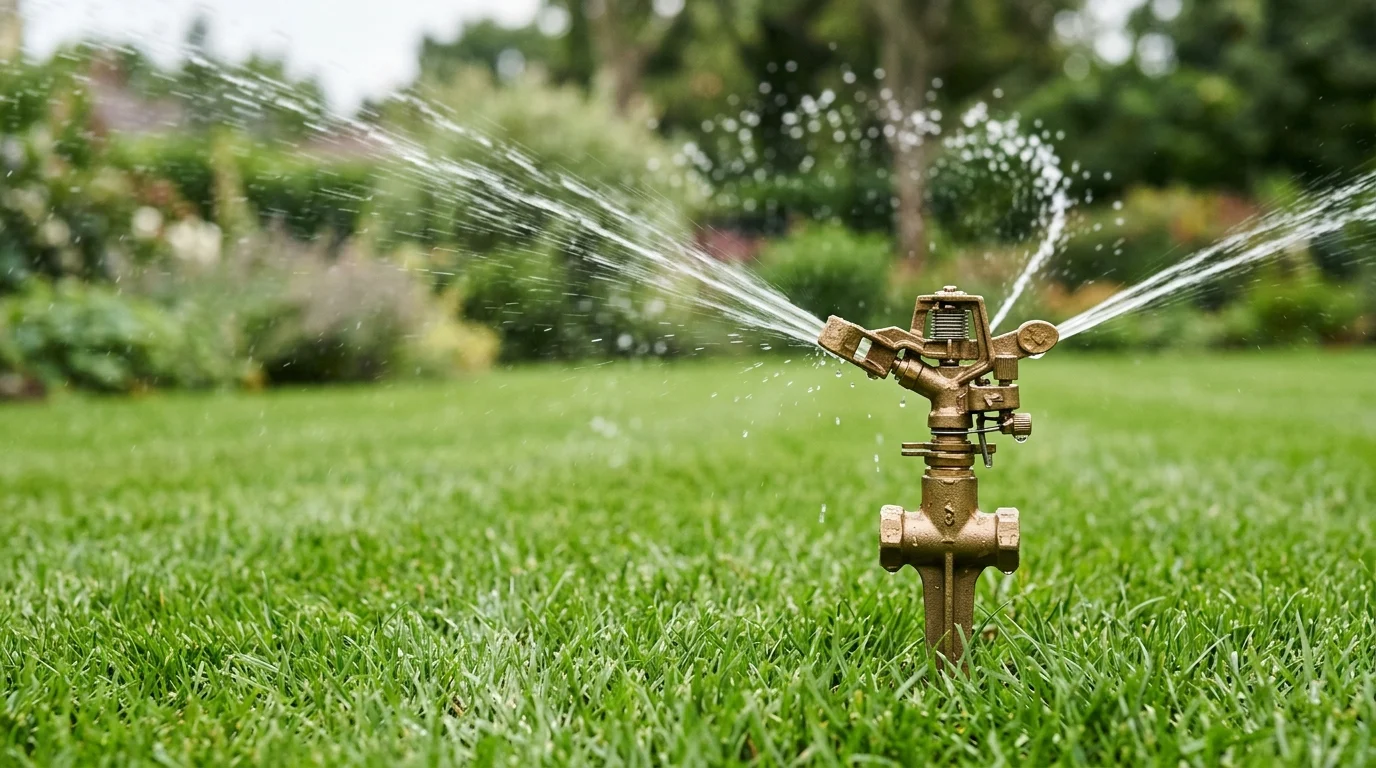
Gear drive sprinklers come in various configurations, primarily categorized by their application: residential lawns, commercial turf, or agricultural fields. A proficient factory will offer a comprehensive portfolio ranging from 1/2-inch short-range pop-ups to 1-inch heavy-duty commercial rotors.
| Sprinkler Category | Inlet Size | Typical Throw Radius | Common Applications |
|---|---|---|---|
| Short-Range Residential | 1/2″ Female | 4.0m – 8.5m | Small lawns, tight landscape beds |
| Medium-Range Commercial | 3/4″ Female | 7.5m – 15.0m | Parks, residential yards, light commercial |
| Long-Range Heavy Duty | 1″ Female | 14.0m – 24.0m | Sports fields, golf courses, large public parks |
Factories that only produce a single type of 3/4-inch rotor may lack the R&D resources to innovate or customize products for diverse market needs. Conversely, a factory with a wide array of standardized models demonstrates mature tooling and deep industry knowledge.
Technical specifications that show factory strength
A factory’s technical capabilities dictate the performance and durability of the final product. Key specifications to review include the operating pressure range, flow rates, and precipitation uniformity. High-quality rotary sprinklers should operate efficiently across a broad pressure spectrum, typically from 2.0 to 4.5 bar (30 to 65 PSI).
Buyers should also evaluate the nozzle technology. Ask suppliers for performance charts detailing the trajectory angle (standard is often 25°, low angle is 11° to 15°) and the corresponding flow rates in gallons per minute (GPM) or cubic meters per hour (m³/h). A factory that can provide certified, third-party validated performance charts demonstrating a Distribution Uniformity (DU) of 75% or higher is highly likely to possess strong engineering and testing capabilities.
How to Evaluate Quality Control and Compliance
Robust quality control (QC) separates reliable manufacturers from opportunistic assemblers. Since gear-driven heads are installed underground and subjected to high water pressure, grit, and environmental stress, even minor manufacturing flaws can lead to catastrophic system failures. Evaluating a factory’s QA protocols before placing an order is non-negotiable.
Quality assurance processes and testing methods
Standard QA protocols for irrigation equipment must include rigorous life-cycle and stress testing. A reputable factory will conduct cycle testing, where sprinkler heads are subjected to 10,000 to 15,000 continuous rotation cycles under maximum operating pressure to simulate years of field use.
Additionally, burst pressure testing is critical to ensure the integrity of the plastic housing and sonic welds. High-quality housings should withstand static burst pressures up to 10 bar (145 PSI) without cracking or seal blowout. Sand and grit tolerance testing, where sprinklers operate in a slurry of fine sand, is also essential to verify the effectiveness of the wiper seals and the enclosed gear drive mechanism.
Certifications, material standards, and export compliance
Compliance with international standards ensures that the products meet safety, environmental, and performance benchmarks required for import. Verify that the factory holds an active ISO 9001:2015 certification for quality management. For the European market, CE marking and RoHS compliance (restricting hazardous substances in any electronic components or brass alloys) are mandatory.
Material standards are equally important. Ensure the factory specifies the use of UV-stabilized ABS or heavy-duty polyethylene for the outer casing, and stainless steel (grade 304 or 316) for retraction springs and adjustment screws. Request material safety data sheets (MSDS) and certificates of analysis (CoA) from their raw material suppliers to confirm compliance.
Comparison points for shortlisting suppliers
When placing suppliers side-by-side, establish clear comparison metrics. Look at their Acceptable Quality Limit (AQL) standards. A reliable factory will typically agree to a third-party inspection based on AQL 1.5 for major defects and AQL 4.0 for minor defects.
| Evaluation Metric | Substandard Supplier | Premium Supplier |
|---|---|---|
| Incoming Material QC | Random visual checks | Spectrometer testing for brass/plastics |
| In-process Inspection | End-of-line only | Hourly sampling (dimensional & pressure) |
| Traceability | Batch numbers only | Laser-etched date codes on every unit |
| Warranty Offered | 1 Year | 3 to 5 Years |
Use these comparison points to filter out suppliers who view quality control as an afterthought rather than an integrated manufacturing process.
How to Assess Cost, MOQ, Lead Time, and Supply
Procurement managers must look beyond the initial unit price to understand the total cost of ownership. Balancing cost with Minimum Order Quantities (MOQ), production lead times, and long-term supply stability is critical. Understanding a manufacturer’s dealer policy can also shed light on how they manage regional distribution and protect their B2B partners from market saturation.
Main cost drivers
The primary variables affecting the Free On Board (FOB) price of irrigation equipment are raw materials, tooling amortization, and labor. Material costs typically account for 40% to 50% of the total unit price. Fluctuations in global petroleum prices directly impact the cost of ABS, POM, and polycarbonate resins used in manufacturing.
Another significant cost driver is the inclusion of premium features, such as pre-installed check valves (to prevent low-head drainage up to 3 meters of elevation change) or specialized brass nozzles. While these features may increase the unit cost by $0.30 to $0.80, they significantly enhance the product’s marketability and performance.
MOQ, production scheduling, and spare parts availability
Order volumes dictate production prioritization. Standard MOQs for customized or OEM gear drive sprinklers typically range from 2,000 to 5,000 pieces per model. However, factories may offer lower MOQs (e.g., 500 units) for off-the-shelf models in standard packaging.
Production lead times generally hover around 25 to 35 days for repeat orders, but initial orders requiring custom packaging or new tooling can take 45 to 60 days. It is also crucial to negotiate the availability of spare parts. Ensure the supplier guarantees the availability of replacement nozzles, filter screens, and wiper seals for at least 3 to 5 years after the initial purchase.
Supplier audits and sample approval steps
Before committing to a long-term contract, conduct a comprehensive supplier audit. If an in-person visit is not feasible, hire a reputable third-party auditing firm (such as SGS or TÜV Rheinland) to assess the factory’s technical capability, social compliance, and financial health.
The sample approval step is the final technical hurdle. Request a batch of 10 to 20 sample units. Do not just inspect them visually; install them in a test field to evaluate rotation speed, arc adjustment ease, and throw distance against the provided specifications. Only authorize mass production after a ‘Golden Sample’ has been signed off and sealed by both parties.
How to Make the Final Supplier Decision
The final stage of procurement involves synthesizing all collected data into an actionable decision. This requires a structured approach to ensure emotions or exceptionally low pricing do not cloud judgment. Establishing a clear channel of communication, often starting through a formal contact us inquiry, sets the tone for future negotiations and dispute resolution.
Supplier scoring criteria
Implementing a weighted scorecard is the most effective way to evaluate finalists. Assign percentage weights to the categories that matter most to your business model. For example, a standard B2B distribution model might weight criteria as follows: Quality & Certifications (35%), FOB Price (25%), Production Capacity & Lead Time (20%), and Communication & Support (20%).
Score each supplier on a scale of 1 to 5 within these categories. A factory that scores highly on price but fails to provide clear English communication or transparent QC documentation will ultimately cost more in management time and defect resolution down the line.
Negotiation points and trial order criteria
Effective negotiation extends beyond unit pricing. Focus on payment terms, seeking to move from a standard 30% advance / 70% before shipment to more favorable terms (like 70% against the Bill of Lading) as the relationship matures. Also, negotiate clear penalties for late shipments, typically 0.5% of the order value per week of delay, capped at 5%.
Always initiate the partnership with a trial order. A standard trial order should consist of 1,000 to 2,000 units—enough to test the factory’s mass production consistency, packaging durability during ocean transit, and adherence to agreed-upon lead times, but small enough to mitigate financial risk before scaling up to full 40-foot container loads (which can hold upwards of 40,000 units).
Further reading:
Key Takeaways
- The most important conclusions and rationale for rotary sprinklers
- Specs, compliance, and risk checks worth validating before you commit
- Practical next steps and caveats readers can apply immediately
Frequently Asked Questions
How can I tell if a Chinese supplier is a real gear drive sprinkler factory?
Ask for factory audit reports, production videos, machine lists, and in-house testing records. Real manufacturers usually show molding, assembly, and QC processes, not just catalogs.
What quality benchmarks should rotary sprinkler buyers check?
Verify operating pressure range, flow charts, trajectory angles, DU data, and defect rates. A strong factory should provide test reports and keep defects below about 1.5%.
Why does raw material verification matter for gear drive sprinklers?
Internal gears and seals depend on stable materials like virgin POM. Confirm material specs, batch traceability, and incoming inspection records to avoid premature wear and leaks.
What production capacity is reasonable for a reliable sprinkler factory?
For established rotary sprinkler factories, monthly capacity of roughly 100,000 to 250,000 units is a practical sign they can support repeat orders with consistent quality.
Can zm-inovato.com help compare different rotary sprinkler models?
Yes. Review the product range on zm-inovato.com and request specs such as inlet size, throw radius, pressure range, and nozzle options to match your market needs.

