
Introduction
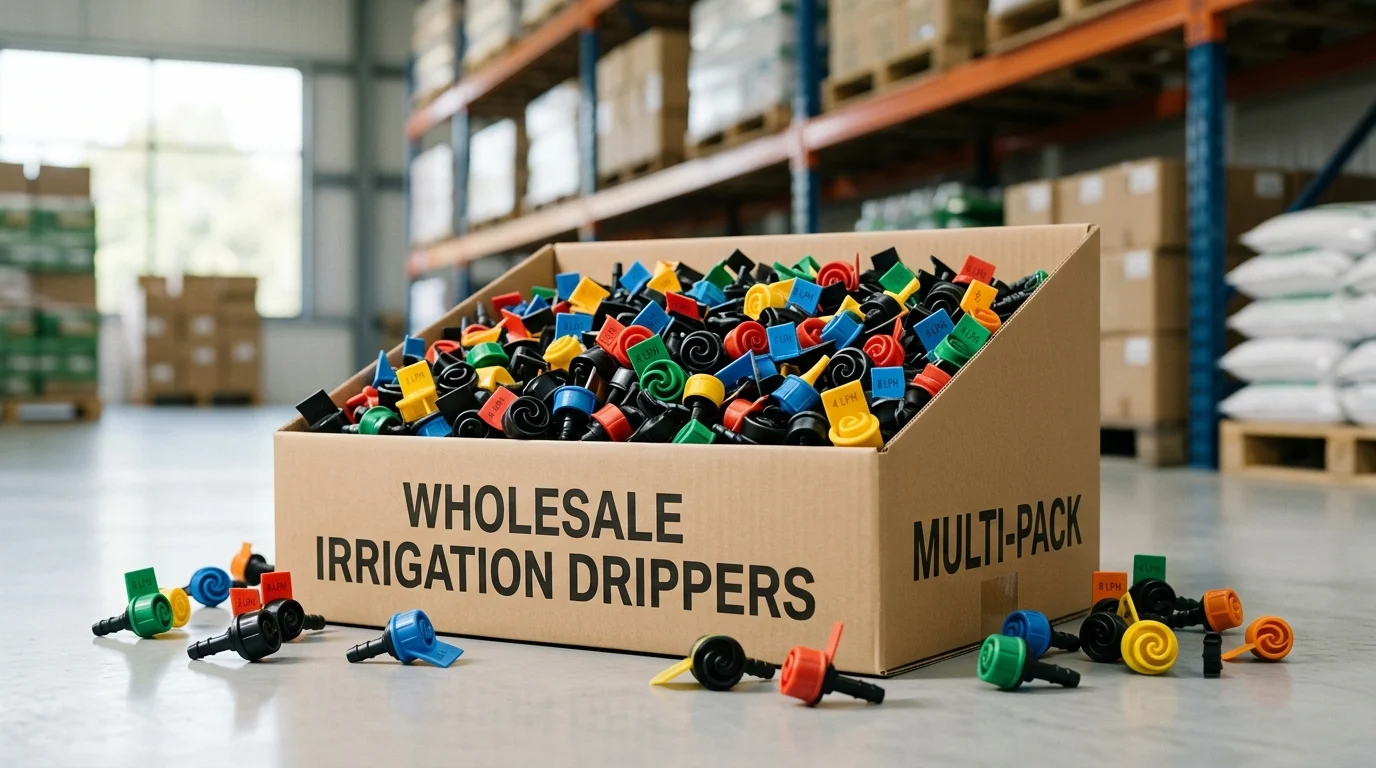
Choosing wholesale flag drippers is not just a purchasing decision; it shapes system reliability, maintenance demands, and water distribution across the entire irrigation project. The right emitter must match crop spacing, pressure conditions, water quality, and target flow rates while still making sense at bulk pricing levels. Small differences in dripper design can affect clogging risk, flushing efficiency, and distribution uniformity, especially on large sites where thousands of units are installed. This article explains the key specifications, cost considerations, and supplier factors to review so you can compare options with confidence and select drippers that support both short-term budgets and long-term field performance.
Why wholesale flag drippers matter in irrigation planning
Flag drippers are fundamental components in commercial agricultural irrigation, distinguished by their twist-open top mechanism that allows for rapid manual flushing and cleaning. For project managers and agricultural planners, selecting the right emitters is a critical early-stage decision that dictates both immediate capital expenditure and long-term crop yield.
When designing systems for expansive agricultural tracts, the sheer volume of emitters required shifts the procurement strategy from retail purchasing to bulk sourcing. Understanding the technical and economic nuances of these devices ensures that irrigation systems perform reliably across diverse environmental conditions.
Impact on cost and distribution uniformity
Sourcing these components in bulk significantly impacts a project’s capital expenditure. While retail pricing for individual emitters might hover around $0.15 to $0.20 per unit, securing them through wholesale channels can reduce unit costs to a band of $0.03 to $0.06. A standard 10-acre orchard, depending on planting density, might require upwards of 5,000 to 8,000 drippers. At this scale, wholesale procurement translates to thousands of dollars in immediate savings.
Beyond upfront costs, the primary performance metric for any irrigation system is Distribution Uniformity (DU). High-quality emitters ensure a DU rating exceeding 85%, meaning water and fertigation nutrients are delivered consistently across the entire crop stand. Poor-quality drippers with high flow variance will result in uneven watering, leading to localized waterlogging or drought stress, which ultimately degrades crop uniformity and harvest value.
Best-fit applications and purchase priorities
The distinct manual-flush design of flag drippers makes them exceptionally well-suited for applications where water quality is marginal or prone to particulate contamination. Their best-fit applications include tree crops, vineyards, commercial nurseries, and complex landscaping projects where individual plant targeting is necessary.
When establishing purchase priorities, buyers must evaluate the specific needs of their crop alongside the water source quality. For surface water sources with high organic loads, prioritizing easy-to-clean flag mechanisms is essential. Engaging with reputable suppliers of wholesale flag drippers allows project managers to match the emitter’s specifications to the exact demands of the local topography and filtration capabilities.
Technical specifications to compare when selecting wholesale flag drippe
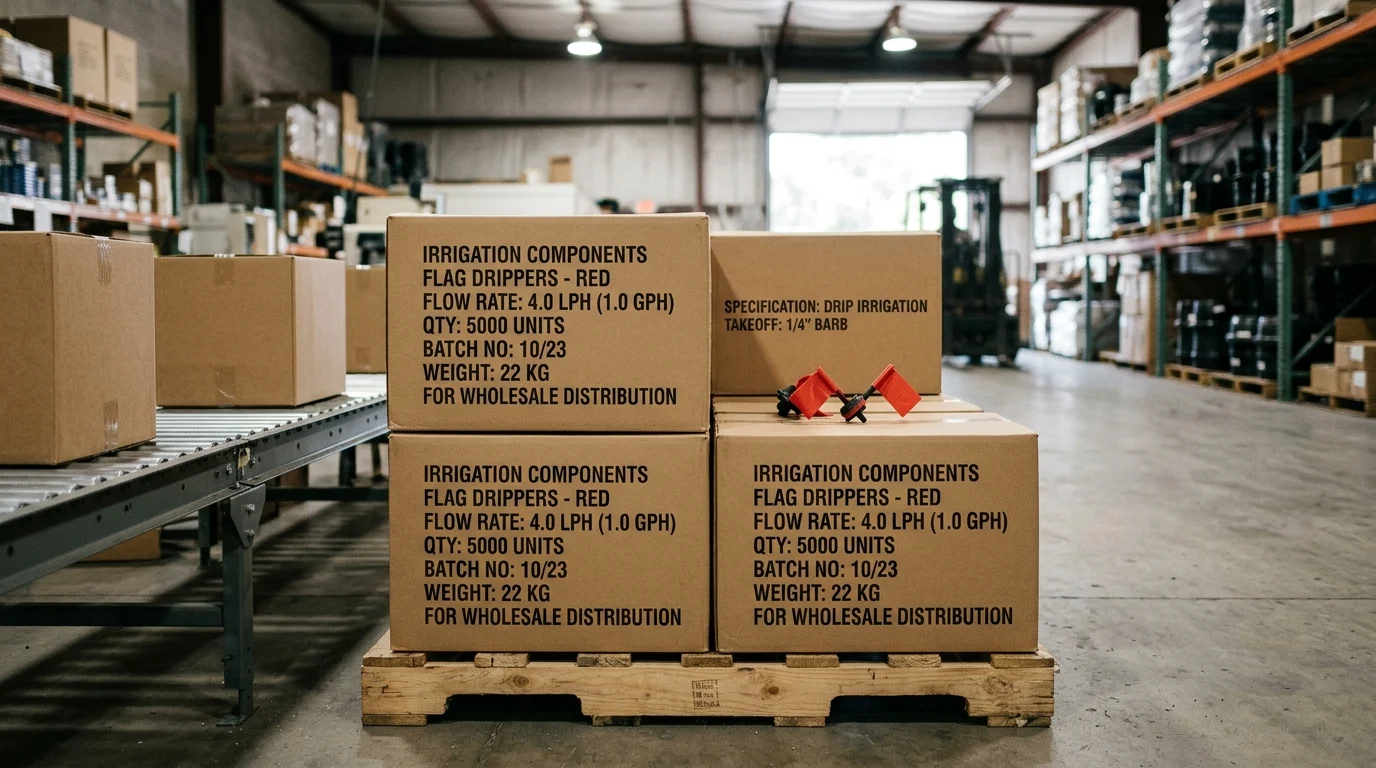
Evaluating technical specifications ensures that the chosen emitters align perfectly with the hydraulic design of the broader irrigation infrastructure. Moving beyond basic utility, project engineers must scrutinize flow dynamics, material composition, and pressure ratings to guarantee system longevity.
Flow rate, pressure range, and wetting pattern
Flow rates for standard flag drippers are traditionally standardized and color-coded for rapid field identification. Common specifications include 1.0 Gallon Per Hour (GPH) or 4.0 Liters Per Hour (L/H), 2.0 GPH (8.0 L/H), and 4.0 GPH (16.0 L/H). The optimal operating pressure for standard non-compensating flag drippers typically ranges from 10 to 15 PSI, with a maximum functional threshold generally capped at 25 PSI.
| Color Code | Standard Flow Rate (GPH) | Metric Equivalent (L/H) | Typical Application |
|---|---|---|---|
| Black | 1.0 GPH | 4.0 L/H | Dense nurseries, heavy soils |
| Green / Blue | 2.0 GPH | 8.0 L/H | Vineyards, medium loams |
| Red | 4.0 GPH | 16.0 L/H | Mature orchards, sandy soils |
The wetting pattern of a flag dripper is localized, creating a concentrated wetted bulb beneath the emitter. This makes them ideal for targeted root-zone irrigation rather than broad surface coverage, minimizing evaporation and weed growth in the inter-row spaces.
Material quality and clogging resistance
Material integrity directly correlates with field longevity and resilience against environmental degradation. Industrial-grade flag drippers are manufactured from UV-stabilized polypropylene or high-impact ABS plastics. This chemical composition is vital for resisting both solar radiation and the corrosive effects of agricultural fertilizers injected through the system.
Clogging resistance is engineered through the internal turbulent flow path of the dripper. A wider, precisely molded labyrinth prevents the buildup of silt and algae. High-quality wholesale units are designed to operate continuously for a minimum five-year field lifecycle before requiring wholesale replacement, provided standard filtration (typically 120 to 150 mesh) is maintained at the pump station.
When to choose pressure-compensating or inline alternatives
Standard flag drippers are inherently non-pressure compensating (non-PC), meaning their flow rate will fluctuate based on the pressure in the lateral line. This is highly efficient for flat terrain where pressure remains relatively constant. However, if an agricultural project features elevation changes exceeding a 5% grade, or if lateral lines extend beyond 300 feet, Pressure Compensating (PC) drippers become a necessary alternative to ensure the first and last plants receive identical water volumes.
Similarly, while flag drippers offer unmatched flexibility for punch-in installations on blank polyethylene tubing, inline drip tubing (where emitters are pre-welded inside the pipe at factory-set intervals) is often preferred for high-density, uniform row crops like strawberries or vegetables due to lower installation labor costs.
How to evaluate wholesale flag dripper suppliers
The operational success of an irrigation system relies heavily on the capabilities and quality assurance protocols of the manufacturing partner. Engaging with established suppliers of wholesale flag drippers guarantees that the physical products meet the strict tolerances required for commercial agriculture.
Manufacturing controls, sample testing, and batch consistency
Stringent manufacturing controls mitigate the risk of uneven flow rates across large batches. Because the internal labyrinth of a flag dripper dictates its hydraulic performance, injection molding tolerances must be maintained within +/- 0.1 mm. Even microscopic flashing (excess plastic) inside the flow path can drastically alter the GPH output.
Procurement managers should request documentation on the manufacturer’s sample testing protocols. Leading factories perform randomized bench testing on every production run to verify flow consistency at standard 15 PSI pressures. For bulk wholesale orders, the acceptable defect rate—including leaking seals or blocked labyrinths—should be strictly guaranteed at less than 0.5%.
Certifications, water-contact compliance, and regional standards
Suppliers should demonstrate compliance with recognized international agricultural standards. The primary benchmark is ISO 9261, which specifies mechanical and functional requirements for agricultural irrigation emitters and emitting pipes. Compliance with this standard assures the buyer that the drippers have passed rigorous tests for uniformity, resistance to hydrostatic pressure, and flow rate accuracy.
Additionally, if the irrigation system is utilized in environments with strict environmental regulations, water-contact compliance becomes relevant. The plastics used must not leach harmful phthalates or heavy metals into the water supply, adhering to regional standards such as RoHS or REACH where applicable. Verifying these certifications during the supplier evaluation phase prevents costly compliance failures during facility audits.
Commercial and logistics factors behind landed cost
The baseline per-unit price of an emitter is only one component of the total landed cost. Procurement managers must account for a complex matrix of logistics, import duties, packaging efficiency, and the labor required to deploy the system in the field.
MOQ, packaging, lead times, and shipping terms
Minimum Order Quantities (MOQs) for factory-direct wholesale purchasing typically range from 50,000 to 100,000 units per flow-rate variant. Purchasing at these volumes requires careful inventory planning. Packaging is usually handled in bulk polybags of 500 to 1,000 units, packed into master cartons to optimize pallet space for freight.
Lead times are a critical logistics factor. Standard production and transit times can span 21 to 45 days, heavily dependent on the agreed shipping terms (e.g., FOB vs. DDP). Failing to align lead times with the planting season can result in delayed deployment and severe agricultural losses.
Failure, replacement, and installation cost considerations
When calculating the true cost of irrigation components, labor and failure rates must be quantified. The manual labor required to punch holes and install individual flag drippers into polyethylene laterals often costs more than the dripper itself, averaging $0.10 to $0.25 per unit depending on regional agricultural wage rates.
| Cost Component | Estimated % of Total Installed Cost | Strategic Consideration |
|---|---|---|
| Emitter Unit Price | 15% – 20% | Driven by MOQ and material quality |
| International Freight & Duties | 10% – 15% | Varies by shipping terms (FOB/CIF) |
| Installation Labor | 50% – 60% | Highest cost variable; requires ergonomic dripper designs |
| Replacement / Maintenance | 10% – 15% | Minimized by purchasing high-durability, low-defect units |
A dripper that saves $0.01 upfront but fails at a 3% rate will incur heavy secondary labor costs for field scouting and replacement. Therefore, the landed cost analysis must always factor in the projected failure and replacement rates over the system’s 5- to 10-year lifespan.
How to choose the right wholesale flag drippers
Finalizing a procurement decision requires a structured approach that weighs immediate capital outlay against long-term operational reliability. A systematic selection process ensures that the chosen components will perform efficiently under the specific hydraulic and environmental conditions of the project.
Step-by-step selection process
The selection process begins with a comprehensive audit of the site’s hydraulic requirements, establishing the necessary flow rates, operating pressures, and filtration limits. Once the technical parameters are defined, buyers should shortlist suppliers and request sample batches of 100 to 500 units for physical bench testing and field trials.
During the trial phase, technicians should evaluate the insertion force required to punch the dripper into the lateral line, as well as the ease of opening the flag mechanism for flushing. Finally, buyers should engage the supplier to confirm commercial terms; reaching out directly to a manufacturer of wholesale flag drippers ensures absolute alignment on MOQs, warranty terms, and delivery schedules before a master purchase agreement is signed.
Final criteria to balance price, reliability, and performance
Ultimately, the decision rests on balancing unit price with field reliability. While aggressive cost-cutting on emitters might reduce initial capital expenditures, it introduces severe risks to crop uniformity and maintenance budgets.
The ideal wholesale flag dripper offers a verifiable flow consistency within a 5% deviation, features a robust UV-resistant polymer construction, and is backed by a supplier with transparent ISO certifications. By prioritizing these final criteria, agricultural operators can secure an irrigation infrastructure that maximizes water efficiency, reduces labor overhead, and directly supports optimal crop yields.
Further reading:
Key Takeaways
- The most important conclusions and rationale for wholesale flag drippers
- Specs, compliance, and risk checks worth validating before you commit
- Practical next steps and caveats readers can apply immediately
Frequently Asked Questions
What flow rate should I choose for wholesale flag drippers?
Match it to soil and crop: 1.0 GPH for heavy soils, 2.0 GPH for vineyards and loams, and 4.0 GPH for sandy soils or mature orchards.
When are flag drippers better than other emitters?
They work best where manual flushing matters, especially in orchards, vineyards, nurseries, and landscapes using water with higher particulate content.
What pressure range is suitable for standard flag drippers?
Most non-compensating flag drippers perform best at 10–15 PSI and should generally stay below 25 PSI for stable operation.
How can I reduce clogging in a wholesale flag dripper system?
Use 120–150 mesh filtration, choose drippers with a wide turbulent flow path, and flush the twist-open flag regularly when water quality is marginal.
Where can I source wholesale flag drippers for large irrigation projects?
You can review bulk irrigation options and product specs through ZM Inovato at zm-inovato.com/products/ to compare drippers for project needs.


