
Introduction
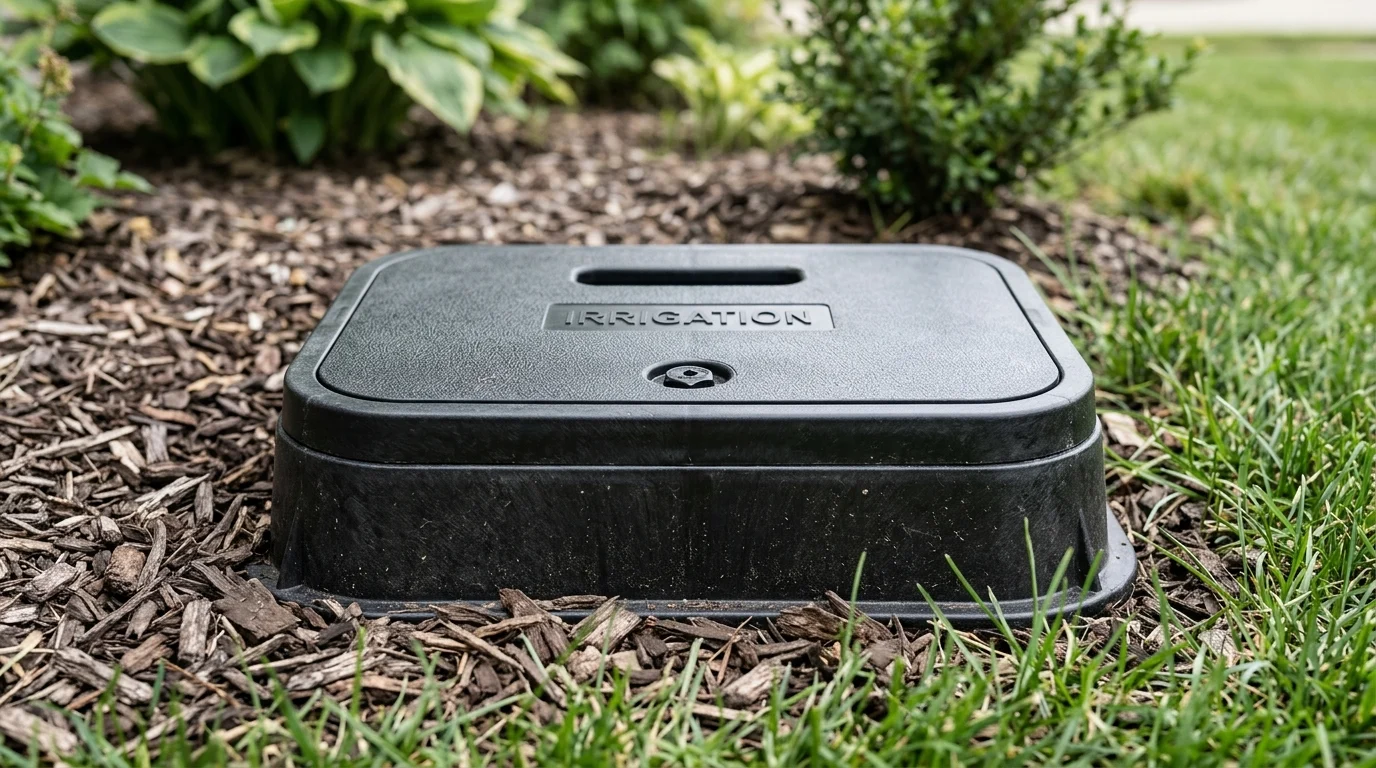
Sun exposure is one of the most overlooked causes of failure in outdoor irrigation systems, especially where plastic enclosures protect valves, wiring, and manifolds. A UV-resistant valve box addresses this risk by preventing the cracking, embrittlement, and structural loss that standard materials can develop after prolonged exposure. For contractors, property managers, and system designers, that choice affects maintenance frequency, component safety, and long-term operating cost. This article explains how ultraviolet degradation impacts valve box performance, why material stability matters in above-ground and partially exposed installations, and what benefits UV-resistant designs offer for durability, access, and system reliability.
Why UV-Resistant Valve Boxes Matter
Outdoor irrigation systems rely on protective enclosures to shield critical components, such as solenoids, manifolds, and electrical wiring, from environmental hazards. While moisture and soil pressure are common concerns, one of the most pervasive threats to these enclosures is ultraviolet (UV) radiation from the sun. Continuous exposure to direct sunlight causes untreated plastics to undergo rapid chemical degradation, compromising the structural integrity of the entire irrigation network.
Implementing a dedicated UV-resistant valve box is a critical engineering decision for commercial and residential landscaping projects. By mitigating the damaging effects of solar radiation, these specialized enclosures ensure that vital water management infrastructure remains secure, accessible, and functional over extended periods, drastically reducing the total cost of ownership.
UV degradation and maintenance risk
When standard polymers like untreated high-density polyethylene (HDPE) or polypropylene (PP) are exposed to prolonged sunlight, they experience photo-oxidation. This chemical reaction breaks the molecular chains within the plastic, leading to a phenomenon known as polymer embrittlement. Industry testing demonstrates that untreated plastics can lose up to 50% of their baseline tensile strength within just 12 to 18 months of continuous exposure in high UV-index environments.
As the material degrades, the maintenance risk scales exponentially. Embrittled lids are highly susceptible to cracking under minimal weight, exposing internal valves to dirt, debris, and water ingress. Furthermore, the financial burden of replacing a shattered box is significant; standard replacement operations typically cost $50 to $150 per unit when factoring in both material costs and the labor required to excavate and reinstall the enclosure.
Who benefits from UV-resistant designs
The integration of UV-stabilized infrastructure provides immediate advantages across multiple sectors. Municipalities managing expansive public parks, highway medians, and sports complexes benefit immensely, as these locations often lack natural shade and expose equipment to relentless solar radiation. For commercial agriculture and golf course management, where irrigation downtime can lead to massive crop or turf losses, structural reliability is non-negotiable.
Additionally, landscaping contractors and property developers utilize UV-resistant designs to reduce warranty callbacks. By installing enclosures that withstand harsh environmental conditions, contractors protect their profit margins from post-installation maintenance requests, ensuring that the irrigation system performs optimally long after the initial site handover.
What Makes a Valve Box UV-Resistant
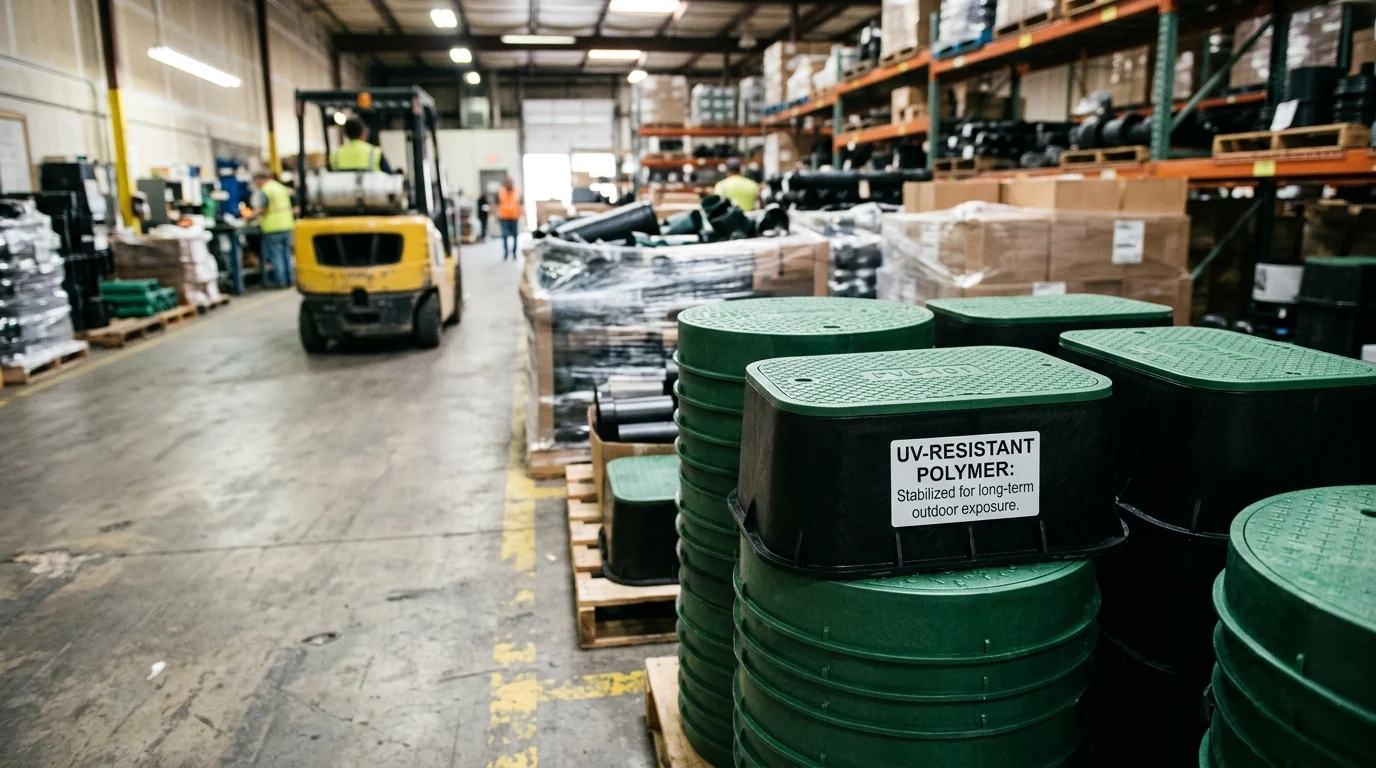
The fundamental difference between a standard enclosure and a premium UV-resistant valve box lies in the polymer chemistry and the precision of the manufacturing process. While HDPE and PP remain the preferred base resins due to their excellent moisture resistance and impact strength, they require specific chemical interventions to survive prolonged solar radiation without deteriorating.
Materials, additives, and construction
To achieve true UV resistance, manufacturers compound the base polymer with specialized additives during the extrusion or injection molding phase. The most common and effective additive is carbon black. When introduced at a precise concentration of 2% to 3% by weight, carbon black acts as a highly effective UV absorber, transforming harmful UV rays into harmless thermal energy before they can break the polymer chains.
In applications where black enclosures are aesthetically undesirable—such as green lids designed to blend with turf—manufacturers utilize hindered amine light stabilizers (HALS) or UV absorbers like benzotriazoles. These chemical stabilizers scavenge the free radicals generated by UV exposure, preventing the photo-oxidation cycle from propagating through the material matrix. High-quality UV-resistant valve box models often undergo rigorous accelerated weathering tests, such as ASTM D4329, enduring over 2,000 hours of simulated solar radiation to verify additive efficacy.
How UV-resistant models compare with standard boxes
Comparing standard enclosures to their UV-stabilized counterparts reveals stark contrasts in both physical properties and operational longevity. While standard boxes may present a lower initial procurement cost, their rapid degradation in outdoor environments quickly negates any upfront savings.
| Metric | Standard Valve Box | UV-Resistant Valve Box |
|---|---|---|
| Additive Concentration | 0% (or trace colorants) | 2% – 3% carbon black or HALS |
| Tensile Strength Retention | < 50% after 18 months | > 90% after 60 months |
| Color Fading | Severe fading within 1 year | Minimal fading over 5+ years |
| Embrittlement Risk | High (susceptible to mower damage) | Low (maintains impact resistance) |
How UV Resistance Improves Lifecycle Performance
The true value of UV resistance becomes evident when analyzing the lifecycle performance and operational expenditure (OPEX) of irrigation infrastructure. By actively resisting the chemical breakdown caused by solar radiation, UV-stabilized enclosures maintain their physical characteristics, ensuring long-term protection for the expensive hydraulic components housed within.
Common outdoor failure modes
In demanding outdoor environments, the failure modes of untreated plastics are predictable and highly destructive. The most common failure is structural cracking under dynamic loads. A standard valve box lid that initially boasts a load rating of 1,500 lbs can see its capacity plummet to under 500 lbs due to UV embrittlement. When a commercial lawnmower or a maintenance vehicle traverses this weakened lid, it easily shatters.
Another frequent failure mode is severe warping and dimensional instability. As untreated plastics absorb UV radiation and heat unevenly, the lid may warp, preventing it from seating correctly within the box body. This gap allows for the ingress of soil, pests, and surface runoff, which can submerge solenoids and corrode electrical splices, leading to catastrophic system failures.
Service life and maintenance comparison
Lifecycle data consistently demonstrates the superior return on investment provided by UV-resistant materials. In high UV-index regions, such as the American Southwest or Australia, a standard untreated valve box typically requires replacement every 2 to 3 years. Conversely, a properly specified UV-resistant valve box is engineered to deliver a service life of 10 to 15 years or more.
This extended lifecycle translates to a massive reduction in maintenance hours. Facility managers who standardize on UV-resistant enclosures eliminate the cyclic labor costs associated with digging out degraded boxes, realigning the surrounding turf, and replacing shattered lids. Over a 10-year operational window, the transition to UV-stabilized infrastructure can reduce enclosure-related maintenance costs by up to 80%.
How to Specify and Install the Right Valve Box
Selecting the correct enclosure requires balancing environmental resilience with physical dimensions and load-bearing requirements. Even the most advanced UV-resistant valve box will fail to protect irrigation components if it is improperly sized for the manifold or installed without adequate foundational support.
Sizing, load rating, and selection criteria
Specification begins with determining the appropriate internal volume and structural load rating. Valve boxes are categorized by their geometric dimensions and their ability to withstand top-down pressure. Pedestrian-grade boxes are sufficient for private gardens, while commercial environments require heavy-duty enclosures rated for up to 3,000 lbs to withstand incidental vehicle traffic.
| Box Size / Type | Dimensions (Approx.) | Typical Application | Max Load Rating (varies by spec) |
|---|---|---|---|
| Round (Small) | 6-inch to 10-inch diameter | Single control valves, quick couplers | 1,000 lbs (Pedestrian) |
| Standard Rectangular | 12-inch x 17-inch | Multiple valves, small manifolds | 1,500 lbs (Light Commercial) |
| Jumbo Rectangular | 14-inch x 20-inch | Large commercial manifolds, master valves | 3,000 lbs (Heavy Duty) |
| Super Jumbo | 17-inch x 30-inch | Complex routing, backflow preventers | 3,000+ lbs (Heavy Duty) |
Installation and inspection best practices
Proper installation is just as critical as material specification. To prevent settling and ensure adequate drainage, excavators must prepare a foundational base consisting of 3 to 6 inches of crushed gravel beneath the box. This prevents water from pooling around the electrical splices and solenoid wiring during heavy precipitation or system leaks.
Furthermore, the enclosure must be installed flush with the final grade of the surrounding soil or turf. If a box protrudes even half an inch above grade, it becomes a severe strike hazard for rotary mower blades. Regular inspections should verify that the lid remains securely locked in place and that the internal cavity remains free of accumulated silt and nesting insects.
How to Choose the Right Supplier
Procurement professionals and landscape architects must evaluate manufacturing partners beyond just the initial unit price. Sourcing a dependable UV-resistant valve box requires analyzing a supplier’s quality control protocols, material sourcing transparency, and overall production capacity to ensure long-term project success.
Balancing cost, durability, and value
While UV-stabilized enclosures carry a slight initial cost premium—typically 15% to 20% higher than standard, untreated alternatives—the long-term durability drastically offsets this upfront investment. Buyers must balance this initial expenditure against the expected service life and the reduction in future maintenance liabilities.
For large-scale commercial deployments, understanding a supplier’s Minimum Order Quantity (MOQ) is essential. Reputable commercial manufacturers often set MOQs between 500 and 1,000 units to unlock bulk pricing tiers. Buyers should negotiate these volume thresholds while ensuring that the supplier does not compromise on the concentration of UV additives to lower production costs.
Supplier and purchasing evaluation
Evaluating a supplier requires a thorough review of their manufacturing certifications and testing data. Buyers should prioritize suppliers who operate under ISO 9001 quality management systems and can provide documented compliance with accelerated weathering standards like ASTM D4329 or ISO 4892. Transparency regarding the type and percentage of UV stabilizers used in the injection molding process is a strong indicator of a reliable manufacturer.
Additionally, comprehensive customer support and robust warranty terms are vital for mitigating procurement risk. Buyers should review a supplier’s track record for on-time delivery and post-sale technical assistance. To assess production capabilities and request detailed material specifications, procurement teams can review the company’s background at about us or reach out directly to contact us for specialized project consultations.
Further reading:
Key Takeaways
- The most important conclusions and rationale for UV-resistant valve box
- Specs, compliance, and risk checks worth validating before you commit
- Practical next steps and caveats readers can apply immediately
Frequently Asked Questions
Why is a UV-resistant valve box important for outdoor irrigation systems?
It protects valves, solenoids, and wiring from sun-driven plastic embrittlement. This reduces cracked lids, dirt ingress, and early box replacement in exposed landscapes.
How does a UV-resistant valve box differ from a standard box?
It uses UV stabilizers such as 2%–3% carbon black or HALS in HDPE or PP. These additives help the box retain strength and color much longer under direct sunlight.
Who should prioritize UV-resistant valve boxes?
Municipal parks, golf courses, farms, developers, and landscaping contractors should. They benefit most where irrigation boxes sit in full sun and downtime or callbacks are costly.
What should I check before buying a UV-resistant valve box from ZM-Inovato?
Confirm the resin type, UV additive system, load strength, lid fit, and weathering test data. On zm-inovato.com, compare product specs to your site’s sun exposure and traffic conditions.
Can UV-resistant valve boxes lower maintenance costs?
Yes. Longer-lasting boxes are less likely to crack or fail, so crews spend less on excavation, replacements, and emergency repairs in residential or commercial irrigation systems.

