
Introduction
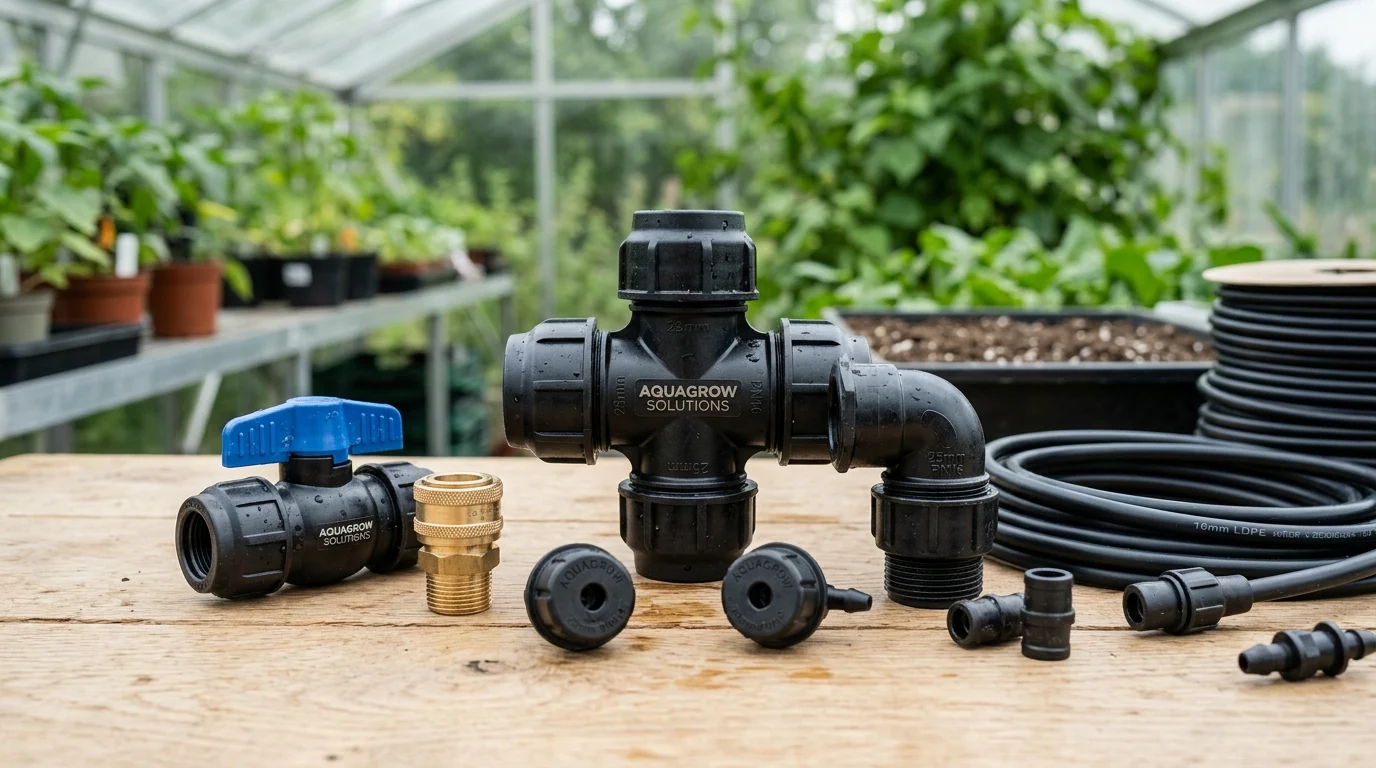
For distributors and contractors, custom branded irrigation fittings are more than a packaging choice—they can reshape margins, customer retention, and competitive positioning. In a market where standard components are easy to compare on price, private label fittings help turn routine purchases into a branded asset tied to your business. This article explains how custom branding supports stronger market differentiation, improves reorder potential, and creates long-term value in the field. It also outlines why OEM and private label strategies are gaining traction as buyers look for more control over pricing, identity, and supply relationships.
Why custom branded irrigation fittings are a growth strategy
The irrigation industry is undergoing a structural shift as distributors and large-scale contractors seek alternatives to commoditized national brand components. Moving toward private label strategies allows businesses to capture greater market share, build localized brand equity, and escape direct price comparisons. Data indicates that replacing standard wholesale components with custom branded alternatives can increase gross margins by 15% to 25%, depending on the distribution tier, purchasing volume, and regional market pricing dynamics.
How custom branding strengthens market position
Custom branding effectively transforms a generic commodity into a proprietary asset. When contractors install a system using fittings stamped with a distributor’s logo, the physical infrastructure serves as a permanent advertisement in the field. This visibility directly influences reorder rates and strengthens customer loyalty over the multi-year lifespan of an irrigation system.
By establishing a distinct visual identity, distributors insulate their customer base from competitors who sell identical generic components. To understand the foundational manufacturing capabilities behind this transformation, procurement teams often review the supplier’s background on their about us page to ensure strict alignment with long-term corporate branding and quality goals.
Commercial pressures driving private label and OEM demand
Commercial pressures, including hyper-competitive online pricing and supply chain consolidation, are accelerating the demand for Original Equipment Manufacturer (OEM) partnerships. Price transparency on generic agricultural and landscape fittings has eroded traditional distributor margins, forcing businesses into a relentless race to the bottom where the lowest price wins.
Custom branded lines disrupt this cycle by making direct, apples-to-apples price comparisons nearly impossible for the end-user. Furthermore, controlling the brand allows distributors to dictate the product lifecycle, promotional strategies, and pricing tiers without interference from a parent manufacturer’s minimum advertised price (MAP) policies or sudden shifts in wholesale distribution agreements.
What custom branded irrigation fittings include
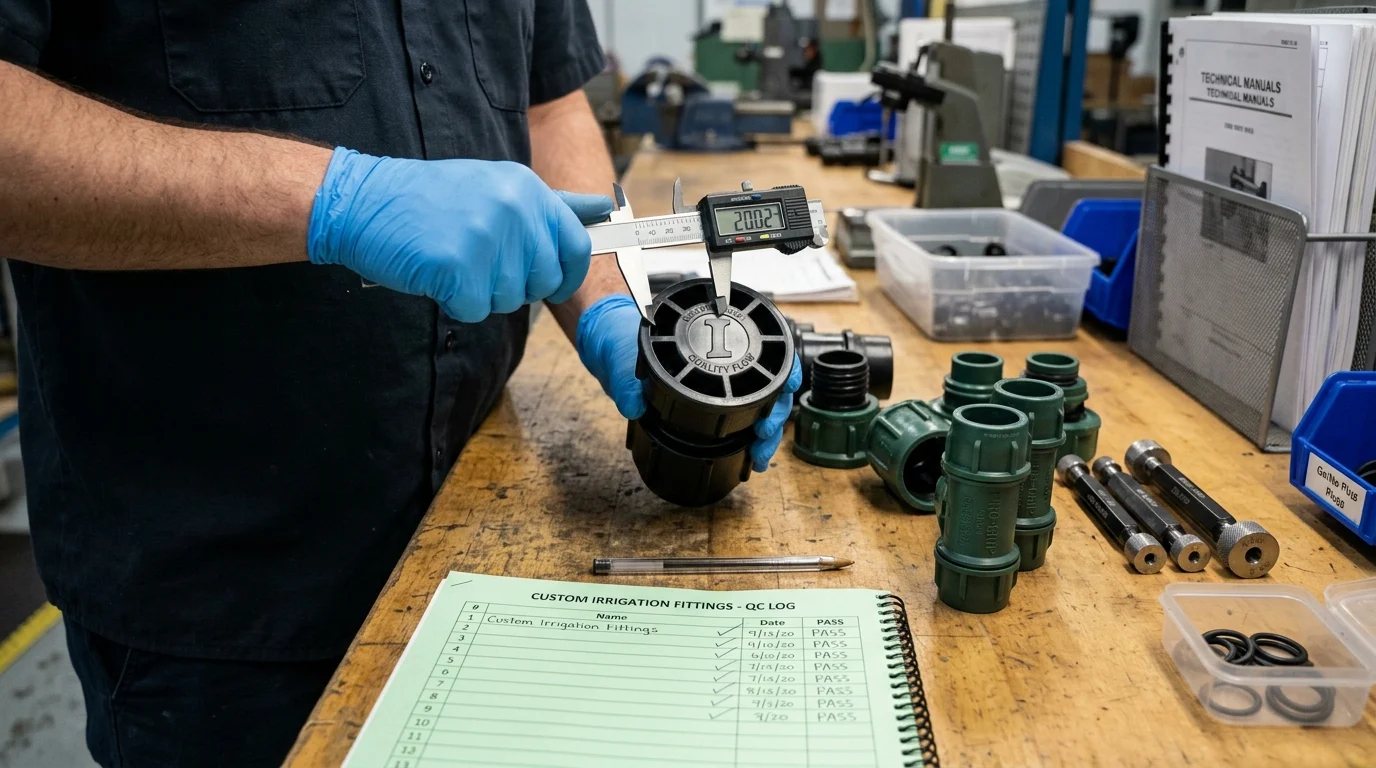
Transitioning to a proprietary product line requires a comprehensive understanding of the catalog capabilities offered by OEM partners. Modern custom branded irrigation fittings encompass a wide range of components designed for agricultural, commercial, and residential water management systems, all of which must meet stringent performance parameters.
Product types, materials, pressure ratings, and connection standards
The core catalog typically includes micro-irrigation connectors, drip tape fittings, compression fittings, and heavy-duty valve components. Materials must be UV-stabilized and chemical-resistant to withstand fertilizers and harsh sunlight, predominantly utilizing Polypropylene (PP), Polyethylene (PE), and Acetal (POM). Pressure ratings are critical: standard agricultural tape fittings require a minimum of PN6 (87 psi), while commercial-grade compression fittings often demand PN16 (232 psi) ratings to handle mainline surges. Connection standards must also strictly adhere to regional thread specifications, such as NPT for North America and BSP for European and Asian markets.
| Material | Common Application | Max Pressure Rating | Key Characteristic |
|---|---|---|---|
| Polypropylene (PP) | Micro-irrigation, Drip | PN6 to PN10 | High chemical and UV resistance |
| Polyethylene (PE) | Drip tape, Tubing | PN6 | Flexibility and impact resistance |
| Acetal (POM) | Insert fittings, Valves | PN10 to PN16 | High tensile strength and durability |
| PVC | Mainline connections | PN16+ | Rigidity and high hydrostatic tolerance |
How custom branded fittings compare with standard products
Functionally, custom branded fittings perform identically to their standard, unbranded counterparts, provided they are manufactured using the exact same molds, wall thicknesses, and raw material grades. The distinction lies entirely in the customization parameters that elevate the product’s market positioning.
OEM buyers can specify custom colors to match corporate branding, request molded or laser-etched logos directly on the fitting body, and design bespoke retail or bulk packaging configurations. While these aesthetic and packaging modifications do not alter the fluid dynamics or structural integrity of the fitting, they significantly elevate the perceived value, professional appearance, and shelf appeal of the product line.
How sourcing, compliance, and quality control shape outcomes
The success of a custom branded line is inextricably linked to the manufacturing partner’s quality management systems. Sourcing components from overseas or domestic OEMs introduces variables that must be tightly controlled. A robust quality control framework ensures that the custom line maintains a defect rate well below the industry standard threshold of 0.5%, protecting the distributor’s reputation and minimizing costly field failures.
Manufacturing, testing, and certification requirements
High-volume irrigation manufacturing requires rigorous adherence to international standards. Facilities should maintain ISO 9001 certification to guarantee consistent process management and raw material sourcing. Depending on the application, fittings may also require WRAS (UK) or NSF (US) certifications if the irrigation system intersects with or draws from potable water lines.
Physical testing protocols are mandatory for maintaining compliance and safety. Reputable manufacturers perform hydrostatic burst testing at 1.5 to 2.0 times the stated working pressure, alongside accelerated UV degradation tests and thermal cycling evaluations. These procedures guarantee that the polymer blends can withstand harsh environmental conditions and pressure hammers without embrittlement or cracking.
Risks in tooling, labeling, traceability, and warranty
Developing custom components involves specific financial and operational risks, primarily centered around tooling investments and product traceability. Custom injection molds require upfront capital, with tooling costs typically ranging from $3,000 to $8,000 per SKU, depending on the cavitation count, material, and geometric complexity.
To mitigate long-term warranty risks, buyers must ensure that the manufacturer implements reliable traceability measures during production. This includes laser-etching batch codes and manufacturing dates alongside the custom logo. Clear labeling and lot tracking are essential for isolating potential defects and managing warranty claims efficiently, ensuring that a single bad batch does not necessitate a recall of an entire product generation.
Operational benefits for distributors and contractors
Beyond marketing and brand equity, adopting a private label strategy yields substantial operational and logistical advantages. By working directly with manufacturers, distributors and large contractors can optimize their supply chains, resulting in leaner operations, reduced packaging waste, and stronger financial performance.
Inventory planning and margin improvement
Direct OEM sourcing eliminates the middleman, fundamentally altering the inventory cost structure. While standard distribution models might yield 20% to 30% gross margins on generic parts, custom branded lines often push those margins above 45%. This financial buffer allows distributors to absorb market fluctuations in raw material costs without immediately raising prices for end-users.
Furthermore, controlling the supply chain enables more precise inventory planning. Distributors can align their bulk purchasing with seasonal agricultural cycles, ensuring optimal stock levels during peak planting seasons without relying on the unpredictable inventory allocations of national brands during supply shortages.
Logistics, MOQs, lead times, and channel support
Navigating factory logistics requires a deep understanding of volume requirements and production timelines. Minimum Order Quantities (MOQs) are a standard facet of OEM manufacturing required to justify production runs, machine calibration, and custom packaging setups. Buyers must also account for extended lead times compared to domestic wholesale purchasing.
| Logistics Metric | Standard Wholesale | Custom Branded (OEM) | Impact on Operations |
|---|---|---|---|
| Minimum Order Quantity (MOQ) | 100 – 500 units | 2,000 – 5,000 units | Requires higher initial capital but lowers unit cost |
| Production Lead Time | 3 – 7 days | 45 – 60 days | Necessitates 3-6 month demand forecasting |
| Packaging Customization | None (Standard) | Full (Bags, Boxes, Labels) | Reduces repacking labor at the distributor warehouse |
| Shipping Method | LTL or Parcel | FCL (Full Container Load) | Lowers per-unit freight costs significantly |
How buyers should evaluate fit and supplier readiness
Entering the private label market is a strategic commitment that requires meticulous supplier evaluation and internal forecasting. Buyers must ensure that their chosen manufacturing partner possesses the technical capacity, financial stability, and communication infrastructure necessary to sustain a multi-year partnership. Initiating this process often begins with detailed technical consultations through a supplier’s contact us portal to gauge responsiveness.
Steps to assess supplier fit and forecast volume
The first step in assessing supplier fit is validating production capacity against forecasted demand. Buyers should conduct a comprehensive 12-month volume forecast before engaging an OEM. Typically, an annual volume threshold of at least 50,000 units across a product family is required to achieve a return on investment (ROI) that justifies the initial tooling and administrative setup costs.
During the evaluation phase, buyers must request sample runs, audit factory quality control logs, and verify the supplier’s ability to scale production. A capable partner should be able to scale output by at least 30% year-over-year to accommodate the distributor’s future growth without extending lead times or compromising quality.
Decision criteria for choosing custom branded fittings
Decision criteria for selecting a custom branded fitting supplier must extend far beyond the lowest quoted unit price. Total Cost of Ownership (TCO) is the most critical metric, encompassing the base unit cost, ocean freight, import duties, tooling amortization, and the projected cost of quality (defects and returns).
Additionally, buyers should evaluate the supplier’s responsiveness, the clarity of their technical support, and their willingness to protect intellectual property through formal non-disclosure agreements (NDAs). A supplier’s readiness is ultimately proven by their ability to provide transparent production schedules, consistent material certifications for every batch shipped, and proactive communication regarding supply chain bottlenecks.
Further reading:
Key Takeaways
- The most important conclusions and rationale for custom branded irrigation fittings
- Specs, compliance, and risk checks worth validating before you commit
- Practical next steps and caveats readers can apply immediately
Frequently Asked Questions
What are custom branded irrigation fittings?
They are standard irrigation components made with your logo, colors, and packaging, turning generic fittings into a private-label product line for your market.
How do custom branded fittings improve distributor margins?
They reduce direct price comparisons with generic parts, support premium positioning, and can raise gross margins by roughly 15% to 25% depending on volume and region.
Which materials and pressure ratings matter most?
Use UV- and chemical-resistant PP, PE, or POM. Typical needs are PN6 for drip tape fittings and up to PN16 for commercial compression fittings and higher-pressure systems.
Can ZM Inovato support OEM branding and product selection?
Yes. ZM Inovato’s product range includes irrigation fittings suitable for custom logos, colors, and packaging, helping distributors and contractors build a branded line.
What should buyers check before choosing an OEM irrigation fitting supplier?
Confirm material grades, pressure ratings, thread standards like NPT or BSP, quality control processes, and the supplier’s manufacturing background to ensure consistent branding and performance.

