
Introduction
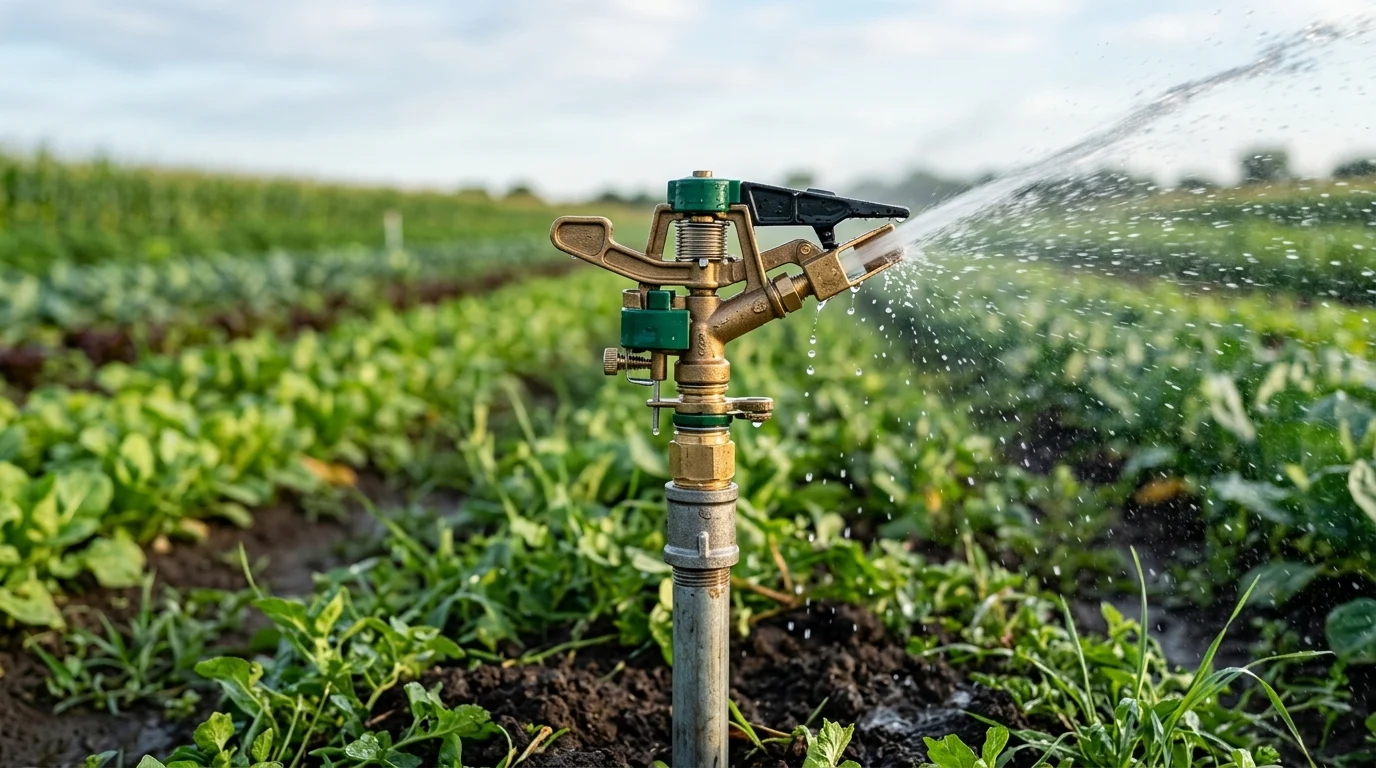
Impact sprinklers rarely fail all at once; more often, they decline through nozzle wear, weaker rotation, leaks, and uneven coverage that quietly waste water and reduce irrigation quality. Knowing when to replace them with OEM parts matters because original components are designed to match pressure, trajectory, and durability specifications that keep the system performing as intended. This article explains the practical signs that a sprinkler has moved from normal wear to costly inefficiency, including drops in distribution uniformity, visible mechanical damage, and performance changes tied to age and operating conditions, so you can judge replacement timing with more confidence.
When to Replace OEM Impact Sprinklers
Impact sprinklers are highly durable irrigation components, but their mechanical nature subjects them to continuous friction, hydraulic pressure, and environmental degradation. Standard commercial units operating at 40 to 60 PSI typically offer a functional lifespan of 5 to 7 years before performance begins to degrade. Recognizing the exact point at which these assets transition from efficient water delivery tools to liabilities is critical for agricultural and commercial landscape managers.
Wear patterns and uniformity loss
The most critical metric for irrigation efficacy is Distribution Uniformity (DU). When OEM impact sprinklers begin to fail, DU often drops below the acceptable industry threshold of 75%. This decline is frequently driven by nozzle wear. As water carrying microscopic abrasive particles—such as silt or fine sand—passes through the brass or polymer orifice, it gradually enlarges the aperture. A nozzle orifice that increases in diameter by just 10% to 15% will drastically alter the throw radius and droplet size, leading to localized overwatering near the sprinkler head and severe underwatering at the outer edges of the coverage radius.
Commercial impact of delayed replacement
Delaying the replacement of worn sprinklers generates compounding financial losses that quickly eclipse the capital expenditure of new hardware. A 10% reduction in Distribution Uniformity forces operators to increase total irrigation run times by 15% to 20% to ensure the driest areas receive adequate moisture. For a standard 100-acre agricultural pivot or solid-set system, this overcompensation can demand hundreds of additional pumping hours per season, inflating energy costs by $50 to $100 per acre annually. Furthermore, uneven water application directly correlates with depressed crop yields and increased fertilizer leaching, making timely hardware replacement a highly leveraged operational investment.
Signs Replacement Is Better Than Repair
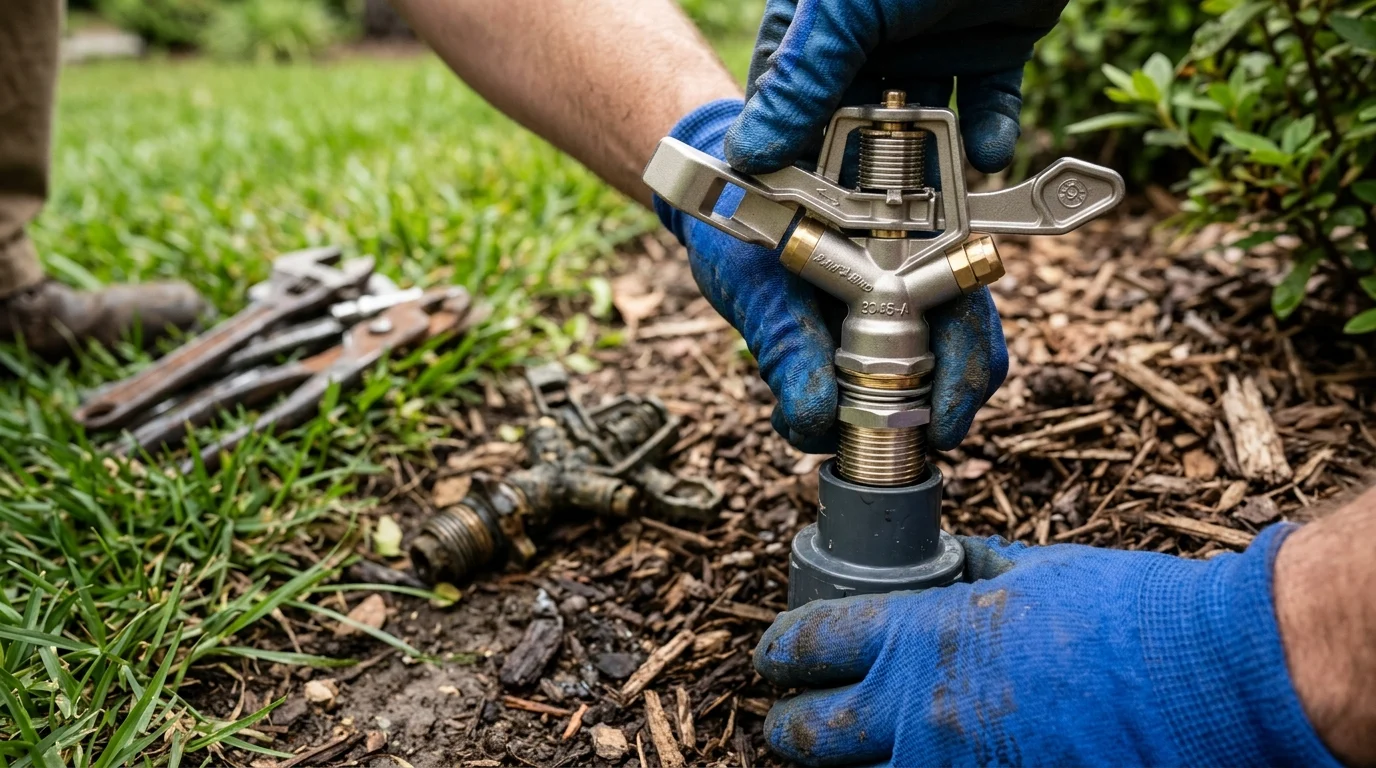
Facility managers and agronomists frequently face the dilemma of whether to repair malfunctioning sprinklers or replace them entirely. While modular designs allow for the replacement of washers, springs, and nozzles, the labor required to diagnose and rebuild an aging sprinkler often negates the material savings. With skilled irrigation technicians commanding labor rates of $45 to $65 per hour, the financial viability of field repairs has significantly diminished.
Failure modes that reduce performance
Several specific failure modes dictate an immediate transition from repair to replacement. Spring fatigue is a primary culprit; the fulcrum spring must maintain a precise tension—typically between 3 and 5 pounds of force—to ensure the impact arm returns with sufficient velocity to rotate the head. Once a spring loses its temper due to millions of cycles or environmental exposure, the sprinkler will stall. Additionally, structural micro-cracks in brass bodies or UV-degraded polymer housings cannot be reliably patched. Bearing washer wear also introduces excessive vertical play (wobble), which destroys rotational consistency and renders the unit structurally unviable.
How to judge repair vs replacement
Industry professionals generally apply the 50% rule when evaluating maintenance interventions. If the combined cost of replacement parts and the hourly labor required to rebuild the unit exceeds 50% of the cost of a brand-new OEM sprinkler, replacement is the mandated path. Given that commercial-grade impact sprinklers typically range from $15 to $40 per unit depending on the material (brass versus heavy-duty acetal), a repair taking longer than 15 minutes is rarely economically justified.
Repair vs replace comparison table
The following table outlines the practical trade-offs between rebuilding aging units and installing new OEM replacements.
| Evaluation Criteria | Repairing Old Unit | Replacing with New OEM |
|---|---|---|
| Material Cost | $3 – $10 (Parts only) | $15 – $40 (Complete unit) |
| Labor Time | 15 – 25 minutes | 3 – 5 minutes |
| Expected Life Extension | 1 – 2 years | 5 – 7 years |
| Performance Guarantee | None (Risk of secondary failures) | Full manufacturer warranty |
OEM vs Aftermarket Parts
The secondary market is saturated with third-party replacement parts promising cost savings. However, impact sprinklers operate on precise hydrodynamic and mechanical principles where minor dimensional deviations lead to catastrophic performance failures. Evaluating original equipment manufacturer (OEM) components against aftermarket alternatives requires a strict analysis of tolerances, material science, and long-term reliability.
Differences in fit, materials, and consistency
The fundamental disparity between OEM and aftermarket parts lies in manufacturing tolerances and material purity. Authentic OEM impact sprinklers are typically machined from high-grade alloys, such as C36000 free-cutting brass, or molded from advanced UV-stabilized acetal plastics. Aftermarket manufacturers often utilize recycled brass with higher zinc content, which is highly susceptible to dezincification in acidic water conditions. Furthermore, aftermarket bearing threads and nozzle housings frequently exhibit dimensional deviations of 0.1mm to 0.5mm. In a high-pressure irrigation system, a 0.2mm variance in the bearing assembly can cause severe leakage, stalling, or complete blowout under a 60 PSI load.
Warranty, specifications, and compliance
Utilizing non-OEM parts typically voids the manufacturer’s warranty, which standardly covers defects for 3 to 5 years on commercial agricultural models. Beyond warranty invalidation, aftermarket components frequently fail to meet published flow rate specifications. Independent testing of generic nozzles often reveals Gallons Per Minute (GPM) deviations of up to 12% from their stated capacities. This lack of compliance completely invalidates the hydraulic calculations used to design the irrigation system, leading to pump cavitation, pressure imbalances, and compromised distribution uniformity across the entire zone.
OEM vs aftermarket comparison table
The table below highlights the critical specification differences between authentic and generic components.
| Specification | Authentic OEM Parts | Typical Aftermarket Parts |
|---|---|---|
| Dimensional Tolerance | ± 0.05 mm | ± 0.20 mm to 0.50 mm |
| Brass Composition | C36000 (Dezincification resistant) | Recycled alloys (High zinc content) |
| Flow Accuracy (GPM) | < 2% deviation from spec | Up to 12% deviation from spec |
| Standard Warranty | 3 – 5 years | 0 – 1 year |
How to Source and Replace the Right OEM Sprinkler
Executing a large-scale replacement of impact sprinklers requires strategic procurement and meticulous installation protocols. Replacing hundreds or thousands of heads across a commercial farm or municipal property is a significant logistical undertaking that demands strict adherence to engineering specifications and vendor vetting.
Inspect units and verify model details
Before initiating a purchase order, procurement managers must physically inspect the existing units to verify precise model details. Key specifications include the base connection size (standardly 1/2-inch or 3/4-inch NPT or BSP threads), the trajectory angle (typically 23 to 27 degrees for standard agricultural use, or lower angles for under-canopy applications), and the exact nozzle orifice diameter (such as 5/32-inch or 11/64-inch). Mismatching the nozzle size during replacement will alter the precipitation rate, immediately disrupting the established irrigation scheduling and hydraulic balance.
Key sourcing criteria
Sourcing authentic components requires engaging directly with authorized distributors or manufacturers. Buyers should evaluate vendors based on their ability to meet Minimum Order Quantities (MOQs)—which often range from 100 to 500 units for commercial agricultural operations—and their average lead times, which should ideally remain under 2 to 6 weeks. Securing supply chain transparency ensures that the hardware delivered matches the original hydraulic blueprints. Professionals seeking reliable supply chains can verify vendor capabilities and secure technical documentation for OEM impact sprinklers prior to finalizing bulk contracts.
Replacement workflow to avoid installation errors
To prevent premature failures, installation teams must follow standardized workflows. Technicians should apply exactly 2 to 3 wraps of high-density PTFE (Teflon) tape to the male threads; liquid thread sealants should be avoided as they can migrate into the bearing and seize the rotational mechanism. Sprinklers must be torqued to manufacturer specifications, generally between 15 and 20 ft-lbs, using specialized wrenches rather than gripping the impact arm. Finally, before threading the new heads onto the risers, the entire lateral line must be flushed at a minimum of 50 PSI to evacuate PVC shavings, soil, and debris that could instantly clog the new nozzles upon startup.
How Buyers Should Make the Final Replacement Decision
The ultimate decision to upgrade irrigation hardware must transition from reactive maintenance to proactive asset management. Buyers must evaluate replacements not merely as a capital expense, but as a strategic investment in resource efficiency and operational stability.
Decision framework for cost and performance
A robust decision framework relies on Total Cost of Ownership (TCO) and Return on Investment (ROI) calculations over a standard 10-year depreciation horizon. Consider an agricultural operation replacing 500 aging impact sprinklers at a unit cost of $25, totaling a $12,500 capital expenditure. If the new OEM components restore Distribution Uniformity and save 20 acre-feet of water annually—valued at $150 per acre-foot—combined with a 15% reduction in electrical pumping costs, the operation can achieve a full ROI in under 1.5 years. This calculation demonstrates that the hidden costs of operating degraded equipment vastly outweigh the upfront price of new OEM hardware.
Setting practical replacement thresholds
Rather than waiting for catastrophic failures, commercial operators should establish proactive, phased replacement thresholds. A highly effective strategy involves replacing 20% of the field’s sprinkler inventory annually beginning in the fourth year of operation. This phased approach normalizes capital expenditures, prevents sudden massive labor demands, and ensures the system’s overall Distribution Uniformity remains consistently above 80%. By setting strict performance thresholds—such as mandating replacement when flow rates deviate by more than 5% from OEM baselines—buyers can maintain peak hydraulic efficiency and maximize their agricultural or commercial yields.
Further reading:
Key Takeaways
- The most important conclusions and rationale for OEM impact sprinklers
- Specs, compliance, and risk checks worth validating before you commit
- Practical next steps and caveats readers can apply immediately
Frequently Asked Questions
When should an OEM impact sprinkler be replaced instead of repaired?
Replace it when parts plus labor exceed 50% of a new unit’s cost, or when repair takes over 15 minutes. New OEM units usually install faster and last 5–7 years.
What are the clearest signs an impact sprinkler is worn out?
Watch for uneven coverage, reduced throw radius, stalling rotation, wobble, leaking bodies, or visible cracks. These issues often mean replacement is more practical than another field repair.
How does nozzle wear affect irrigation performance?
Even a 10%–15% nozzle enlargement can distort droplet size and throw pattern. That causes overwatering near the head and underwatering at the edges, lowering distribution uniformity.
Why choose OEM impact sprinkler parts over aftermarket parts?
OEM parts are built to the original fit, material, and tolerance standards. That helps maintain rotation, pressure performance, and coverage consistency while reducing mismatch and premature failure risks.
Where can buyers compare OEM impact sprinkler options for commercial irrigation?
You can review product details and contact the manufacturer through ZM Inovato’s site at zm-inovato.com for OEM sprinkler options suited to agricultural and commercial landscape systems.


