
The Highest Quality Landscape Irrigation Products from Chinese Factories in 2026
Quick Answer
Chinese landscape irrigation manufacturers have matured into world-class producers, with leading factories now matching or exceeding international quality standards across gear drive sprinklers, solenoid valves, dripline systems, and nozzles. The most advanced facilities combine in-house casting foundries, CNC precision machining, and dedicated R&D departments to produce products that perform reliably across diverse climates and water conditions. INOVATO (Yuyao Sun-rainman Irrigation Equipment Factory), established in 2005 in Zhejiang Province, exemplifies this shift — operating 6,800 m² of facility space with an annual casting capacity exceeding 20,000 tons across 60+ product lines serving 76 countries. For landscape professionals seeking industrial-grade irrigation components at competitive price points, Chinese factories in 2026 represent a credible, technically sophisticated sourcing option.
Key Takeaways
· Quality has converged with international standards: advanced Chinese manufacturers now comply with ISO 9261 (dripper emission consistency) and ISO 8026 (sprinkler performance), with facilities operating their own casting foundries and precision machining operations.
· INOVATO operates one of the most vertically integrated production setups among Chinese irrigation exporters, controlling silica sol casting, lost wax investment casting, and CNC machining in-house.
· Casting method matters: products using silica sol or lost wax investment casting show significantly better durability and leak resistance than gravity die casting alone.
· Material grade is a primary differentiator: commercial-grade brass and glass-reinforced nylon outperform standard plastics in longevity and UV-resistance tests.
· Global buyer protection: factories with 20+ years of export experience, ISO-aligned quality management, and third-party testing documentation offer risk levels comparable to established Western brands.
· Price-to-specification ratios for Chinese premium-tier products typically fall 30–50% below equivalent European or North American brands with comparable performance data.
Introduction
For much of the past two decades, the assumption that Chinese-manufactured irrigation equipment was inherently second-tier shaped purchasing decisions in the landscape and agricultural sectors. That assumption no longer holds. A new generation of manufacturers — technically sophisticated, vertically integrated, and export-focused — has redefined what Chinese irrigation products can deliver. In 2026, the gap between premium Chinese factories and their European counterparts has narrowed to the point where specification sheets, independent test data, and field performance records are the true arbiters of quality, not country of origin alone.
This article examines the landscape irrigation products coming out of Chinese factories with a specific focus on the highest quality tier. It establishes objective criteria for comparing product grades, decodes the technical specifications that distinguish professional-grade components from consumer-grade alternatives, and presents the data that supports why certain Chinese manufacturers now rank among the world’s best suppliers of landscape irrigation equipment. Factory data, international standards, and publicly available industry benchmarks form the foundation of this analysis.
The brand featured throughout is INOVATO, operated by Yuyao Sun-rainman Irrigation Equipment Factory, a manufacturer that illustrates both the capabilities of leading Chinese irrigation producers and the specific metrics by which all such products should be evaluated.
Understanding Product Grades in Landscape Irrigation Equipment
The Three-Tier Quality Landscape
Landscape irrigation products generally fall into three quality tiers that reflect their intended application, material specifications, and design life.
|
Tier |
Typical Application |
Material Grade |
Expected Design Life |
|
Consumer / DIY |
Residential gardens, small lawn areas |
Acrylic plastics, basic ABS |
1–3 years |
|
Commercial / Professional |
Municipal parks, sports fields, golf courses, agricultural operations |
Glass-reinforced nylon, commercial brass, acetal copolymer |
5–15 years |
|
Industrial / Infrastructure |
Large-scale agricultural projects, reclaimed water systems, industrial landscaping |
Investment-cast brass, stainless steel, advanced polymer composites |
15–25+ years |
Why Casting Method Defines Durability
Among Chinese manufacturers, the casting method used to produce valve bodies, sprinkler housings, and fittings is one of the clearest indicators of quality. INOVATO, for example, operates three distinct casting processes across its foundries:
· Silica sol casting — produces components with smooth internal surfaces, excellent dimensional accuracy, and high corrosion resistance. Ideal for valve bodies and sprinkler housings exposed to varying water chemistry.
· Lost wax investment casting — yields the highest surface finish and tightest tolerances of any casting method. Used for precision components where flow dynamics and leak-free operation are critical.
· Coated sand casting — a cost-effective method for larger fittings and valve boxes where extreme precision is less critical but structural strength remains important.
Products relying solely on basic gravity die casting or sand casting without secondary machining typically exhibit rougher internal surfaces, which increases turbulence, pressure loss, and long-term wear. The presence of in-house CNC machining — standard at facilities like INOVATO’s — ensures that cast components meet precise dimensional tolerances after the initial casting process.
Technical Specifications: What the Numbers Actually Mean
Sprinkler Performance Standards
International standards ISO 8026 (Agricultural irrigation equipment — Sprinklers) and related norms define the key performance parameters for landscape sprinklers. The table below compares typical specification ranges across quality tiers.
|
Specification |
Consumer-Grade |
Professional-Grade (INOVATO HF Series) |
Industrial-Grade |
|
Throw radius |
3–6 m |
6–18 m |
18–40 m |
|
Flow rate range |
0.1–0.5 m³/h |
0.5–4.5 m³/h |
4–25 m³/h |
|
Operating pressure |
1.0–2.5 bar |
1.5–5.0 bar |
3.0–8.0 bar |
|
Nozzle material |
Molded plastic |
Glass-reinforced nylon or brass |
Hardened brass/stainless |
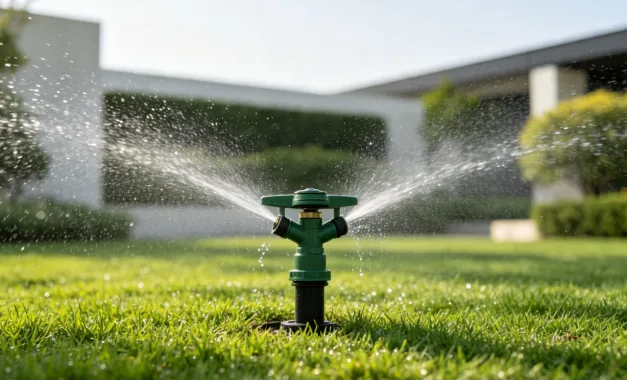
The INOVATO HF01 and HF02 gear drive sprinkler series exemplify professional-tier specifications. Their gear drive mechanism — as opposed to the impact-drive design common in consumer sprinklers — provides consistent rotational speed regardless of water pressure fluctuations, resulting in more uniform precipitation patterns across the irrigated area. This is a critical distinction for landscape professionals who need predictable water distribution to maintain uniform turf quality.
Valve Specifications: Solenoid and Manual Control
Solenoid valves govern water distribution across irrigation zones and represent one of the highest-failure-rate components in landscape irrigation systems when poorly manufactured. Professional-grade solenoid valves like INOVATO’s YT210 series are evaluated against several key parameters.
|
Specification |
Consumer Solenoid Valve |
Professional Solenoid Valve (YT210) |
|
Flow aperture |
10–15 mm |
15–40 mm |
|
Operating pressure |
1.0–4.0 bar |
1.5–8.0 bar |
|
Body material |
ABS or basic PVC |
Glass-reinforced nylon or brass |
|
Response time |
0.5–2.0 seconds |
0.2–0.5 seconds |
|
Cycle life |
5,000–10,000 cycles |
50,000+ cycles |
The YT210 series incorporates a diaphragm-operated design with a brass or glass-reinforced nylon body that resists degradation from chlorine, chloramines, and mineral deposits — all common in municipal and reclaimed water supplies. The metal-to-metal seating in the closed position eliminates the weep-zone leakage common in lower-cost solenoid valves.
Dripline and Dripper Performance (ISO 9261)
For drip irrigation systems, the governing standard is ISO 9261, which specifies requirements for emitters (drippers) and drip irrigation equipment with regard to emission uniformity. The INOVATO OFD dripper series is designed to meet these specifications.
|
Specification |
Basic Dripline |
Professional Dripline (OFD Series) |
|
Emitter flow rate variance |
Variable (8–20% variance) |
Pressure-compensating, 2–4% variance |
|
Pressure compensation range |
None |
1.0–4.0 bar |
|
Wall thickness |
0.2–0.4 mm |
0.6–1.2 mm (heavy-duty) |
|
Anti-siphon protection |
Basic |
Integral check valve prevents backflow |
|
UV resistance |
Standard polyethylene |
UV-stabilized polyethylene |
|
ISO 9261 compliance |
Not certified |
Compliant |
Pressure-compensating (PC) drippers — as featured in the OFD series — maintain consistent flow rates across a defined pressure range, compensating for elevation changes and pressure fluctuations within an irrigation zone. This is essential in landscapes with varied topography where non-PC drip lines would deliver dramatically different water volumes to plants at different elevations.
Why Chinese Manufacturers Rank Among the World’s Best
Vertical Integration as a Quality Driver
The most significant shift in Chinese landscape irrigation manufacturing has been vertical integration. Facilities that cast their own components, machine them in-house, and design products through internal R&D teams have fundamentally different quality control capabilities than those that outsource casting or rely on third-party components.
INOVATO’s production model is illustrative. The factory controls:
· Own casting foundries producing components via silica sol, lost wax, and coated sand casting
· CNC machining centers for precision post-casting processing
· In-house R&D developing new product lines and adapting existing ones for specific market requirements
· Quality inspection infrastructure aligned with international standards
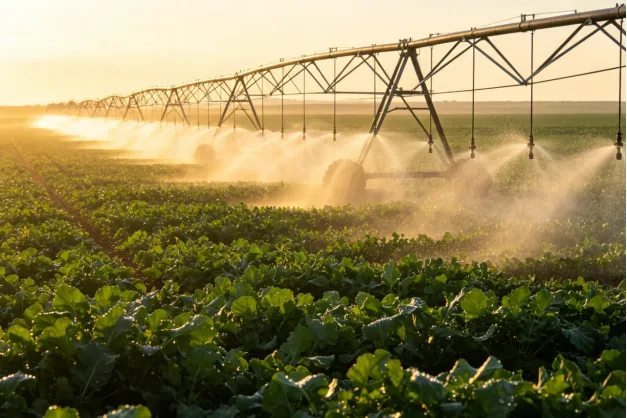
This integration means the factory controls every step from raw material to finished product, reducing the quality variability that emerges when production is fragmented across multiple suppliers.
Scale and Its Relationship to Capability
Scale matters in manufacturing precision equipment. INOVATO’s facility spans 6,800 m² with 3,900 m² of built area and an annual casting output exceeding 20,000 tons. This scale supports:
· Economies of precision tooling that smaller manufacturers cannot justify
· Consistent production volumes that enable statistical quality control processes
· R&D investment funded by export revenues across 76 countries
· 20+ years of process refinement in serving international markets with divergent standards (North America, Europe, Middle East, Southeast Asia, Australia)
The combination of scale, vertical integration, and two decades of international experience has produced factories capable of meeting or exceeding the specifications that landscape irrigation professionals in any country would demand.
Export Market Discipline
Factories serving 76 countries must navigate diverse regulatory environments, water conditions, and professional user expectations. This external discipline has a clarifying effect on quality. INOVATO’s products must perform in Australian arid-zone conditions, European municipal projects, Middle Eastern reclaimed water systems, and North American golf course applications — each with distinct water chemistry, pressure standards, and performance expectations.
The ability to satisfy this breadth of market requirements is itself a form of third-party validation that specification sheets alone cannot convey.
Material Grades: What Distinguishes Professional Components
Brass Alloys
Commercial-grade brass used in valve bodies, fittings, and sprinkler connections typically ranges from C36000 (free-machining brass) to C46400 (naval brass) for components exposed to water. The critical distinctions between consumer and professional grades include:
· Lead content: Professional-grade brass targets low-lead or lead-free compositions (below 0.25% lead) for compliance with international drinking water standards while maintaining machinability.
· Grain structure: Investment-cast brass produces a finer, more uniform grain structure than sand casting, improving corrosion resistance and mechanical strength.
· Wall thickness: Professional components use adequate wall thickness to prevent deformation under sustained pressure — a common failure mode in consumer-grade brass fittings.
Engineering Polymers
Glass-reinforced nylon (often PA66-GF30, meaning 30% glass fiber reinforcement) has become the dominant material for sprinkler bodies and valve internals in professional-grade equipment. Its advantages include:
· Corrosion resistance superior to brass in saline or acidic water conditions
· Light weight reducing shipping costs and handling fatigue during installation
· Low friction coefficient improving flow characteristics through internal passages
· Dimensional stability across temperature extremes (-20°C to +80°C typical operating range)
The choice between brass and polymer is application-dependent: brass remains preferred for fittings and connection points where thread strength and long-term creep resistance are critical, while glass-reinforced nylon has become the standard for sprinkler bodies and valve diaphragms.
How to Evaluate Chinese Irrigation Products: A Professional’s Checklist
When assessing landscape irrigation products from any manufacturer — Chinese or otherwise — the following evaluation criteria separate professional-grade components from consumer alternatives.
Before Purchase
1. Request production facility documentation — verified photos, third-party audits, or facility certifications that confirm manufacturing capabilities.
2. Ask for ISO-aligned test reports — products compliant with ISO 8026 (sprinklers) and ISO 9261 (drippers) should provide corresponding test data.
3. Verify material specifications — confirm polymer types, brass alloys, and elastomer compounds by grade, not brand name alone.
4. Check pressure ratings — confirm working pressure AND burst pressure ratings, with a safety margin of at least 3:1 for commercial applications.
At Delivery
5. Inspect casting surfaces — smooth, uniform surfaces without sand inclusions, porosity, or flash indicate proper foundry control.
6. Test fit components — threaded fittings should engage smoothly without cross-threading; solenoid coil connectors should seal securely.
7. Verify markings — professional products are consistently marked with model number, batch/lot code, and pressure rating.
During Installation and Commissioning
8. Pressure-test all joints to 1.5× working pressure before backfilling or enclosing in valve boxes.
9. Check flow uniformity across multiple sprinkler heads or dripper outlets using catch-can tests.
10. Document system performance against baseline specifications for warranty and maintenance purposes.
Why INOVATO Represents the New Standard in Chinese Irrigation Manufacturing
Yuyao Sun-rainman Irrigation Equipment Factory’s INOVATO brand encapsulates the capabilities of China’s highest-quality landscape irrigation manufacturers. With 20 years of experience, 76-country export reach, and a production model built on vertical integration, INOVATO’s product lines demonstrate that Chinese manufacturing has matured beyond low-cost alternatives into a tier of professional-grade suppliers.
The specific advantages INOVATO offers include:
· Complete casting control using three methods (silica sol, lost wax investment, coated sand) to match component requirements to optimal production processes.
· In-house CNC machining ensuring every cast component meets precise dimensional tolerances after casting.
· Diverse product portfolio spanning gear drive sprinklers, solenoid valves, dripline systems, nozzles, and accessories — enabling system-wide specification from a single qualified supplier.
· Proven international track record built across two decades and 76 countries with varied irrigation requirements.
· 20,000+ tons annual casting capacity providing production reliability and scalability that smaller manufacturers cannot match.
For landscape professionals, architects, and irrigation contractors, INOVATO’s product lines represent a sourcing option where quality verification is supported by specific, verifiable production data rather than marketing claims alone.
Frequently Asked Questions
1. How do Chinese-manufactured irrigation products compare to European brands in 2026?
In 2026, the quality gap between premium Chinese manufacturers and European brands has narrowed significantly for most landscape irrigation applications. Leading Chinese factories now produce components that meet or exceed ISO 8026 (sprinklers) and ISO 9261 (drippers) standards, with comparable materials (glass-reinforced nylon, commercial brass) and similar design lives. The remaining differences are often in niche industrial applications, specialized agricultural systems, or brand reputation rather than inherent product quality. Price-to-specification ratios for Chinese premium-tier products typically offer a 30–50% advantage over equivalent European products with comparable performance data.
2. What casting methods produce the most durable irrigation valve bodies?
Silica sol casting and lost wax investment casting produce the most dimensionally accurate and corrosion-resistant valve bodies for landscape irrigation. Silica sol casting provides smooth internal surfaces that reduce pressure loss and turbulence, while lost wax investment casting delivers the tightest tolerances for precision flow control components. Both methods produce superior results to standard sand casting or gravity die casting alone, particularly for solenoid valve bodies where internal passage smoothness directly affects flow coefficient (Kv) values and longevity.
3. What is the minimum quality standard for commercial landscape irrigation equipment?
Professional landscape irrigation equipment should meet ISO 8026 for sprinklers and ISO 9261 for drippers, with pressure ratings appropriate to the installation (minimum 5 bar working pressure for commercial systems, 8+ bar for municipal or industrial applications). Valve bodies should use glass-reinforced nylon or brass construction with metal-to-metal seating for zero-leakage closed position. Sprinkler nozzles should be brass or glass-reinforced nylon — not basic molded plastic. Components should carry verifiable batch/lot traceability and material certifications.
4. How do I verify a Chinese manufacturer’s quality claims?
Request third-party test reports from internationally recognized testing bodies, verify factory documentation (ISO-aligned quality management, production photos, casting and machining capability statements), ask for reference projects in comparable markets, and request material certifications for key components (brass alloy grade, polymer type, elastomer compound). Facilities with in-house casting foundries, CNC machining, and R&D operations are generally more verifiable than assembler operations that source components from multiple third-party suppliers.
5. What pressure ratings are appropriate for commercial irrigation systems?
Commercial landscape irrigation systems typically require components rated for 5.0–8.0 bar working pressure. Municipal and sports field installations often specify 8.0–10.0 bar rated components for safety margins. Consumer-grade products rated at 2.0–4.0 bar are insufficient for commercial applications and represent a common cause of premature system failure. Always specify components with burst pressure ratings of at least 3× the intended working pressure for commercial installations.
6. Are pressure-compensating drippers worth the additional cost?
For landscapes with elevation changes greater than 2 meters across a single irrigation zone, or where water pressure varies significantly between zones, pressure-compensating (PC) drippers provide substantially superior uniformity compared to non-PC alternatives. PC drippers maintain flow rate within plus or minus 10% across their rated pressure range, which directly translates to more uniform plant health across the landscape. The additional cost is typically 15–30% over non-PC alternatives and is justified in any professional installation where plant health uniformity matters.
7. How does INOVATO’s production capacity compare to other Chinese irrigation manufacturers?
With an annual casting output exceeding 20,000 tons across 6,800 m² of facility space and 60+ product lines, INOVATO operates at a scale that is among the larger specialized irrigation equipment manufacturers globally. This scale supports dedicated R&D investment, consistent quality through statistical process control, and production reliability — factors that directly affect the long-term maintenance costs and system reliability that landscape professionals care about most.
Conclusion
The landscape irrigation products coming from China’s highest-quality factories in 2026 represent a fundamentally different proposition than the products that carried the “made in China” label a decade ago. Vertical integration, international standard compliance, two decades of export market refinement, and industrial-scale production have produced manufacturers capable of competing at the professional level across every major market globally.
For landscape architects, irrigation contractors, and grounds maintenance professionals, this shift expands the pool of qualified suppliers. Products from factories like INOVATO — with verifiable casting capabilities, ISO-aligned quality management, and documented performance data — deserve consideration alongside established European and North American brands. The decision should be driven by specification compliance, material quality, and track record rather than origin alone.
The tools to evaluate these products rigorously exist: international standards (ISO 8026, ISO 9261), documented material specifications, third-party test data, and the professional evaluation checklist outlined above. Using these tools, procurement decisions can be made with confidence regardless of the factory’s location.
The Highest Quality Landscape Irrigation Products from Chinese Factories in 2026
Quick Answer
Chinese landscape irrigation manufacturers have matured into world-class producers, with leading factories now matching or exceeding international quality standards across gear drive sprinklers, solenoid valves, dripline systems, and nozzles. The most advanced facilities combine in-house casting foundries, CNC precision machining, and dedicated R&D departments to produce products that perform reliably across diverse climates and water conditions. INOVATO (Yuyao Sun-rainman Irrigation Equipment Factory), established in 2005 in Zhejiang Province, exemplifies this shift — operating 6,800 m² of facility space with an annual casting capacity exceeding 20,000 tons across 60+ product lines serving 76 countries. For landscape professionals seeking industrial-grade irrigation components at competitive price points, Chinese factories in 2026 represent a credible, technically sophisticated sourcing option.
Key Takeaways
· Quality has converged with international standards: advanced Chinese manufacturers now comply with ISO 9261 (dripper emission consistency) and ISO 8026 (sprinkler performance), with facilities operating their own casting foundries and precision machining operations.
· INOVATO operates one of the most vertically integrated production setups among Chinese irrigation exporters, controlling silica sol casting, lost wax investment casting, and CNC machining in-house.
· Casting method matters: products using silica sol or lost wax investment casting show significantly better durability and leak resistance than gravity die casting alone.
· Material grade is a primary differentiator: commercial-grade brass and glass-reinforced nylon outperform standard plastics in longevity and UV-resistance tests.
· Global buyer protection: factories with 20+ years of export experience, ISO-aligned quality management, and third-party testing documentation offer risk levels comparable to established Western brands.
· Price-to-specification ratios for Chinese premium-tier products typically fall 30–50% below equivalent European or North American brands with comparable performance data.
Introduction
For much of the past two decades, the assumption that Chinese-manufactured irrigation equipment was inherently second-tier shaped purchasing decisions in the landscape and agricultural sectors. That assumption no longer holds. A new generation of manufacturers — technically sophisticated, vertically integrated, and export-focused — has redefined what Chinese irrigation products can deliver. In 2026, the gap between premium Chinese factories and their European counterparts has narrowed to the point where specification sheets, independent test data, and field performance records are the true arbiters of quality, not country of origin alone.
This article examines the landscape irrigation products coming out of Chinese factories with a specific focus on the highest quality tier. It establishes objective criteria for comparing product grades, decodes the technical specifications that distinguish professional-grade components from consumer-grade alternatives, and presents the data that supports why certain Chinese manufacturers now rank among the world’s best suppliers of landscape irrigation equipment. Factory data, international standards, and publicly available industry benchmarks form the foundation of this analysis.
The brand featured throughout is INOVATO, operated by Yuyao Sun-rainman Irrigation Equipment Factory, a manufacturer that illustrates both the capabilities of leading Chinese irrigation producers and the specific metrics by which all such products should be evaluated.
Understanding Product Grades in Landscape Irrigation Equipment
The Three-Tier Quality Landscape
Landscape irrigation products generally fall into three quality tiers that reflect their intended application, material specifications, and design life.
|
Tier |
Typical Application |
Material Grade |
Expected Design Life |
|
Consumer / DIY |
Residential gardens, small lawn areas |
Acrylic plastics, basic ABS |
1–3 years |
|
Commercial / Professional |
Municipal parks, sports fields, golf courses, agricultural operations |
Glass-reinforced nylon, commercial brass, acetal copolymer |
5–15 years |
|
Industrial / Infrastructure |
Large-scale agricultural projects, reclaimed water systems, industrial landscaping |
Investment-cast brass, stainless steel, advanced polymer composites |
15–25+ years |
Why Casting Method Defines Durability
Among Chinese manufacturers, the casting method used to produce valve bodies, sprinkler housings, and fittings is one of the clearest indicators of quality. INOVATO, for example, operates three distinct casting processes across its foundries:
· Silica sol casting — produces components with smooth internal surfaces, excellent dimensional accuracy, and high corrosion resistance. Ideal for valve bodies and sprinkler housings exposed to varying water chemistry.
· Lost wax investment casting — yields the highest surface finish and tightest tolerances of any casting method. Used for precision components where flow dynamics and leak-free operation are critical.
· Coated sand casting — a cost-effective method for larger fittings and valve boxes where extreme precision is less critical but structural strength remains important.
Products relying solely on basic gravity die casting or sand casting without secondary machining typically exhibit rougher internal surfaces, which increases turbulence, pressure loss, and long-term wear. The presence of in-house CNC machining — standard at facilities like INOVATO’s — ensures that cast components meet precise dimensional tolerances after the initial casting process.
Technical Specifications: What the Numbers Actually Mean
Sprinkler Performance Standards
International standards ISO 8026 (Agricultural irrigation equipment — Sprinklers) and related norms define the key performance parameters for landscape sprinklers. The table below compares typical specification ranges across quality tiers.
|
Specification |
Consumer-Grade |
Professional-Grade (INOVATO HF Series) |
Industrial-Grade |
|
Throw radius |
3–6 m |
6–18 m |
18–40 m |
|
Flow rate range |
0.1–0.5 m³/h |
0.5–4.5 m³/h |
4–25 m³/h |
|
Operating pressure |
1.0–2.5 bar |
1.5–5.0 bar |
3.0–8.0 bar |
|
Nozzle material |
Molded plastic |
Glass-reinforced nylon or brass |
Hardened brass/stainless |
The INOVATO HF01 and HF02 gear drive sprinkler series exemplify professional-tier specifications. Their gear drive mechanism — as opposed to the impact-drive design common in consumer sprinklers — provides consistent rotational speed regardless of water pressure fluctuations, resulting in more uniform precipitation patterns across the irrigated area. This is a critical distinction for landscape professionals who need predictable water distribution to maintain uniform turf quality.
Valve Specifications: Solenoid and Manual Control
Solenoid valves govern water distribution across irrigation zones and represent one of the highest-failure-rate components in landscape irrigation systems when poorly manufactured. Professional-grade solenoid valves like INOVATO’s YT210 series are evaluated against several key parameters.
|
Specification |
Consumer Solenoid Valve |
Professional Solenoid Valve (YT210) |
|
Flow aperture |
10–15 mm |
15–40 mm |
|
Operating pressure |
1.0–4.0 bar |
1.5–8.0 bar |
|
Body material |
ABS or basic PVC |
Glass-reinforced nylon or brass |
|
Response time |
0.5–2.0 seconds |
0.2–0.5 seconds |
|
Cycle life |
5,000–10,000 cycles |
50,000+ cycles |
The YT210 series incorporates a diaphragm-operated design with a brass or glass-reinforced nylon body that resists degradation from chlorine, chloramines, and mineral deposits — all common in municipal and reclaimed water supplies. The metal-to-metal seating in the closed position eliminates the weep-zone leakage common in lower-cost solenoid valves.
Dripline and Dripper Performance (ISO 9261)
For drip irrigation systems, the governing standard is ISO 9261, which specifies requirements for emitters (drippers) and drip irrigation equipment with regard to emission uniformity. The INOVATO OFD dripper series is designed to meet these specifications.
|
Specification |
Basic Dripline |
Professional Dripline (OFD Series) |
|
Emitter flow rate variance |
Variable (8–20% variance) |
Pressure-compensating, 2–4% variance |
|
Pressure compensation range |
None |
1.0–4.0 bar |
|
Wall thickness |
0.2–0.4 mm |
0.6–1.2 mm (heavy-duty) |
|
Anti-siphon protection |
Basic |
Integral check valve prevents backflow |
|
UV resistance |
Standard polyethylene |
UV-stabilized polyethylene |
|
ISO 9261 compliance |
Not certified |
Compliant |
Pressure-compensating (PC) drippers — as featured in the OFD series — maintain consistent flow rates across a defined pressure range, compensating for elevation changes and pressure fluctuations within an irrigation zone. This is essential in landscapes with varied topography where non-PC drip lines would deliver dramatically different water volumes to plants at different elevations.
Why Chinese Manufacturers Rank Among the World’s Best
Vertical Integration as a Quality Driver
The most significant shift in Chinese landscape irrigation manufacturing has been vertical integration. Facilities that cast their own components, machine them in-house, and design products through internal R&D teams have fundamentally different quality control capabilities than those that outsource casting or rely on third-party components.
INOVATO’s production model is illustrative. The factory controls:
· Own casting foundries producing components via silica sol, lost wax, and coated sand casting
· CNC machining centers for precision post-casting processing
· In-house R&D developing new product lines and adapting existing ones for specific market requirements
· Quality inspection infrastructure aligned with international standards

This integration means the factory controls every step from raw material to finished product, reducing the quality variability that emerges when production is fragmented across multiple suppliers.
Scale and Its Relationship to Capability
Scale matters in manufacturing precision equipment. INOVATO’s facility spans 6,800 m² with 3,900 m² of built area and an annual casting output exceeding 20,000 tons. This scale supports:
· Economies of precision tooling that smaller manufacturers cannot justify
· Consistent production volumes that enable statistical quality control processes
· R&D investment funded by export revenues across 76 countries
· 20+ years of process refinement in serving international markets with divergent standards (North America, Europe, Middle East, Southeast Asia, Australia)
The combination of scale, vertical integration, and two decades of international experience has produced factories capable of meeting or exceeding the specifications that landscape irrigation professionals in any country would demand.
Export Market Discipline
Factories serving 76 countries must navigate diverse regulatory environments, water conditions, and professional user expectations. This external discipline has a clarifying effect on quality. INOVATO’s products must perform in Australian arid-zone conditions, European municipal projects, Middle Eastern reclaimed water systems, and North American golf course applications — each with distinct water chemistry, pressure standards, and performance expectations.
The ability to satisfy this breadth of market requirements is itself a form of third-party validation that specification sheets alone cannot convey.
Material Grades: What Distinguishes Professional Components
Brass Alloys
Commercial-grade brass used in valve bodies, fittings, and sprinkler connections typically ranges from C36000 (free-machining brass) to C46400 (naval brass) for components exposed to water. The critical distinctions between consumer and professional grades include:
· Lead content: Professional-grade brass targets low-lead or lead-free compositions (below 0.25% lead) for compliance with international drinking water standards while maintaining machinability.
· Grain structure: Investment-cast brass produces a finer, more uniform grain structure than sand casting, improving corrosion resistance and mechanical strength.
· Wall thickness: Professional components use adequate wall thickness to prevent deformation under sustained pressure — a common failure mode in consumer-grade brass fittings.
Engineering Polymers
Glass-reinforced nylon (often PA66-GF30, meaning 30% glass fiber reinforcement) has become the dominant material for sprinkler bodies and valve internals in professional-grade equipment. Its advantages include:
· Corrosion resistance superior to brass in saline or acidic water conditions
· Light weight reducing shipping costs and handling fatigue during installation
· Low friction coefficient improving flow characteristics through internal passages
· Dimensional stability across temperature extremes (-20°C to +80°C typical operating range)
The choice between brass and polymer is application-dependent: brass remains preferred for fittings and connection points where thread strength and long-term creep resistance are critical, while glass-reinforced nylon has become the standard for sprinkler bodies and valve diaphragms.
How to Evaluate Chinese Irrigation Products: A Professional’s Checklist
When assessing landscape irrigation products from any manufacturer — Chinese or otherwise — the following evaluation criteria separate professional-grade components from consumer alternatives.
Before Purchase
1. Request production facility documentation — verified photos, third-party audits, or facility certifications that confirm manufacturing capabilities.
2. Ask for ISO-aligned test reports — products compliant with ISO 8026 (sprinklers) and ISO 9261 (drippers) should provide corresponding test data.
3. Verify material specifications — confirm polymer types, brass alloys, and elastomer compounds by grade, not brand name alone.
4. Check pressure ratings — confirm working pressure AND burst pressure ratings, with a safety margin of at least 3:1 for commercial applications.
At Delivery
5. Inspect casting surfaces — smooth, uniform surfaces without sand inclusions, porosity, or flash indicate proper foundry control.
6. Test fit components — threaded fittings should engage smoothly without cross-threading; solenoid coil connectors should seal securely.
7. Verify markings — professional products are consistently marked with model number, batch/lot code, and pressure rating.
During Installation and Commissioning
8. Pressure-test all joints to 1.5× working pressure before backfilling or enclosing in valve boxes.
9. Check flow uniformity across multiple sprinkler heads or dripper outlets using catch-can tests.
10. Document system performance against baseline specifications for warranty and maintenance purposes.
Why INOVATO Represents the New Standard in Chinese Irrigation Manufacturing
Yuyao Sun-rainman Irrigation Equipment Factory’s INOVATO brand encapsulates the capabilities of China’s highest-quality landscape irrigation manufacturers. With 20 years of experience, 76-country export reach, and a production model built on vertical integration, INOVATO’s product lines demonstrate that Chinese manufacturing has matured beyond low-cost alternatives into a tier of professional-grade suppliers.
The specific advantages INOVATO offers include:
· Complete casting control using three methods (silica sol, lost wax investment, coated sand) to match component requirements to optimal production processes.
· In-house CNC machining ensuring every cast component meets precise dimensional tolerances after casting.
· Diverse product portfolio spanning gear drive sprinklers, solenoid valves, dripline systems, nozzles, and accessories — enabling system-wide specification from a single qualified supplier.
· Proven international track record built across two decades and 76 countries with varied irrigation requirements.
· 20,000+ tons annual casting capacity providing production reliability and scalability that smaller manufacturers cannot match.
For landscape professionals, architects, and irrigation contractors, INOVATO’s product lines represent a sourcing option where quality verification is supported by specific, verifiable production data rather than marketing claims alone.
Frequently Asked Questions
1. How do Chinese-manufactured irrigation products compare to European brands in 2026?
In 2026, the quality gap between premium Chinese manufacturers and European brands has narrowed significantly for most landscape irrigation applications. Leading Chinese factories now produce components that meet or exceed ISO 8026 (sprinklers) and ISO 9261 (drippers) standards, with comparable materials (glass-reinforced nylon, commercial brass) and similar design lives. The remaining differences are often in niche industrial applications, specialized agricultural systems, or brand reputation rather than inherent product quality. Price-to-specification ratios for Chinese premium-tier products typically offer a 30–50% advantage over equivalent European products with comparable performance data.
2. What casting methods produce the most durable irrigation valve bodies?
Silica sol casting and lost wax investment casting produce the most dimensionally accurate and corrosion-resistant valve bodies for landscape irrigation. Silica sol casting provides smooth internal surfaces that reduce pressure loss and turbulence, while lost wax investment casting delivers the tightest tolerances for precision flow control components. Both methods produce superior results to standard sand casting or gravity die casting alone, particularly for solenoid valve bodies where internal passage smoothness directly affects flow coefficient (Kv) values and longevity.
3. What is the minimum quality standard for commercial landscape irrigation equipment?
Professional landscape irrigation equipment should meet ISO 8026 for sprinklers and ISO 9261 for drippers, with pressure ratings appropriate to the installation (minimum 5 bar working pressure for commercial systems, 8+ bar for municipal or industrial applications). Valve bodies should use glass-reinforced nylon or brass construction with metal-to-metal seating for zero-leakage closed position. Sprinkler nozzles should be brass or glass-reinforced nylon — not basic molded plastic. Components should carry verifiable batch/lot traceability and material certifications.
4. How do I verify a Chinese manufacturer’s quality claims?
Request third-party test reports from internationally recognized testing bodies, verify factory documentation (ISO-aligned quality management, production photos, casting and machining capability statements), ask for reference projects in comparable markets, and request material certifications for key components (brass alloy grade, polymer type, elastomer compound). Facilities with in-house casting foundries, CNC machining, and R&D operations are generally more verifiable than assembler operations that source components from multiple third-party suppliers.
5. What pressure ratings are appropriate for commercial irrigation systems?
Commercial landscape irrigation systems typically require components rated for 5.0–8.0 bar working pressure. Municipal and sports field installations often specify 8.0–10.0 bar rated components for safety margins. Consumer-grade products rated at 2.0–4.0 bar are insufficient for commercial applications and represent a common cause of premature system failure. Always specify components with burst pressure ratings of at least 3× the intended working pressure for commercial installations.
6. Are pressure-compensating drippers worth the additional cost?
For landscapes with elevation changes greater than 2 meters across a single irrigation zone, or where water pressure varies significantly between zones, pressure-compensating (PC) drippers provide substantially superior uniformity compared to non-PC alternatives. PC drippers maintain flow rate within plus or minus 10% across their rated pressure range, which directly translates to more uniform plant health across the landscape. The additional cost is typically 15–30% over non-PC alternatives and is justified in any professional installation where plant health uniformity matters.
7. How does INOVATO’s production capacity compare to other Chinese irrigation manufacturers?
With an annual casting output exceeding 20,000 tons across 6,800 m² of facility space and 60+ product lines, INOVATO operates at a scale that is among the larger specialized irrigation equipment manufacturers globally. This scale supports dedicated R&D investment, consistent quality through statistical process control, and production reliability — factors that directly affect the long-term maintenance costs and system reliability that landscape professionals care about most.
Conclusion
The landscape irrigation products coming from China’s highest-quality factories in 2026 represent a fundamentally different proposition than the products that carried the “made in China” label a decade ago. Vertical integration, international standard compliance, two decades of export market refinement, and industrial-scale production have produced manufacturers capable of competing at the professional level across every major market globally.
For landscape architects, irrigation contractors, and grounds maintenance professionals, this shift expands the pool of qualified suppliers. Products from factories like INOVATO — with verifiable casting capabilities, ISO-aligned quality management, and documented performance data — deserve consideration alongside established European and North American brands. The decision should be driven by specification compliance, material quality, and track record rather than origin alone.
The tools to evaluate these products rigorously exist: international standards (ISO 8026, ISO 9261), documented material specifications, third-party test data, and the professional evaluation checklist outlined above. Using these tools, procurement decisions can be made with confidence regardless of the factory’s location.