
Introduction
Choosing irrigation equipment for a commercial farm is a capital decision that affects yield consistency, water use, labor demands, and operating costs for years. The right system must fit crop type, soil conditions, field size, water availability, pressure requirements, and budget rather than simply offering the lowest purchase price. A poor match can lead to uneven application, runoff, excess energy use, and reduced plant performance. This article explains the key factors that should guide equipment selection, from matching irrigation methods to production goals to evaluating infrastructure, efficiency, and maintenance needs, so you can compare options with a clearer technical and financial framework.
Why irrigation equipment selection determines commercial farm productivi
Optimal irrigation equipment selection serves as the foundational infrastructure for commercial agricultural operations, directly dictating yield stability (often improving baseline yields by 15% to 30%), resource efficiency, and long-term profitability. As water scarcity increases and energy costs fluctuate, the transition from legacy flood methods to highly engineered, pressurized irrigation systems is no longer optional but a baseline requirement for competitive farming. The integration of advanced hydraulics and precision water delivery mechanisms allows operators to control soil moisture profiles with unprecedented accuracy.
Selecting the correct infrastructure requires balancing agronomic requirements with mechanical and financial constraints. A mismatched system can result in severe localized waterlogging, nutrient leaching, or inadequate root zone penetration, ultimately depressing crop yields. By treating irrigation equipment as a highly specific capital asset rather than a generic commodity, farm managers can engineer solutions that maximize water productivity and mitigate drought-related risks.
Water availability, crop value, and field scale
The primary drivers of irrigation system design are the baseline water availability (measured in acre-feet per year, typically ranging from 2.5 to 4.0 AF/Y for permanent crops, or continuous flow rates of 5 to 7 gallons per minute per acre), the economic value of the target crop, and the physical scale of the operation. High-value permanent crops, such as almonds or wine grapes, justify highly specialized, capital-intensive micro-irrigation systems capable of delivering localized fertigation. Conversely, expansive commodity row crops like corn or soybeans typically rely on broad-acre solutions that prioritize coverage speed and lower per-acre capital expenditures.
Field scale fundamentally alters the hydraulic engineering required. A 10-acre specialty vegetable plot may operate efficiently on a single centralized pump delivering 200 gallons per minute (GPM). However, scaling to a 500-acre contiguous field necessitates complex mainline networks, booster pumps, and dynamic pressure regulation to overcome friction loss. Application efficiency targets also shift based on water scarcity; operators facing strict extraction limits must prioritize systems capable of 90% to 95% application efficiency to maintain viable production volumes.
Key farm constraints that shape equipment choice
Physical and environmental constraints heavily dictate the viability of specific irrigation equipment. Topography is a primary limiting factor; while center pivots can negotiate slopes up to 15%, steeper or highly undulating terrain often mandates pressure-compensating drip systems to prevent destructive runoff and ensure uniform distribution. Soil texture and its associated infiltration rate dictate the maximum allowable application rate. Heavy clay soils with infiltration rates as low as 0.1 to 0.2 inches per hour require low-intensity application to prevent surface pooling, whereas sandy soils with rates exceeding 1.0 to 2.0 inches per hour demand high-frequency, low-volume irrigation to prevent deep percolation.
Labor availability and energy infrastructure serve as secondary but critical constraints. The operational transition from manual siphon tubes to automated telemetry-driven systems can reduce irrigation labor requirements by up to 70% (saving an estimated $30 to $60 per acre annually in labor costs). Additionally, the availability of three-phase electrical power versus reliance on off-grid diesel generators influences pump selection, system operating pressure, and the lifetime operating expenditure of the equipment.
Which irrigation equipment types suit commercial farms
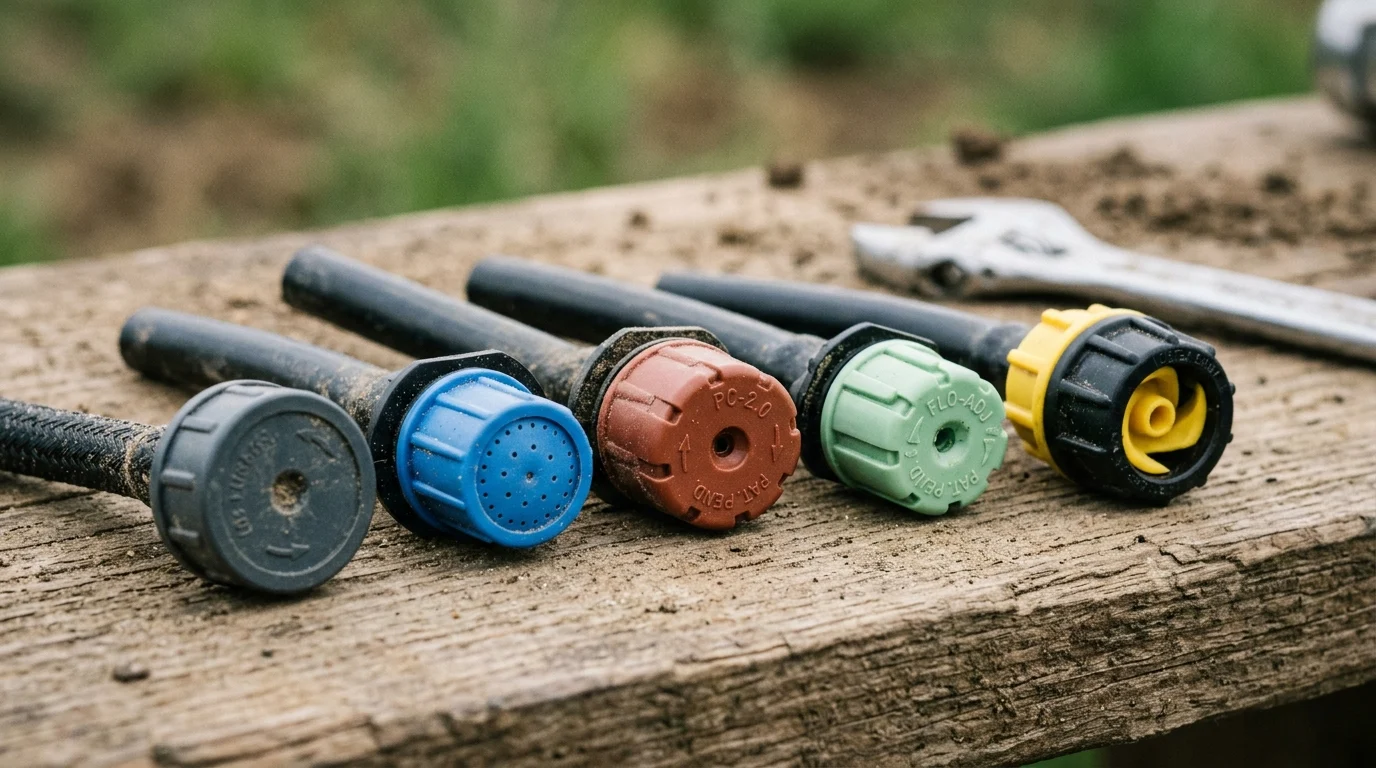
Commercial irrigation equipment spans a spectrum of hydraulic designs, each engineered to address specific agronomic and topographical profiles. Understanding the mechanical architecture and operational parameters of these systems is critical for matching equipment to farm-specific requirements.
Drip, sprinkler, center pivot, and linear move systems
Drip irrigation, encompassing both surface and subsurface configurations, utilizes polyethylene tubing (typically 16mm to 22mm in diameter) with precisely engineered emitters to deliver water directly to the plant root zone. This method minimizes evaporative losses and eliminates wind drift, achieving application efficiencies exceeding 90%. Sprinkler systems range from solid-set impact sprinklers used in orchards for both irrigation and frost protection, to portable aluminum pipe configurations. While highly versatile, traditional sprinklers are more susceptible to evaporative losses, often capping efficiency at 70% to 85%.
Mechanized lateral move and center pivot systems dominate large-scale row crop agriculture. A standard 7-to-8 span quarter-section center pivot typically spans 1,320 feet and irrigates approximately 130 to 135 acres. Modern pivots equipped with Low Energy Precision Application (LEPA) drop nozzles bring water delivery closer to the soil surface, drastically improving efficiency compared to older high-pressure impact models. Linear move systems operate on similar principles but traverse rectangular fields, offering up to 98% field coverage at the cost of more complex water feed mechanisms (ditch feed or drag hose).
Core components, use cases, and performance differences
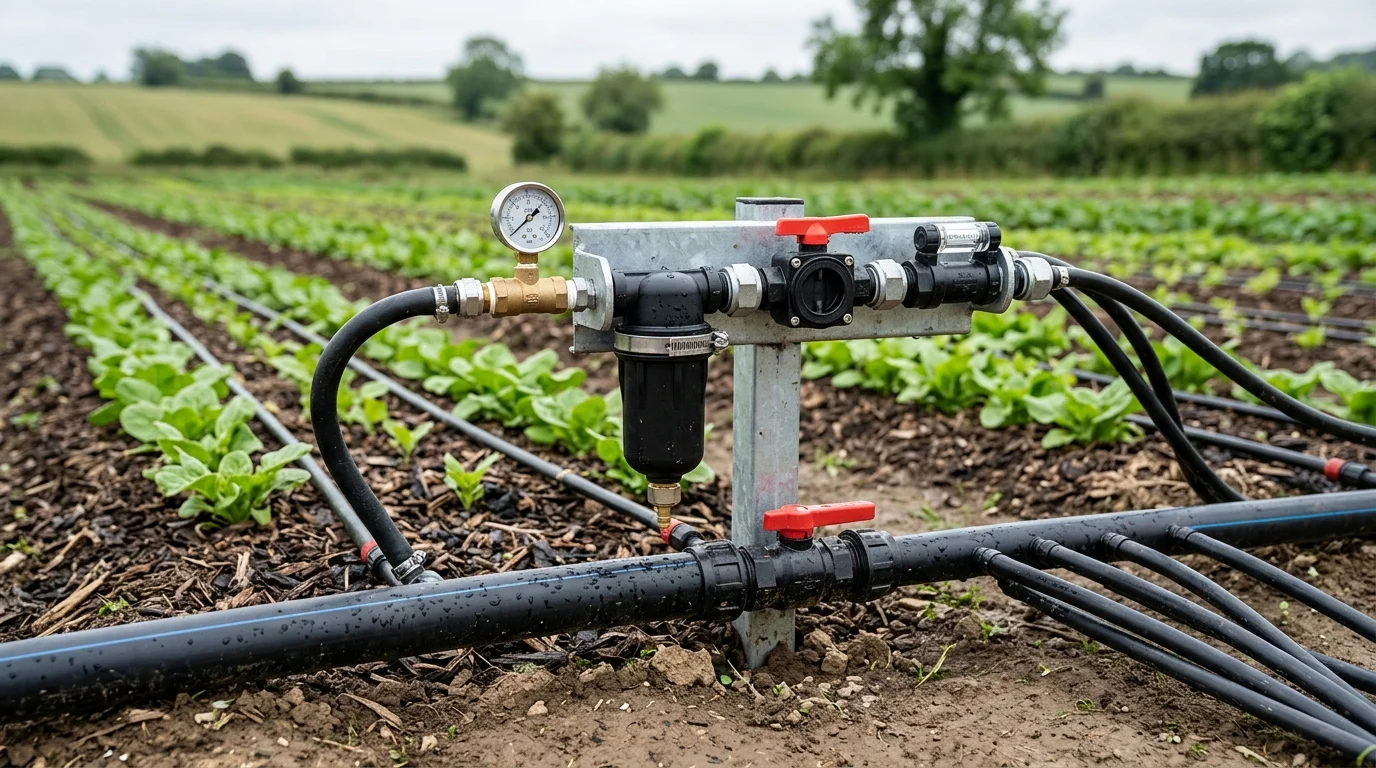
At the core of any pressurized irrigation system is the pumping station, which must be precisely sized to the system's total dynamic head (TDH) and required flow rate. Filtration is another non-negotiable component, particularly for micro-irrigation; sand media filters or automatic screen filters (operating at 120 to 200 mesh, or roughly 130 to 75 microns) are required to prevent emitter clogging from organic matter or suspended solids. Pressure regulators are distributed throughout the system to maintain design specifications, ensuring that a drip emitter receives a constant 10 to 15 PSI regardless of its elevation relative to the pump.
Performance differences become stark under varying environmental conditions. Micro-irrigation excels in minimizing weed growth and fungal diseases by keeping the foliar canopy dry, making it ideal for solanaceous crops. Center pivots offer unmatched labor efficiency and are highly effective for incorporating chemigation over hundreds of acres simultaneously, though they require specific soil infiltration characteristics to prevent wheel-track rutting.
Comparison table for major irrigation system types
The following table outlines the foundational performance metrics and cost profiles associated with major commercial irrigation systems.
| System Type | Target Application Efficiency (%) | Typical Operating Pressure (PSI) | Est. Capital Cost ($/Acre) | Best Suited For |
|---|---|---|---|---|
| Subsurface Drip (SDI) | 90–95% | 10–25 | $1,200–$2,500 | High-value crops, severe water restrictions |
| Center Pivot (LEPA nozzles) | 85–95% | 15–40 | $600–$1,200 | Large-scale row crops, flat/rolling terrain |
| Solid Set Sprinklers | 70–85% | 40–80 | $1,500–$3,000 | Orchards, frost protection, complex layouts |
| Micro-Sprinklers | 80–90% | 20–40 | $1,000–$2,000 | Tree nuts, citrus, high-infiltration soils |
Selecting between these architectures requires a rigorous analysis of the farm's capital budget, long-term operational goals, and the specific agronomic needs of the crop rotation.
How commercial farms should compare irrigation equipment
Procuring commercial irrigation equipment demands rigorous comparative analysis beyond initial purchase prices. Farm operators must evaluate systems based on precise hydraulic specifications, lifecycle costs, and the operational trade-offs inherent in different application methods.
Technical specifications that matter most
The most critical technical specification for any irrigation system is the Distribution Uniformity (DU) or the Coefficient of Uniformity (CU). A high-performing center pivot should achieve a CU of 85% or higher, while a well-designed drip system must target a DU exceeding 90%. Poor uniformity results in simultaneous over-watering and under-watering within the same field, severely depressing overall yield. Wall thickness in drip tape is another vital specification; 5-mil to 8-mil tape may suffice for a single-season vegetable crop, whereas 15-mil to 20-mil tape is required for multi-year subsurface installations to resist insect damage and mechanical stress.
Friction loss and pipe sizing dictate the energy efficiency of the entire network. Undersized mainlines require exponentially higher pump pressures to deliver the necessary flow, leading to continuous energy waste. Engineers must calculate the Total Dynamic Head (TDH), factoring in elevation changes, pipe friction (targeting a Hazen-Williams C-factor of 140 to 150 for new PVC), and the required operating pressure at the furthest nozzle or emitter, to select a pump operating at its Best Efficiency Point (BEP).
Total cost of ownership and ROI
Total Cost of Ownership (TCO) encompasses initial capital expenditure, annual energy consumption, maintenance, and labor. While a center pivot may require an upfront investment of $80,000 to $120,000, its lifespan of 15 to 25 years and low labor requirements often yield a superior ROI for broad-acre crops, with payback periods typically ranging from 3 to 5 years. Conversely, surface drip tape requires frequent replacement and intensive labor for seasonal deployment and retrieval, shifting the cost burden from capital expenditure to operating expenditure.
Energy costs are a dominant factor in TCO. Pumping one acre-foot of water can cost between $30 and $80 depending on the lift required from the aquifer and the system's operating pressure. Low-pressure systems (operating at 15 to 25 PSI) drastically reduce the horsepower required compared to high-pressure impact sprinklers (operating at 60+ PSI), generating substantial energy savings (often 20% to 40%) over a 2,000-hour irrigation season.
Trade-offs between water efficiency, yield protection, and labor
Choosing irrigation equipment involves inevitable trade-offs. Drip irrigation offers maximum water efficiency and yield protection through precise fertigation, but it demands rigorous maintenance to prevent emitter clogging and offers zero capability for crop cooling or frost protection. Solid-set sprinklers provide excellent microclimate control and frost mitigation for orchards, but they suffer from lower application efficiency due to evaporation and require massive instantaneous flow rates (often 50 to 60 GPM per acre for effective frost mitigation).
Automation introduces another layer of trade-offs. Advanced telemetry, variable rate irrigation (VRI) zones, and automated soil moisture sensors can reduce physical labor hours by up to 60% while optimizing water use. However, these systems require a higher caliber of technical management, reliable cellular or radio networks, and increased upfront capital for programmable logic controllers and actuated valves.
What sourcing, compliance, and implementation factors affect irrigation
The successful deployment of commercial irrigation infrastructure relies heavily on vendor reliability, strict adherence to local regulations, and a meticulously managed installation process. Overlooking compliance or supply chain vulnerabilities can result in stranded assets and severe operational delays.
How to evaluate irrigation equipment suppliers
Evaluating irrigation equipment suppliers requires scrutinizing their engineering support, warranty terms, and localized parts availability. A tier-one supplier should provide comprehensive hydraulic modeling and surge analysis prior to the sale. Operators must assess the supplier's Service Level Agreements (SLAs) for critical components; during peak season, a failed 100-HP variable frequency drive (VFD) or deep well turbine pump must be replaceable within 24 to 48 hours to prevent catastrophic crop stress.
Furthermore, the financial stability of the dealer network is crucial. Given that major infrastructure like center pivots or complex filtration stations represent multi-decade investments, the chosen supplier must demonstrate the longevity to honor 10-year structural warranties and provide ongoing firmware updates for automated control panels.
Regulatory, water, pumping, electrical, and environmental requir
ements
Regulatory compliance dictates system design before ground is ever broken. Groundwater extraction limits and surface water diversion rights strictly govern the maximum allowable system flow rate. Environmental regulations frequently mandate backflow prevention devices, such as Reduced Pressure Zone (RPZ) assemblies (complying with ASSE 1013 standards), to ensure that injected fertilizers and chemicals cannot contaminate municipal or aquifer water sources.
Electrical and pumping requirements introduce further compliance hurdles. Upgrading a pump station often requires coordination with utility providers to secure 480V three-phase power. If grid power is unavailable, Tier 4 Final diesel engines must be specified to meet stringent agricultural emissions standards. Additionally, local water boards may require the installation of certified magnetic flow meters (requiring ±2% accuracy) to monitor and report precise volumetric water usage.
Step-by-step implementation process
Implementation begins with a comprehensive topographic and soil survey, utilizing RTK GPS to map elevation changes down to sub-inch accuracy. This data feeds into the hydraulic design software to dictate pipe routing and pressure zone boundaries. Lead times must be factored into the project schedule; custom center pivots or large-diameter (10-inch to 15-inch) PVC mainlines frequently require 8 to 12 weeks for delivery during peak manufacturing seasons.
The physical installation involves deep trenching for mainlines (typically buried 36 to 48 inches to avoid deep tillage equipment), concrete pad pouring for pump stations, and the precise assembly of filtration manifolds.
How commercial farms can choose irrigation equipment with confidence
Key Takeaways
- The most important conclusions and rationale for Irrigation equipment
- Specs, compliance, and risk checks worth validating before you commit
- Practical next steps and caveats readers can apply immediately
Frequently Asked Questions
Which irrigation equipment is best for high-value crops like grapes or almonds?
Drip or micro-irrigation is usually best. It delivers precise root-zone watering, supports fertigation, and can exceed 90% efficiency on commercial farms.
When should a commercial farm choose a center pivot system?
Choose center pivot for large, relatively uniform fields with moderate slopes. It offers broad coverage, lower labor needs, and good cost efficiency for row crops.
How does soil type affect irrigation equipment choice?
Clay soils need low-application-rate systems to avoid runoff, while sandy soils benefit from frequent, low-volume irrigation. Match equipment to infiltration rate before sizing pumps and lines.
What farm conditions make drip irrigation a better option than sprinklers?
Use drip on uneven terrain, in water-scarce areas, or for crops needing precise moisture control. It reduces evaporation, limits wet foliage, and improves water-use efficiency.
What should buyers compare before selecting irrigation equipment from suppliers like ZM Inovato?
Compare field size, crop type, water source, pressure needs, filtration, automation options, and after-sales support. A supplier should help match hydraulic design to your farm layout.