
Introduction
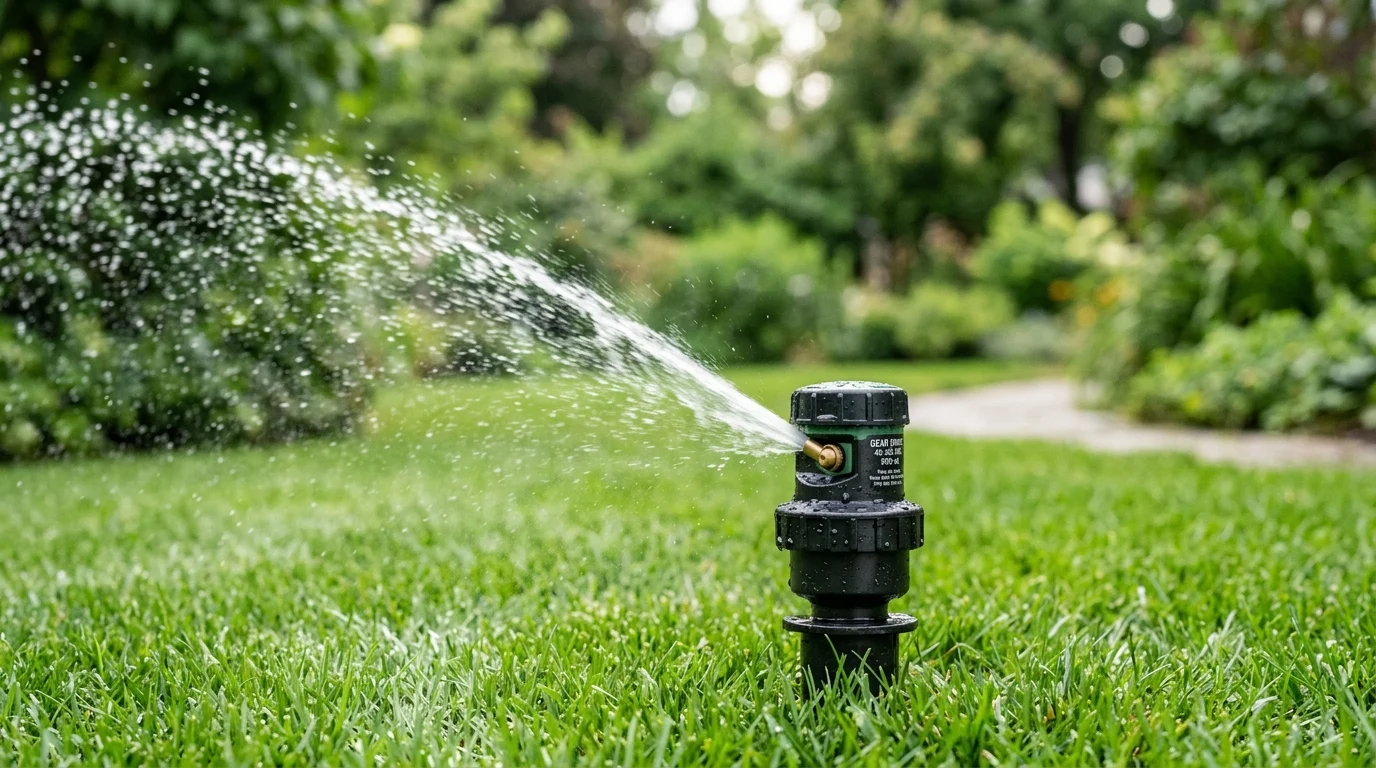
Choosing a gear drive sprinkler affects far more than spray radius: it determines how evenly water is applied, how well the system performs under available pressure, and how much waste is avoided over time. The right match depends on site size, layout, pressure range, nozzle options, and the surfaces or planting areas being irrigated. This guide explains the key selection factors, including coverage patterns, precipitation control, and operating conditions, so you can compare models with a clear framework. With those basics in place, the rest of the article moves into the practical criteria that help you select a sprinkler that supports efficient, reliable irrigation.
Why gear drive sprinkler selection matters for efficient irrigation
Proper gear drive sprinkler selection is foundational to modern commercial and residential irrigation efficiency. Unlike static spray heads, gear-driven rotors utilize water pressure to rotate a turret, delivering a concentrated stream of water over a designated area. Operating efficiently across dynamic pressure ranges—typically between 30 and 70 pounds per square inch (PSI)—these sprinklers are engineered to cover medium to large expanses of turf and groundcover. Selecting the correct model directly impacts water conservation, system longevity, and the overall health of the landscape.
Water distribution benefits
The primary advantage of a gear drive sprinkler lies in its superior water distribution uniformity. A well-calibrated gear-driven rotor can achieve a distribution uniformity (DU) exceeding 75%, significantly outperforming standard fixed spray heads, which often struggle to surpass 60% DU. This high uniformity ensures that water is applied evenly across the target area, minimizing dry spots and reducing the need for wasteful overwatering. Furthermore, the single-stream or multi-stream delivery mechanism produces larger water droplets, which are highly resistant to wind drift and evaporation compared to the fine mist generated by traditional spray nozzles.
Key site variables
Site-specific variables dictate the baseline requirements for any gear drive sprinkler installation. Wind exposure, terrain variations, and microclimate conditions must be evaluated before finalizing a design. In areas with consistent wind speeds above 10 miles per hour, low-angle nozzles (typically trajectory angles of 10 to 15 degrees) are crucial to prevent the water stream from being carried away from the target zone. Additionally, sloped terrains require sprinklers with check valves that can hold back up to 10 feet of elevation change, preventing low-head drainage and the pooling of water at the base of slopes when the system is deactivated.
Technical specifications to compare
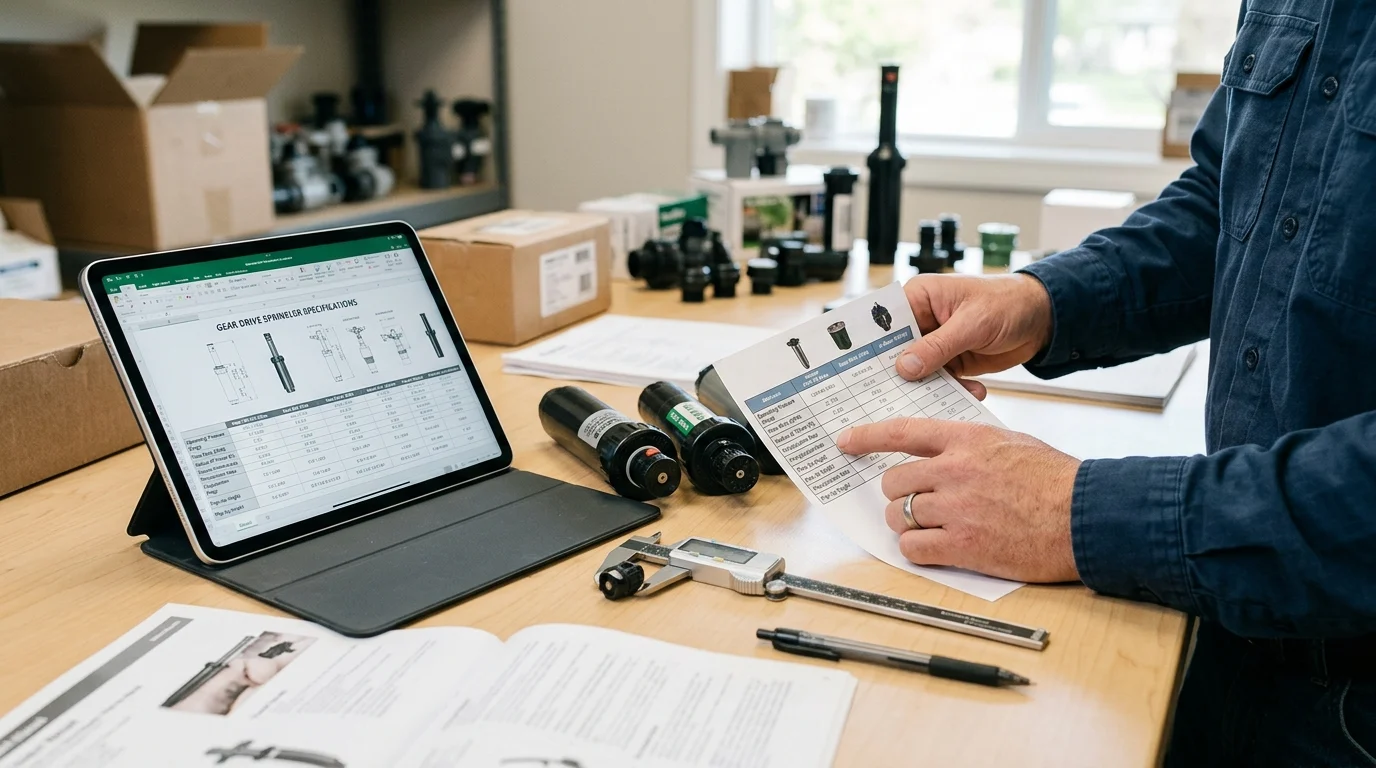
The core of gear drive sprinkler selection lies in matching technical specifications to the hydraulic capabilities of the irrigation system. System designers must account for available flow rates, which typically range from 0.5 to 15.0 gallons per minute (GPM) per rotor, to ensure the water source can support the simultaneous operation of multiple heads on a single zone.
Radius, arc, precipitation rate, and nozzle options
Modern gear drive sprinklers offer extensive adjustability to accommodate diverse landscape geometries. Adjustable arcs allow installers to define watering patterns from a narrow 40 degrees up to a continuous 360-degree rotation. Radius capabilities span from 15 feet for tight commercial strips up to 50 feet or more for expansive sports fields. Crucially, the precipitation rate—the speed at which water is applied to the soil, measured in inches per hour—is determined by the combination of the selected nozzle, the operating pressure, and the head spacing. Interchangeable nozzle racks provided by manufacturers allow precise tuning of this rate, typically ranging from 0.2 to 0.8 inches per hour.
Soil, slope, plant type, and water pressure
Agronomic factors such as soil composition, slope severity, and plant water requirements heavily influence the required specifications. Heavy clay soils, for example, have low infiltration rates (often between 0.1 and 0.25 inches per hour) and require sprinklers equipped with low-flow nozzles to prevent surface runoff. Conversely, sandy soils drain rapidly (exceeding 0.5 inches per hour) and can accommodate higher precipitation rates. Water pressure is the engine driving these metrics; a sprinkler designed for optimal performance at 45 PSI will suffer from poor rotation and reduced radius if supplied with only 25 PSI, leading to severe dry patches.
Comparison factors and trade-offs
Balancing radius, flow, and pressure requires an understanding of the trade-offs inherent in sprinkler design. Maximizing the radius of a rotor generally requires higher operating pressures and consumes more GPM, which limits the number of heads that can be placed on a single irrigation valve.
| Sprinkler Class | Radius Range (ft) | Flow Rate (GPM) | Optimal Pressure (PSI) | Typical Application |
|---|---|---|---|---|
| Short-Range Rotor | 15 – 25 | 0.5 – 3.0 | 30 – 45 | Small turf areas, tight corners |
| Mid-Range Rotor | 25 – 40 | 1.5 – 8.0 | 40 – 60 | Residential lawns, light commercial |
| Long-Range Rotor | 40 – 55+ | 4.0 – 15.0 | 50 – 70 | Sports fields, large parks |
Durability, installation, and total cost
Beyond hydraulic performance, the physical robustness of a gear drive sprinkler dictates its lifecycle value and total cost of ownership. Commercial-grade rotors are engineered to withstand physical impacts, extreme temperature fluctuations, and environmental degradation. A high-quality gear drive sprinkler typically provides reliable service for 10 to 15 years before requiring complete replacement.
Construction, seals, and riser design
The internal and external construction of a rotor determines its resilience in the field. Industry-standard gear drives utilize high-impact ABS plastics for the outer casing and internal gearing, paired with heavy-duty stainless steel retraction springs to ensure the riser drops below grade reliably after watering. Pop-up heights are available in 4-inch, 6-inch, and 12-inch configurations, with the 12-inch models specifically designed to clear tall groundcover or high-cut turf. Premium models feature pressure-activated, multi-function wiper seals that flush debris upon extension and tightly seal the riser upon retraction, preventing sand and dirt from destroying the internal gear drive mechanism.
Installation, zoning, and maintenance
Proper installation techniques are critical for extracting the maximum lifespan from gear drive sprinklers. Rotors must be zoned separately from spray heads due to their vastly different precipitation rates. Industry best practice mandates "head-to-head" spacing, meaning the water spray from one sprinkler should reach the adjacent sprinkler to ensure uniform coverage. Routine maintenance is generally minimal but requires periodic flushing of the lateral lines and cleaning of the internal filter screens located at the base of the riser to prevent nozzle clogging.
Total cost of ownership
When evaluating the total cost of ownership, buyers must look beyond the initial unit price, which typically ranges from $15 to $40 per rotor depending on commercial grade and features. The true cost encompasses installation labor, long-term maintenance, and, most importantly, water usage over the product's lifespan. A premium sprinkler equipped with built-in pressure regulation and check valves may cost 30% more upfront but can reduce annual water consumption by 15% to 20%, yielding a rapid return on investment in regions with high municipal water rates.
Compliance, sourcing, and project delivery
Regulatory compliance and supply chain reliability are critical factors for contractors and landscape architects managing large-scale irrigation projects. Sourcing gear drive sprinklers often involves navigating wholesale distribution networks where minimum order quantities (MOQs) can exceed 500 units for direct commercial purchasing. Delays in procurement or failure to meet local codes can derail project timelines and inflate budgets.
Standards and local water regulations
Irrigation equipment is increasingly subject to strict environmental and municipal regulations aimed at water conservation. In many jurisdictions, commercial installations must utilize products certified by efficiency programs (such as the EPA WaterSense program in the United States), which mandate an average distribution uniformity of at least 65%. Furthermore, state and local building codes frequently require built-in pressure regulation stems (PRS) that restrict operating pressure to an optimal 45 PSI, preventing the atomization of water into mist at higher pressures. Manufacturers operating at a global scale ensure their production facilities adhere to ISO standards for quality management, ensuring that every batch of sprinklers meets these rigorous compliance metrics.
Manufacturer support, availability, and lead times
Project delivery relies heavily on manufacturer support and product availability. While standard 4-inch pop-up rotors are typically stocked in abundance at local irrigation supply houses, specialized units—such as 12-inch stainless steel risers or models with reclaimed water identification (purple caps)—may require lead times of 4 to 8 weeks. Establishing relationships with manufacturers who offer comprehensive technical support and robust warranties spanning 3 to 5 years protects contractors against manufacturing defects and supply chain bottlenecks.
How to choose the right gear drive sprinkler
Selecting the optimal gear drive sprinkler requires a methodical approach that aligns the hydraulic limits of the site with specific agronomic needs. A well-designed system must respect pipe sizing constraints, ensuring water velocity remains below 5 feet per second in the lateral lines to prevent destructive water hammer, while simultaneously delivering adequate moisture to the root zone.
Step-by-step selection process
The selection process begins with a precise evaluation of the water source, measuring both the static pressure and the maximum available GPM. Next, designers map the area to determine sprinkler placement, strictly adhering to head-to-head spacing rules. Once the radius and arc are established for each head, the appropriate nozzle is selected to balance the precipitation rate across the zone. The chosen precipitation rate must ultimately align with the soil's infiltration capacity to prevent runoff.
| Soil Type | Max Infiltration Rate (in/hr) | Recommended Sprinkler PR (in/hr) | Run Time Adjustment |
|---|---|---|---|
| Sand | 0.60 – 1.00 | 0.40 – 0.60 | Standard continuous |
| Loam | 0.30 – 0.50 | 0.25 – 0.40 | Moderate, slight cycling |
| Clay | 0.10 – 0.25 | 0.10 – 0.20 | Cycle and soak required |
Common selection mistakes
Common selection mistakes often lead to chronic landscape issues and wasted resources. The most frequent error is mixing rotors and fixed spray heads on the same irrigation valve; because spray heads apply water at a rate three to four times faster than rotors, the area covered by sprays will flood before the rotor-covered area receives adequate moisture. Another prevalent mistake is stretching the radius of a sprinkler beyond the manufacturer's specifications by operating it at suboptimal pressures. Attempting to force a 40-foot radius from a gear drive sprinkler operating at only 25 PSI will result in the water stream failing to break up properly, creating a heavy donut-shaped ring of water near the end of the stream and leaving the intermediate turf completely dry.
Key Takeaways
- The most important conclusions and rationale for Gear drive sprinkler
- Specs, compliance, and risk checks worth validating before you commit
- Practical next steps and caveats readers can apply immediately
Frequently Asked Questions
What pressure range works best for a gear drive sprinkler?
Most gear drive sprinklers perform best around 30–70 PSI. For reliable rotation and coverage, aim near the model’s rated pressure, often about 45 PSI.
How do I choose the right radius for my irrigation area?
Match the sprinkler’s radius to the zone size and use head-to-head spacing. Small strips may need 15–25 ft rotors, while larger lawns can use 30–50 ft models.
Which nozzle should I use for clay soil?
Use a low-flow nozzle with a lower precipitation rate, typically near 0.2–0.4 in/hr. This helps reduce runoff and improves absorption on slow-draining clay soils.
When should I select a low-angle nozzle?
Choose a low-angle nozzle, about 10–15 degrees, for windy sites above 10 mph. It helps keep water on target and reduces drift and evaporation losses.
Do I need a check valve on sloped landscapes?
Yes, if the area has elevation changes. A check valve can prevent low-head drainage, reduce puddling at the bottom of slopes, and improve system efficiency.